28th June 2026

NEC releases 2021 P.L.E exams, Jonglei dominates top ten

The National Examination Council has on Friday released the results of the 2021 Primary Leaving Exams with one Juba-based female candidate emerging among the best ten performers from Jonglei State.

According to the council, 49,541 pupils sat for the February 2022 examinations, out of 54,361 candidates who had registered for nation-wide papers.

29,173 of the candidates who took the exams are males and 20,389 are females, with 26,508 boys and 17,707 girls passing the exams respectively. This means 4,820 candidates did not seat for the exams for unclear reasons.

NEC stated that English was the worst performed subject followed by mathematics, while Christian Education and Social Studies were the best performed subjects in the exams.

This year, the best ten positions have been shared among fifteen candidates, all of whom completed from private schools mainly in Jonglei State.

Alfa Junior Nursery and Primary School, and St Andrew – both in Jonglei State, have dominated the list of best performed candidates.

The only female candidate, Anyango Jenifer of the Royal Star Academy in Central Equatoria made in the top ten list.

John Deng Ruei from Alfa Junior Nursary and Primary School in Jonglei State topped the best five male candidates sharing the same marks with Nicodemus Abuk of St Andrew in the same state.

The two are followed by Tong Mabior Lueth from Alfa Junior Nursery and Primary School, Malier Alier Malier from the same school and Gai Bol Biel from St Andrew with 477, 476 and 475 marks respectively.

The girls tailing Anyango Jenifer of the Royal Star Academy in Central Equatoria as the best female performers are; Marlin Apieu from the St Andrew Primary School, Abul Gai also from the same school, Anai Machar from Alfa Junior Primary School and Dorcas Angur from St Andrew Primary School.

They scored closed marks of 472, 471, 470 and 469 respectively.

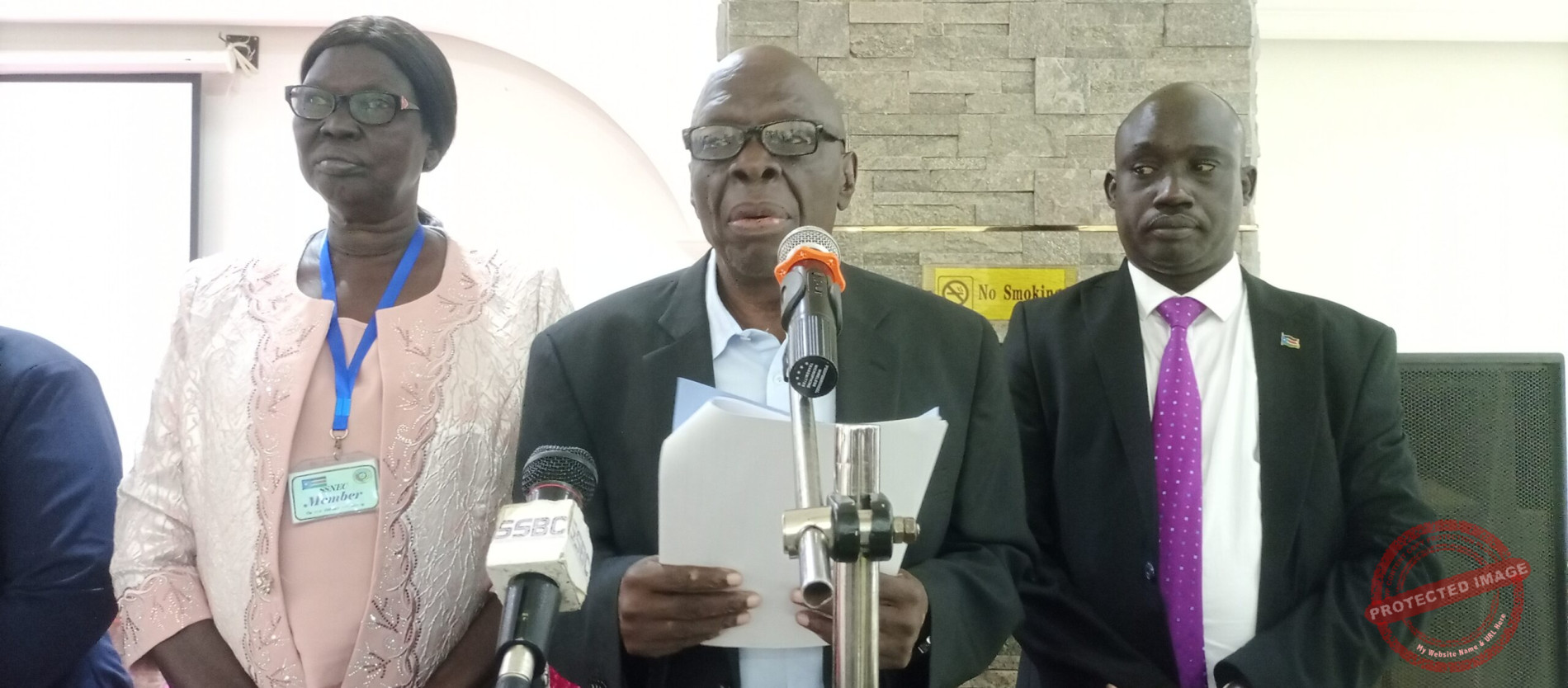
“The answer is straight forward, the private schools pay better, they have better facilities than public schools”, said Martin Tako, the Deputy Minister of the Ministry of General Education and Instruction who announced the results.

“We in the ministry are struggling to facilitate the teachers to come back to the teaching profession because most of them actually left the profession because of the poor working condition.

According to the performance state by state, Jonglei is leading followed by Pibor Administrative as Warrap, Lakes, Northern Bahr el Ghazal, Central Equatoria, Eastern Equatoria took the third, fourth, fifth, sixth and seventh places.

Unity State bottomed the table after Western Equatoria State and Eastern Equatoria states, but they are not as badly off as Abyei and Rwweng administrative areas.

According to NEC, this year’s overall performance is rated at 89-point 3 percent.
Maridi man heartbroken after gunmen murdered his mother

A man is heartbroken after unknown gunmen shot and killed his mother in Maridi County of Western Equatoria State Tuesday.

Bereaved John Hawzar said some armed men entered his 45-year-old mother’s room when she and the father were in the middle of sleep.

“They (two gunmen) removed the curtain from the door and entered by force and they killed my mother with one bullet that passed through her heart to the back.”

Hawzar said the assailants had ordered Easter Robert and her husband to come down from their bed before shooting her alone.

“They ordered my mother and my father to sleep down and from there, they killed my mother and ran way”, he said.

The incident occurred last night in the Mokoyo area about 7 miles from Maridi town.

The Maridi Police Commissioner, Major General Stephen Yen confirmed the incident to Eye Radio saying, “it happened the day before yesterday (Tuesday) in Maridi, like 7 miles from the town and it’s a farming area”,

None of the suspects have been arrested. ‘We didn’t arrest them“ said Maj.Gen. Yen

The motive behind the killing is not clear.

Sri Lanka’s President Rajapaksa leaves Maldives for Singapore

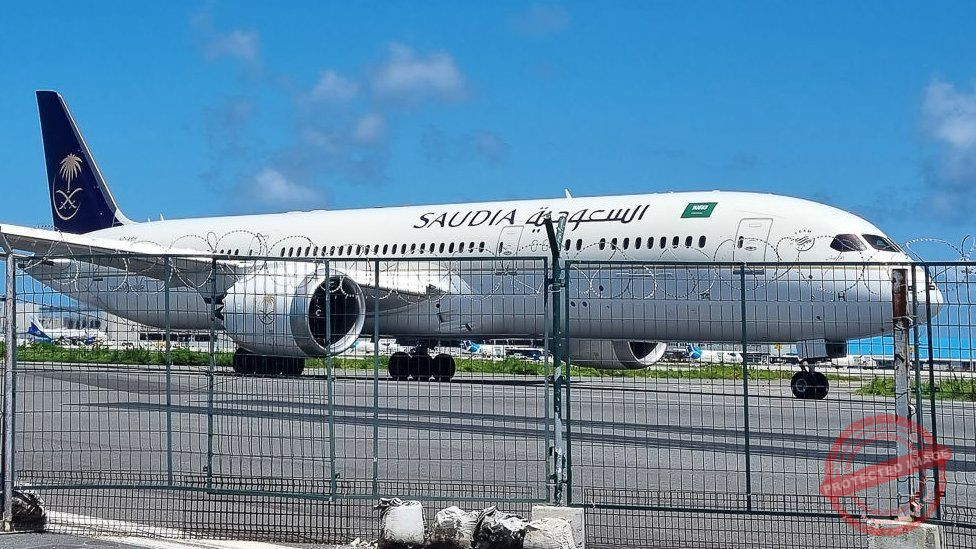
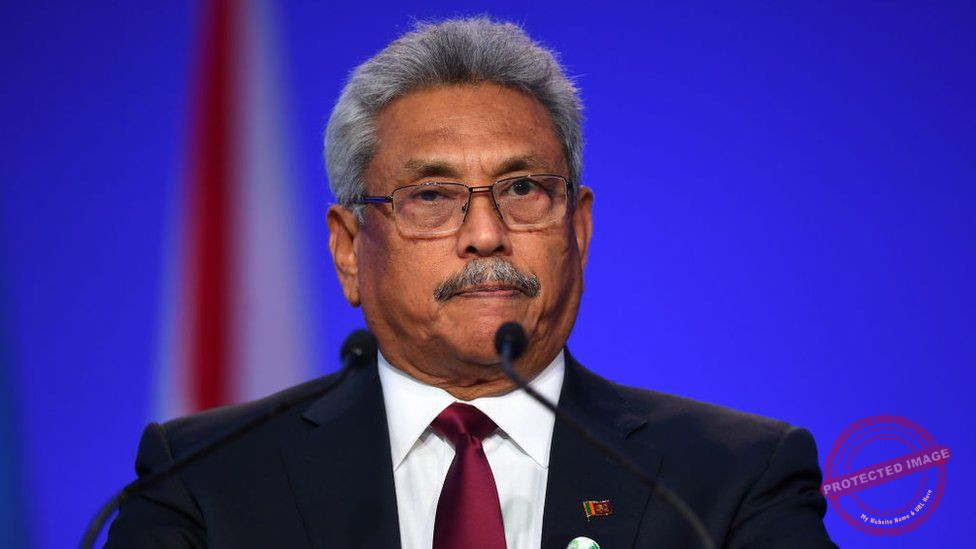
Sri Lankan President Gotabaya Rajapaksa has left the Maldives on a Saudi airlines flight bound for Singapore, the BBC reported.

The president had fled to the Maldives a day earlier amid mass protests over Sri Lanka’s economic crisis.

It is not clear if Mr Rajapaksa will stay in Singapore or whether he will use it as a layover destination.

He had previously pledged to resign by Wednesday, but has failed to submit a formal resignation so far.

The leader, who as president enjoys immunity from prosecution, is believed to have wanted to leave Sri Lanka before stepping down to avoid the possibility of arrest by an incoming administration.

It comes as acting president Ranil Wickremesinghe on Thursday imposed a curfew for a second day. His government ordered a curfew from noon (06:30 GMT) to 05:00 Friday to quell protests.

Sri Lanka’s President Gotabaya flees his country on military jet

President Gotabaya Rajapaksa has fled Sri Lanka on a military jet, amid mass protests over its economic crisis.

The country’s air force confirmed the 73-year-old flew to the Maldives with his wife and two security officials.

They arrived in the capital, Male, at around 03:00 local time (22:00 GMT), BBC Sinhala understands.

Mr Rajapaksa’s departure ends a family dynasty that has ruled Sri Lanka for decades.

He had been in hiding after crowds stormed his residence on Saturday, and had The president had earlier pledged to resign on Wednesday 13 July.

A source told the BBC that Mr Rajapaksa will not remain in the Maldives and intends to travel on to a third country.

His brother, former Finance Minister Basil Rajapaksa, has also left Sri Lanka and is said to be heading to the US.

As Sri Lankans awoke to news of the president’s departure, thousands of people took to the streets of the capital, Colombo. Many gathered at Galle Face Green, the city’s main protest site. Some listened to fiery speeches at a makeshift stage set up for ordinary people to take the mic.

Punctuated by cries of “Victory to the struggle”, the rallying cry of the protest movement, speakers railed against a government and the leaders they feel have failed them.

Others were furious about Mr Rajapaksa’s departure, seeing a lack of accountability.

“We don’t like it. We want to keep him. We want our money back! And we want to put all the Rajapaksas in an open prison where they can do farm work,” said protester GP Nimal.

But 23-year-old university student Reshani Samarakoon told the BBC that the former president’s exile offered “hope that in the future we can eventually become a developed country, economically and socially”.
A demonstrator in Colombo
Image caption,
One of the demonstrators in Colombo delivers a speech to the crowd

Sri Lankans blame President Rajapaksa’s administration for their worst economic crisis in decades.

For months they have been struggling with daily power cuts and shortages of basics like fuel, food and medicines.

The leader, who enjoys immunity from prosecution while he is president, is believed to have wanted to flee abroad before stepping down to avoid the possibility of arrest by the new administration.

Toposa Juba dwellers want wounded invaders punished

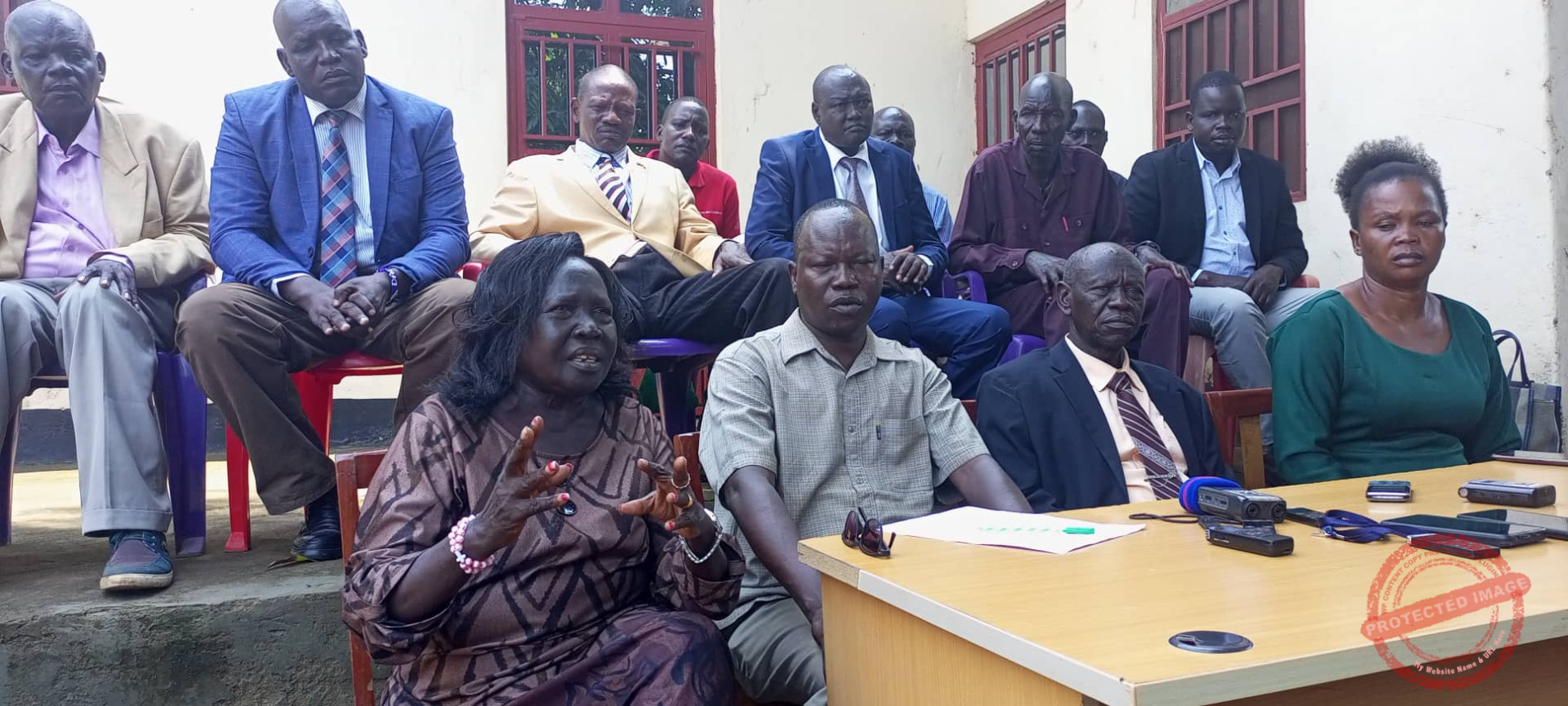
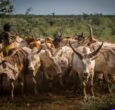
Some Juba-based toposa leaders are calling on the authorities in Eastern Equatoria State to hold accountable over 40 wounded raiders undergoing medical treatment at health facilities in the area.

The suspected raiders reportedly sustained injuries after attacking cattle camps in Kapoeta North County last week.

They are said to be receiving treatment at the Napak and Kimotong Primary Health care centers in Eastern Equatoria State.

Yesterday, Eastern Equatoria State governor, Louise Lobong said, he was organizing for the evacuation of 51 wounded attackers to greater Pibor Administrative Area on a humanitarian ground.

Mr Lobong however, called on the offenders to desist from future attacks and abducting children.

But the Juba-based Toposa Community wants justice to prevail over the matter.

“The Toposa community request the state government to arrest the wounded raiders who are currently receiving medical treatment at Napak and Kimotong Primary Health center in Kimotong payam”, said Paul Napwon Yoane, the Chairperson of Toposa Community Union in Juba.

“And we further request Lafon County administration to do the same and bring the raiders to face justice. The lives of the people killed during the two attacks will not go without justice.”

The community leaders said the latest violence in Kapoeta North undermined the August 2021 Kali community peace conference.

The conference had resolved that the communities of greater Kapoeta and the surrounding areas coexist peacefully.

“We are not for war and we don’t want war but because the whole of South Sudan is bleeding. In fact the only state that there was hope for South Sudan is Eastern Equatoria,

“…but this one now seems to be something organized and it seems to be a kind of proxy war which is very dangerous”, said Napwon.

“So until now we are for peace and if there is any possible way of the government of South Sudan intervening, including the international community, we are for peace.”

The traditional leaders also demanded that the thousands of heads of cattle are recovered and returned to there rightful owners.

“Set aside 1929 Sudan-Egypt Nile water deal for new initiative,” Makuei

The government spokesperson has told the national legislature to enact the Nile Basin Cooperation Framework agreement to enable South Sudan to become a member.

It’s not clear what prompted the call, but the recent reception from the Egyptian government of dredging equipment by the Unity state government sparked a public outcry.

The equipment were to be used to open the Bahr-el Ghazal-Naam tributaries to the Nile River.

This, according to some officials, was aimed to mitigate the devastating impact of floods in the Upper Nile and Bahr el Ghazal regions.

However, President Salva kiir over the weekend suspended the project until a proper environmental socioeconomic impact studies are carried out.

Historically, the 1929 Anglo-Egyptian treaty granted Egypt a veto power over construction projects on the Nile River or any of its tributaries to minimize any interference with the flow of water into the Nile.

The 1959 agreement increased water allocations to both Egypt and Sudan.

Egypt’s water allocation was raised from 48 billion cubic meters to 55.5 billion cubic meters.

However, due to controversies surrounding the shares of the Nile, the Nile basin countries came up with an agreement framework in May 14, 2010.

Four countries that participated in the deal known as Cooperation Framework Agreement were Ethiopia, Rwanda, Tanzania and Uganda – with Burundi and Kenya signing it later.

Between 2013 and 2019, member states; Ethiopia, Rwanda, Burundi, Tanzania and Uganda except Kenya and Burundi ratified the agreement.

Meanwhile, Egypt and Sudan are non-signatories to the agreement.

Speaking during the ongoing public consultations on the suspended planned to dredge the Nile tributaries, Minister Michael Makuei said South Sudan is not yet a member of the Nile Basin agreement.

He said there is need for the country to join the bloc, but the parliament should enact a bill that can allow the country to be a member.

“I think as a new state, if there is a new initiative, call the Nile Basin Initiative, let us set aside all the agreements and commitments that were made by Sudan government.

“Why should we not sign the Nile Initiative and forget about it because we are not bound by it, we are not a party to it. And Sudan government did not come to remind us about the water agreement.

“If we are not reminded, then let us proceed. So, issues of agreement should not worry us.

“The most important thing is my request to the parliament to pass a Nile Basin Initiative act so that we approve it and finalize it. Whoever will come to talk about it, we will face him.”

NILE BASIN TREATY
The regional treaty established principles, rights and obligations to ensure long-term and sustainable management and development of the shared Nile waters.

According to its provisions, the Nile Basin States shall assume the obligation to cooperate on the conservation, management and development of the Basin and its waters.

The treaty establishes a legal basis for a permanent and joint management institution, the Nile River Basin Commission (NRBC), which is vested with legal personality as well as enhance Nile cooperation.

The institution is to ensure that national development projects are coordinated with basin-wide development to achieve optimal use of the Basin’s resources and increase national benefits of regional cooperation.
Ratification process and entry into force.

Ratification process and entry into force

AN EXCERPT FROM NILE BASIN FROM NILE BASIN ORGANIZATION

The Treaty is subject to ratification.
It will not enter into force until at least 60 days after six countries have ratified or acceded to the document and deposited with the African Union.

Signature of the CFA is an intermediate step by which countries indicate their willingness to ratify the Treaty in the future; yet they are under no legal obligation to ratify.

Signature of the treaty puts countries under an obligation not to set any acts that would undermine the objective and purpose of the CFA. (As of March 2011, the CFA has been signed by six countries.)

As long as the treaty has not entered into force the text can be renegotiated; if this results in text changes the new document will be again subject to the two step process of signature and ratification. The Treaty has not legal effect on States that do not sign or ratify the document.

Nile Basin Countries which do not sign or ratify the CFA are not bound by it.

Nimule Police Inspector shot in leg amidst protest

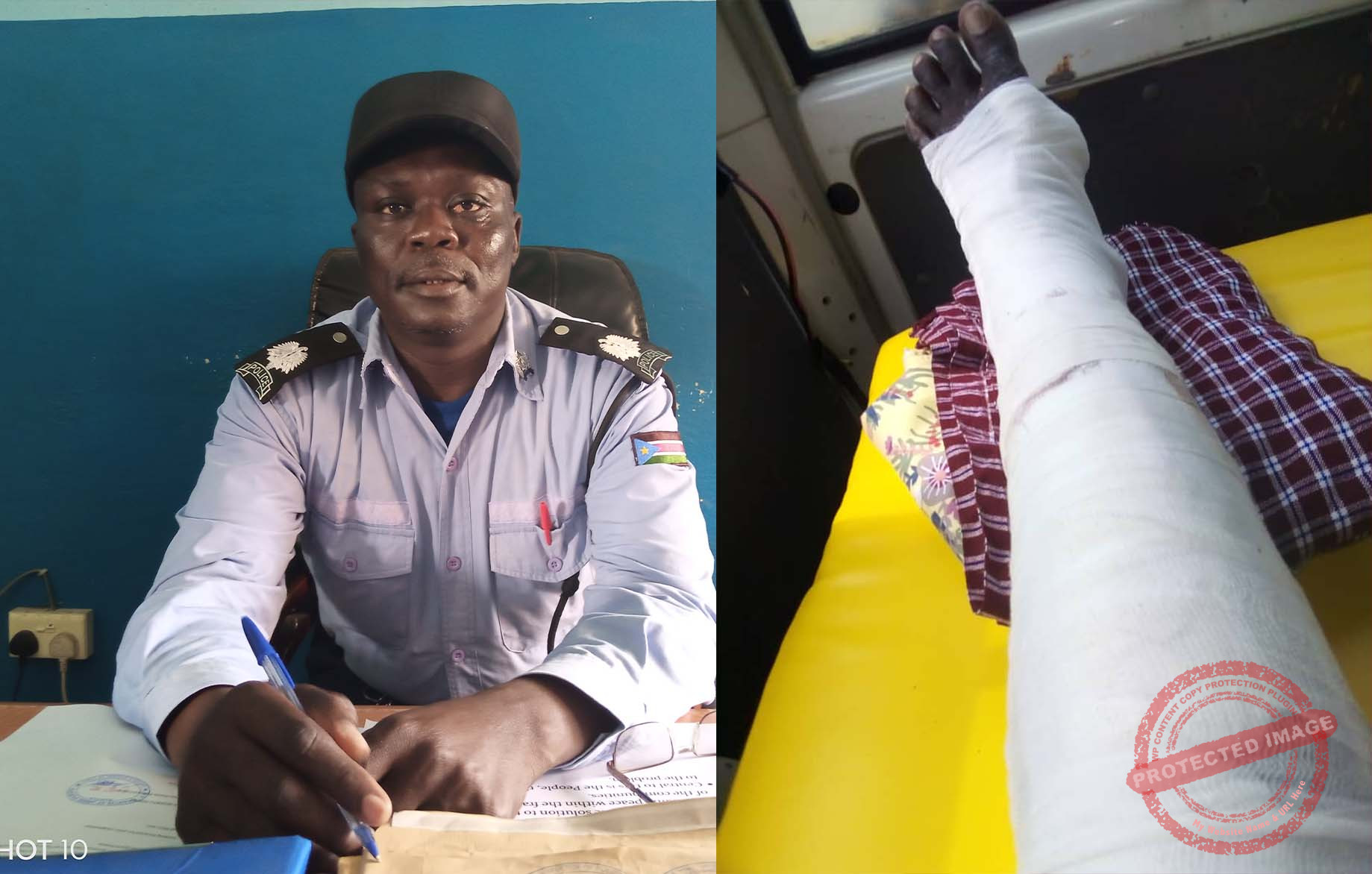
The Inspector of Police in Nimule town has said he is nursing a gunshot wound after a stray bullet hit his left leg during a demonstration that followed the killing of a chief in the area Monday.

Major David Kasmiro told Eye Radio mourners had blockaded the Nimule-Juba High over the killing of Anzara Chief yesterday.

Ebele John was shot dead and two others wounded on Monday morning while they were attending a funeral meeting.

The funeral was of Moses Kanyiri and John who were killed in cold blood in Mugali Payam on Friday.

One other person was abducted and her whereabouts are unknown.

Angered by the Chief’s demise, the mourners took to the streets and placed the bodies of the three victims in the middle of the Juba-Nimule Highway.

“I went out from the office of the traffic because I was there in meetings with some chiefs on the other side. And when we reached the main road where the dead bodies of the three people” said Major David Kasmiro, the Inspector of Police in Nimule town.

The move disrupted movement of motorists for hours, prompting the police to shoot in the air to disperse the protestors.

However, a stray bullet, according the area Inspector of Police, hit his left leg breaking his ankle.

“There was a lot of random shooting towards us from the different organized forces.

“Therefore, I was shot in my left leg and it was broken, and my health is good, now I am trying to be referred for good treatment.”

David Kasmiro, however, says he is now in a stable condition.

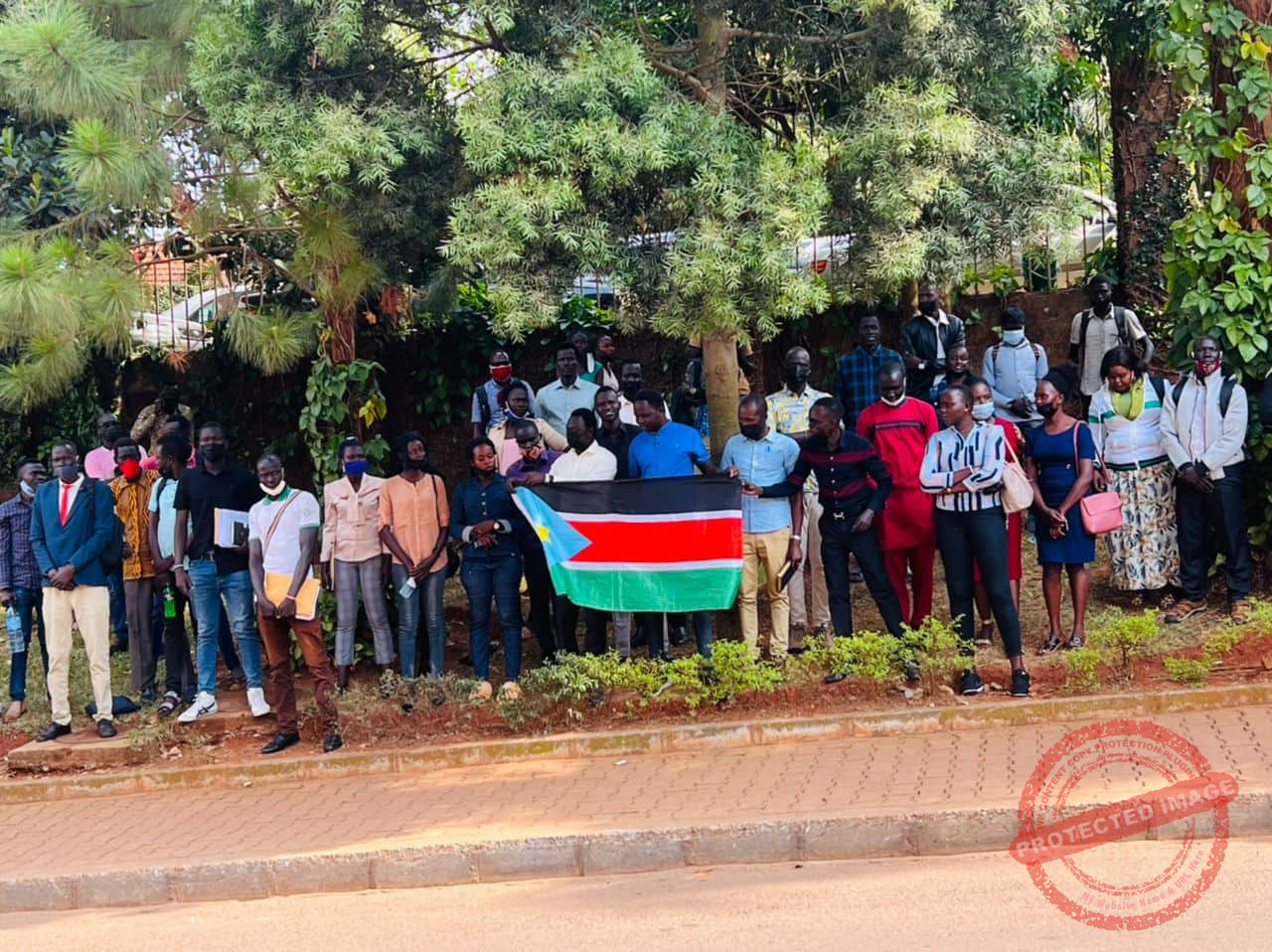
Court hearing of S. Sudanese denied graduation in Kampala kicks-off

A Ugandan High Court has started hearing on the case of South Sudanese students who were denied graduation at the Kampala University main campus last month, according to a team leader.

About 300 South Sudanese students missed their graduation after Badru Dungu Kateregga, the Kampala-based Vice Chancellor abruptly notified them he had closed the Juba branch.

But the protesting students said they had paid their tuition for years at the controversial Kampala University of South Sudan.

The tuition was allegedly channeled via the University’s account at the Number One Charter Bank in Uganda.

On the eve of the graduation, the students petitioned the Ugandan High Court to put on hold the graduation until the matter is resolved – which failed.

However, the court presided over by Judge Wamala Boniface Monday held a first hearing over the case.

One of the affected students, Oyiki Sirino Castino, who had presented the students’ petition to the court confirmed to Eye Radio Monday evening.

According to Sirino, the Vice Chancellor’s unnamed lawyer tried to obstruct the court alleging that he was not authorized to represent the students, but the Judge refuted his claims.

Sirino said some Ugandan lawyers have offered to represent the students in the court.

“Our lawyer asked whether one can represent the students including those 900 who are absent. The judge responded and said one person can represent thousands of students.

“Our lawyer says he will be ready in four days to file the rest of the cases and the judge said he will give the two parties up to 15th of next month to submit their arguments to his office.’

The next hearing is scheduled to take place on the 17th of August

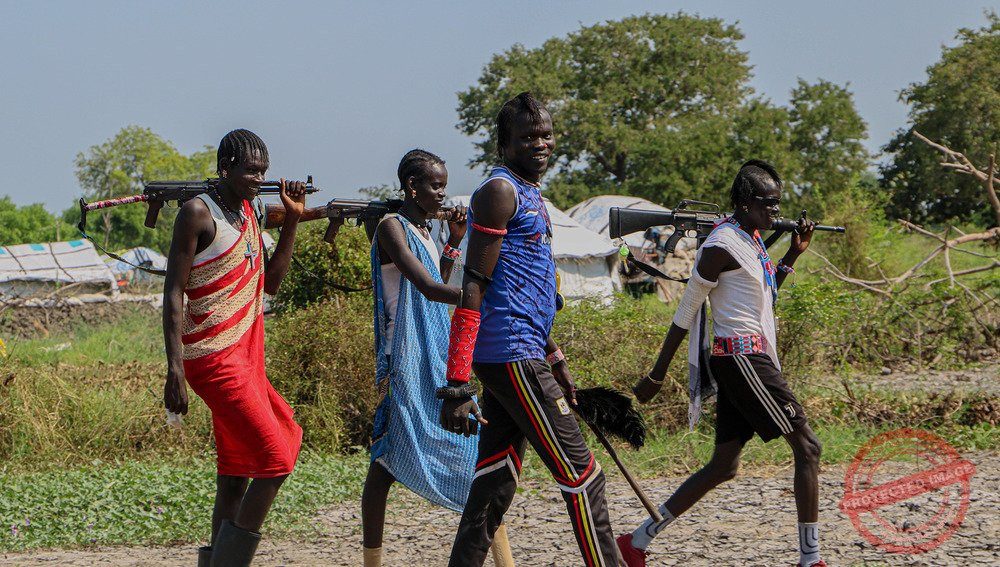
Cattle raid death toll in Kapoeta North rises to 235

The death toll of cattle-related violence in Kapoeta North County, Eastern Equatoria State has risen to 235, with Pibor area deputy chief blaming his youth for participating in the attack.

Last week, more than 70 people were reportedly killed following a cattle raid which the county authorities said was carried out by a coalition of youth from Budi, Lafon and Greater Pibor areas.

When contacted on Monday, Kapoeta North County Commissioner, Emmanuel Epone Lolimo said a total of 235 have been confirmed dead, a figure Eye Radio could not independently verify.

“We are not celebrating the death, but we also blame them for coming to raid us. It has been sixteen years since we had conflict.”

“ So, during this incident, the death toll rose up to two hundred and thirty-five which is not good. We are not celebrating this big number. But we blame them for coming to attack us.”

Meanwhile, John Abula, Deputy Chief Administrator of Greater Pibor Administrative Area confirmed some youth from his area were involved and similarly blamed them for crossing into Eastern Equatoria State to raid.

“Cattle raiding always involves loss of lives, so we are not worried about that incident because they took their lives to that extent.”

Abula said Eastern Equatoria state governor, Louis Lobong informed him about the incident adding, the losses are not a surprise.

“So, we learned that there were some casualties and loss of lives also there but it is not new because they were the ones who decided to go there.”

He asserts that they have organized a conference to change the mindset of the youth in the area to desist from cattle raiding and child abduction.

Support Eye Radio, the first independent radio broadcaster of news, information & entertainment in South Sudan.

Make a monthly or a one off contribution.