28th June 2026

Yei authorities confiscate expired foreign maize flour

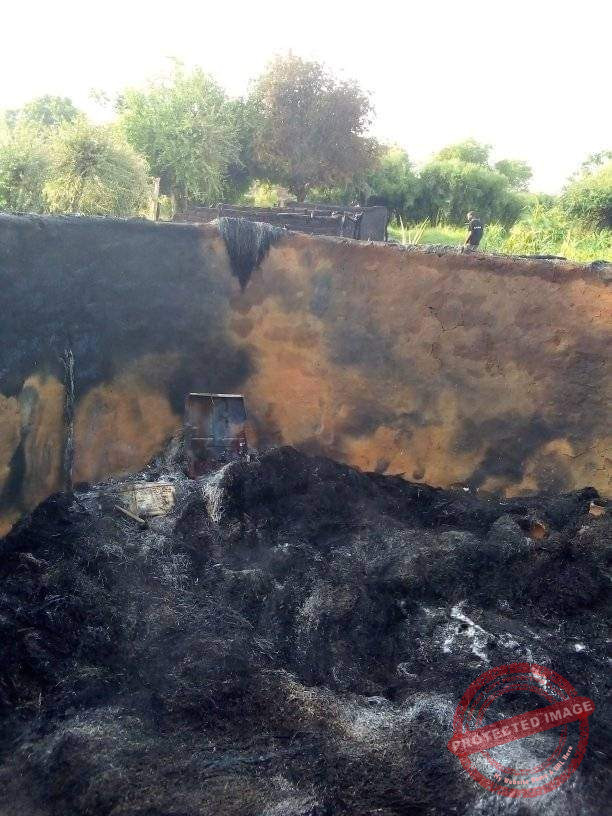
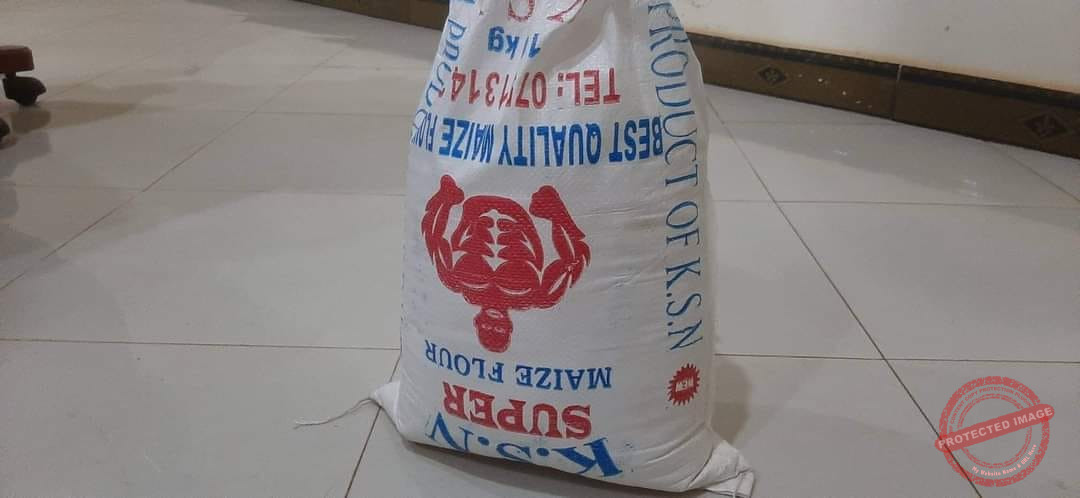
Yei County authorities have confiscated large quantities of maize flour believed to be either contaminated or expired from shopkeepers in the market.

Justin Luwate, Yei Chairperson of the Chamber of Commerce said the move came after some buyers complained they
discovered ‘spongy like objects’ and stinking smells in the food product.

“We got a lot of reports that the maize flour in the market was not good; that it is expired and smelly and these complaints continued to come from various people.”

Mr. Luwate said the concerns prompted the area Commissioner to issue an order directing the county health officials to conduct a search and confiscate the food product.

“So that it triggered public health officials to conduct a search in the market and indeed they got additional information that there was spongy material in the maize flour.”

Mr. Luwate said no adverse effects were recorded from the consumption of the allegedly expired flour.

in November last year, South Sudan National Bureau of Standards warned that the country was feeding on substandard food due to inability to examine imported goods.

South Sudan rely entirely on Kenya and Uganda for all of its imports.

Tomatoes, onions, maize flour, rice, cooking oil, dairy products and beans are some of the food items still being imported from neighboring countries.

Mary Gordon Muortat who is the Chief Executive Officer of South Sudan National Bureau of Standard said this has been happening because her institutions lack the resources to protect South Sudan from harmful products.

While making the remarks, Mrs. Muortat also disclosed that over 500 bags of inferior sorghum were earlier impounded which were meant for the South Sudan Peoples Defense Forces or the SSPDF.

The Minister of Defense and Veterans Affairs had confirmed the importation of the food adding that, directives were given for the sorghum to be destroyed.

Angelina Teny however did not name the company that bought the 500 bags of sorghum for the army.
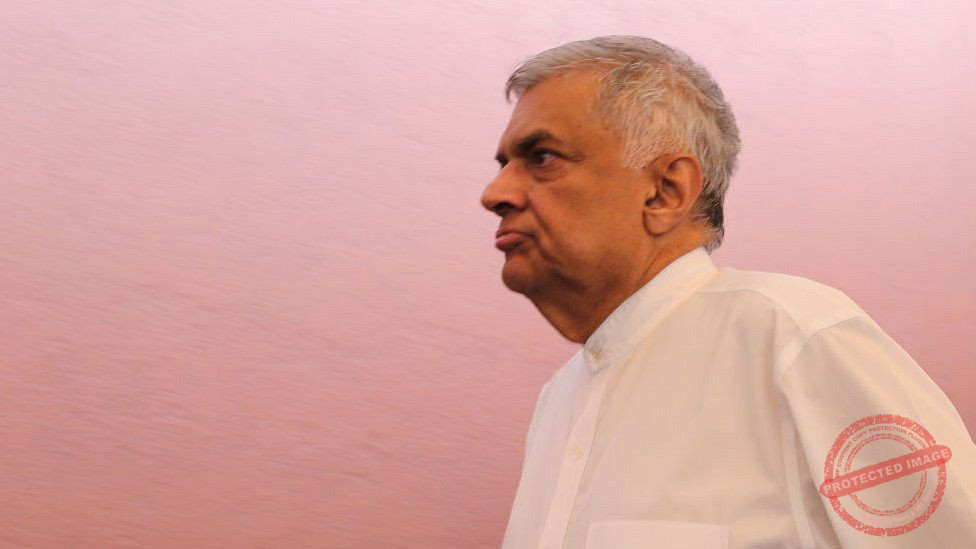
Sri Lanka: Ranil Wickeremesinghe elected president

Sri Lankan MPs have elected prime minister Ranil Wickeremesinghe as the country’s new president, despite his unpopularity with the public.

Mr Wickremesinghe faces the task of leading the country out of its economic collapse and restoring public order after months of mass protests.

He roundly defeated party rival Dullus Alahapperuma, with 134 votes to 82 in the parliamentary vote on Wednesday.

Sri Lanka’s ex-president Gotabaya Rajapaksa fled the country last week.

He bolted to the Maldives and then Singapore after thousands of protesters stormed his presidential residences and other government buildings, calling for his resignation.

They had also called for Mr Wickremesinghe’s resignation, who was appointed prime minister in May. Protesters burnt down his private home and also stormed his prime ministerial office in Colombo in demonstrations against his leadership.

Protesters have consistently been calling for the former prime minister, now president to step down.

However Mr Wickremesinghe has defied those calls. He automatically assumed the position of acting president after Mr Rajapaksa fled, and his victory on Wednesday means he will carry out the rest of the presidential term until November 2024.

Sri Lanka is effectively bankrupt and facing acute shortages of food, fuel and other basic supplies.

Mr Wickremesinghe will strive to restore political stability to Sri Lanka so it can resume stalled negotiations with the International Monetary Fund (IMF) for a bailout package.

Mr Wickremesinghe – an ally of the Rajapaksas – had been nominated by their ruling party the SLPP and was seen as the frontunner in the race.

He faced a serious challenge from Mr Alahapperuma, a dissident MP in the SLPP and former education minister who gained the backing of the main opposition.

Official unhappy with soldiers brutal attack on Ikotos civilians

Eastern Equatoria Local Government and Law Enforcement Minister has blamed soldiers for using excessive force against civilians over the killing of one of their colleagues in Ikotos County recently.

More than a week ago , one SSPDF soldier was reportedly killed by youth in Ikwoto Central Payam while they were having a drink.

The incident prompted the armed forces to rush to the scene resulting in subsequent clash with the local youth leaving unknown number of casualties.

“They could not find out that may be there is a problem, or they quarreled, or they do what, they just go the way they can do things. We condemn it seriously because they are the protectors of the people” said Peter Lokeng Lotone, the state Minister of Local Government and Law Enforcement.

The incident created panic causing displacement of the locals to the nearby areas.

“It is not really right for the soldiers to fight with the civilian population.

“But you know always the military have an ethic side of it, and if something happened to one of their colleagues, they do not investigate, but fight”

However, Lotone said the situation has normalized and people have started returning to their homes, but he condemned the violent approach of the armed forces towards the civil population.

“The police are the ones who can run or go to investigate, not the soldiers.”

About a week ago, at least two people have been killed and another wounded following an ambush on motorbike riders along Ikwoto-Tseretenya road.

Worries as two activists kidnapped in Mundri East hard to trace

Mundri East commissioner says the county is yet to trace two staff of a national non-governmental organization who were abducted early this month in the area.

The two individuals were kidnapped while training chiefs and youths on peace and governance in Minga Payam.

The commissioner could not mention the names of the abductees.

However, in a press release by the Community Empowerment for Progress Organization, the abductees have been identified as Emmanuel Ginaba and Yasir Mamur.

They work for Active Youth Agency, a national non-governmental organization in the county.

The count official, Margaret Fozia said they are aware of the incident, but no one has claimed responsibility.

“I am aware, but I don’t know who abducted them. Somebody who is in the bush, I wouldn’t know. If they were abducted by the SSPD or IO I would be able to respond because these are the people I know and they are around.”

However, Fozia went on to say, “The county is doing everything possible to find their ware-bouts and bring them home.”

In a separate statement, the Community Empowerment for Progress Organization, CEPO, condemned the act and demanded immediate release of the staff.

In its statement seen by Eye Radio, CEPO, called on the abductors to let go off the staff without any pre-conditions and ensure that they are free from any form of harm.

It also added that abducting humanitarian workers for whatever objective is unacceptable, and a crime that should stop.

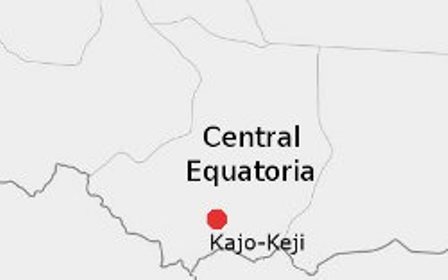
Mother of slain Kajo-keji teens dies after taking toxicant

The mother of two siblings who were allegedly killed by SSPDF soldiers in Kiri Boma of Kajo-Keji County nearly two months ago has died after taking a toxicant.

48-year-old Susan Basa Wani reportedly consumed Ant Trax, a pesticide used for killing ant-hill ants on Sunday evening.

“I called my mum but she was not picking my calls. So, I decided to call a neighbor to go and check on my mother. After a while, the neighbor called me back and told me that she found my mother laying on the ground”, Jessica Kabang, a daughter to the late narrated to Eye Radio.

“”So, I rushed and found that the neighbors have already put her on the bed lying unconsciously. When we went to her room, we got a bottle of Ant-Trax on the ground,” Kabang said.

The woman was then rushed to a nearby health center at Kworojik where she died the following morning while receiving first aid.

In May, Susan sons Yamba Lominsuk, 18, Justin Lisok Lominsuk, 16, and Yiga Wani, 8 were killed by soldiers.

This was after the deceased cousins volunteered to show some soldiers the body of their colleague who was murdered in the Kiri Boma.

Recently, Central Equatoria State received the findings of an investigation into the incident by the state parliament , but the document has not been made public.

Governor Adil, Yei River Catholic Bishop Lodiong quest for peace

The Central Equatoria governor has called on the Bishop of the Catholic Archdiocese of Yei to engage the holdout groups to denounce violence in the area.

Governor Emmanuel Adil and Bishop Alex Lodiong met in the national capital, Juba at the weekend.

The two leaders discussed means to restore peace and stability in the area as well as improve service delivery to the civilian population.

According to the governor’s press secretary, Derick Derickson,”Emmanuel Adil emphasized on the need for the church leaders particularly the Bishop of the Catholic Archdiocese of Yei to use his influence to call on the hold out group to denounce violence and join the wagon of peace.”

For his part, Bishop Alex Lodiong said, insecurity remains the biggest challenge in the Yei River and the situation requires a lot of peace and development efforts.

The latter is what the bishop believes will attract those who took refuge to neighboring Uganda and DR Congo to return home and rebuild their lives.

“So many people are not there, 75 percent of the people are not there, they are in Uganda, others are in DR. Congo and others displaced within the bushes”,

The religious leader went on to say ” insecurity is still strong and many of our people still feel insecure whether in the towns or in the bushes.”

However, the clergy said one of his missions in the near future is to visit the grassroots as well as the disgruntled armed group.

Talks between the government and the National Salvation Front stalled since June last year after President Kiir suspended the Rome peace process.

This followed the killing of two catholic nuns along the Juba-Nimule highway- an incident the government and NAS traded counter accusations

Naam river hand clearing poses Bentiu locals risks of snake bites

An official has expressed worries over the safety of hundreds of Bentiu residents who unilaterally started clearing weeds on the Naam River.

On Thursday, the civilians got into the river with machetes, sickles, hoes and shovels to remove the quagmire of swamps, believed to have obstructed the water flow into the Nile River.

A video footages and photos seen by Eye Radio showed a crowd of civilians inside and along the bank of the river, manually cutting water hyacinths with their hand tools.

He warned the defiant locals against aquatic animals including snakes.

“Hundreds have humped into the river in order to remove those weeds and I think that is a safety concern because we have snakes, we have other aquatic animals and we don’t want to lose lives when people would like to serve lives,” said Joseph Africano, the Undersecretary at the national Ministry of Environment.

The move came a few days after President Salva Kiir suspended dredging related activities on the Naam and Bahr el Ghazal basin, pending environmental impact assessment.

However, in the national capital Juba, environmental experts and academia continue to voice fears of possible danger of the project.

They called on the government to first carry out an environmental and social impact assessment before dredging the Nile tributaries.

Mundri West Commissioner bans home-made ‘marijuana’ wines

Western Equatoria’s Mundri West County Commissioner has banned the production and consumption of suspected home-made local wine being infused with illicit narcotics.

Zelipha Dawa Justin alleges that the local brewers are adding marijuana into liquors.

According to Dawa, consumers are exhibiting erroneous behavior after taking the additives.

“While they do this, you notice the presence of criminals in these bars and then they go to commit criminal activities.

“When they drink these wines, their lives turn crazy”, she added.

She said she observed increase in crimes such as rape, theft and murder, purporting the excessive use of narcotics in liquor as the main drivers.

Ms. Dawa said she summoned the brewers and warned them against punitive measures should they defy the order.

“I summoned them today to raise awareness of the law that governed them because adding any narcotic substance harms human health.”

“…and anyone who does not abide by the order will expose himself to imprisonment for three months and 250,000 SSP as a fine.”

Commissioner Dawa said samples of the drinks have been taken for laboratory examination to establish the substance being used in the drinks.

But she believed this could be bhang.

In March this year, Western Equatoria State Governor, Alfred Futuyo Karaba banned the consumption of dry gins such as Star Gin, Royal Gin, London No.1 including Tramol and Marungi in the State.

He put up to one million pounds as a fine for violators.

Support Eye Radio, the first independent radio broadcaster of news, information & entertainment in South Sudan.

Make a monthly or a one off contribution.