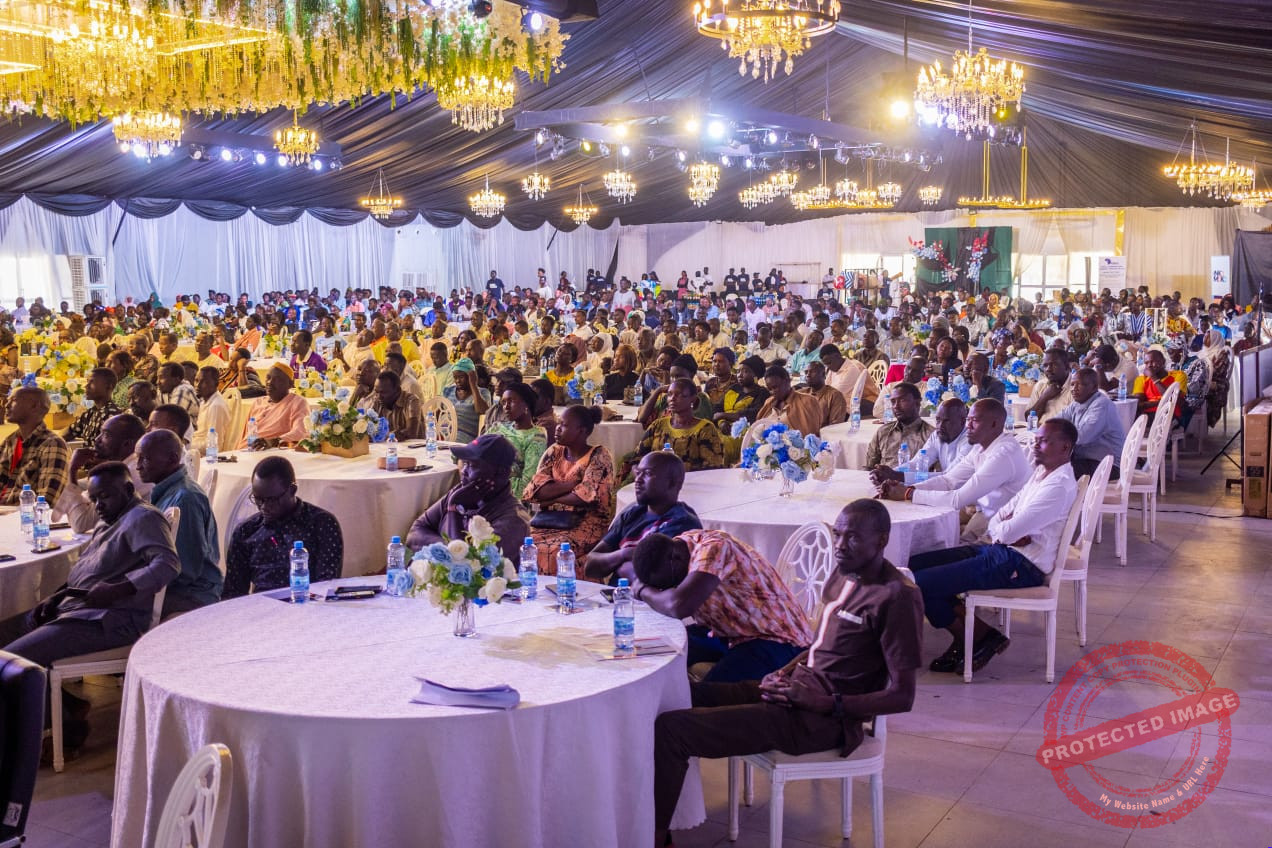
JUBA — Inkomoko South Sudan has awarded certificates to 1,225 entrepreneurs who completed a six-month business training programme aimed at strengthening women- and youth-led enterprises across the country.
The graduates form the organisation’s third cohort under the Empowerment of Women and Youth Entrepreneurs in South Sudan project, supported by the Mastercard Foundation and the Swiss Government.
The training equipped participants with practical skills in business management, investment readiness, record keeping, marketing and sales.
Speaking during the graduation ceremony, William Ngabonziza, Managing Director of Inkomoko South Sudan, said the event was an opportunity to recognise entrepreneurs for their contribution to the country’s economy.
“Entrepreneurs are the ones who build cities, develop countries, and shape the world we live in,” Ngabonziza said.
He said the businesses established and expanded by the graduates were contributing to economic development and creating opportunities for others.
The graduation also coincided with World Entrepreneurs’ Day, celebrated on August 21 under the theme “From Idea to Empire.”
Ngabonziza encouraged the graduates to build on the skills acquired during the six-month programme and continue developing businesses that contribute to the wider economy.
Meanwhile, the Secretary General of the South Sudan National Chamber of Commerce, Industry and Agriculture (SSCCIA), Kur Nyok Deng, pledged to work with relevant authorities to support the new graduates through a proposed one-year tax exemption.
“What I will do here in my capacity as the Secretary General of the South Sudan National Chamber of Commerce, I am committed to supporting you, the graduates, by ensuring you’re exempted from taxes for a period of at least one year,” Nyok said.
He added that he would seek to prevent city council officials from collecting taxes from the beneficiaries during the proposed exemption period.
“My goal is to foster the growth of your businesses, as excessive taxation can hinder progress and discourage entrepreneurs from moving forward,” he said.
For some graduates, the programme has already translated into tangible changes in their businesses and personal finances.
Grace Akur Garang, one of the beneficiaries, said the training helped her develop better financial management habits and achieve greater financial independence.
“Inkomoko taught us how to save money, and my family can vouch for this,” Akur said, adding that her children had noticed the change in how she managed money.
She said the skills and profits generated through her business had also enabled her to diversify into the gold trade in the Greater Pibor area.
“The initiative has helped me achieve financial independence and enabled me to venture into the gold business in the Greater Pibor area,” she said.
Akur said she had recently travelled to Booma in search of gold to purchase using the capital and business knowledge gained through the programme.
She further encouraged other women to take advantage of similar opportunities, saying the initiative had given beneficiaries the confidence and skills to train and support other women in their communities.
The organisers say the programme is intended not only to provide business knowledge but also to strengthen the capacity of women and young people to build sustainable enterprises and contribute to South Sudan’s economic growth.
The graduation of the 1,225 entrepreneurs comes as the country joins the global celebration of entrepreneurs, highlighting the role of small businesses and innovators in creating jobs, strengthening communities and driving economic development. Continue reading “Inkomoko Awards Certificates to 1,225 Entrepreneurs in South Sudan”