13th June 2026

Lightning strike kills two children, injures another in Yambio

Two children have died and another in a critical condition after they were struck by lightning in Western Equatoria’s Yambio town.

The deceased kids, a girl and a boy – and the injured one aged between three and four years old were watching videos on a telephone when they were hit.

The deceased have been identified as Gaaniko Gordon,4,and Nayee,3.        

According to the Mayor of Yambio Municipality, the incident occurred on Sunday at around 3pm at Kuzee residential area in Yambio.  

“The two died on spot and another one is in critical condition and is under medication. That is what happened on Sunday here in Yambio Municipality,” Singira John said

Yambio reportedly experienced heavy downpour on Sunday accompanied by strong storms.

“We were really very sad about what happened yesterday,” he said.

In September 2020, a mother of four was also killed after she was struck by lightning in Yambio.

According to National Geographic, lightning kills or can cause cardiac arrest, including injuries ranging from severe burns and permanent brain damage to memory loss and personality change.

Law-maker suggests creation of special court to try cattle raiders

A lawmaker representing Yei River at the reconstituted national assembly has recommended the establishment of special courts to try cattle raiders in the country.

Cattle raiding is the act of stealing animals, particularly cows.

Cattle raiding is a common practice among pastoralist communities in South Sudan.

Just last week, over 200 heads of cattle were reportedly raided in Lun village, Mugo Payam of Yei River County by suspected raiders.

Speaking to Eye Radio this morning, Honorable Paul Yoane Bonju said special courts should be established to address rampant cattle theft and cattle-related atrocities.

“In my humble opinion, to address the issue of cattle raid holistically, to me there are two things. One, we need to have a special court to deal with such issue of cattle raiding, cattle theft in the country.

“The second thing is to hold the leaders of these communities which are causing problems in many parts of our country, their leaders should be hold responsible and there should face the law.”

Recently, the Secretary General of Pastoralist Union in South Sudan told Eye Radio that there is no government policy to guide pastoralists in the country.

The concern was raised after the country recorded several incidents of conflicts brought about by the presence of cattle in farming communities.

“As a leader, they are supposed to abide and to respect even what you say. But what you say as a leader is not respected, then something somewhere is wrong,” he added.

Unlike in Centeral Equatoria, in Upper Nile, herders and farmers have devised mechanisms to deal with pastoralists-farmers conflict.

Chief, Ahemad Omer Yonis, a nomadic herder in Upper Nile state said “When we reach the area, we send explorers to determine the places of cultivation and the roads that we can take after making sure that there is no farm in the area in which we will settle after that, we will camp there.”

This, Yonis said, helps minimize creating bad blood between herders and farmers.

“The relationship between farmers in the area is good but if the livestock spoil the crops, we always try to sit down and compromise and compensate the farm owner.

Yonis said the herders in the Renk area pay the area administrative officer what he called as traffic fees to allow the passage of their cattle.

President Kiir eulogizes late Mwai Kibaki, declares three days of national mourning

President Salva Kiir has described the former President of Kenya as a courageous statesman who took principled stance in his pursuit of dignified and practical politics throughout his political career.

President Mwai Kibaki who ruled Kenya for 10 years died on Friday.

In his message of condolence issued yesterday, President Kiir eulogized Kibaki as a man who deployed a practical approach to politics in order to keep the torch of accountability burning in Kenyan institutions.

Under Kibaki, Kenya adopted a more decentralized political system and limited presidential powers through the 2010 constitution.

President Kiir also admired Kibaki’s economic policies that he said set Kenya on the path of sustainable development.

Kenya recorded one of its highest rates of GDP growth during Kibaki’s first term.

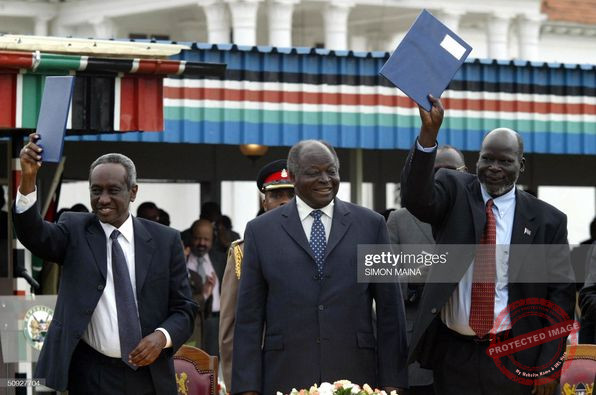
In the region, Kiir said President Kibaki earned the respect of his peers because of his work on regional stability, including overseeing the conclusion of the historic Comprehensive Peace Agreement between the Sudan government and the SPLM.

The CPA, mediated by Kenya, ended Africa’s longest civil war in 2005.

In honor of Kibaki, President Kiir declared three days of mourning and ordered the South Sudan flag to be flown at half-mast across the country.

Kiir further urged everyone to remain inspired by Kibaki’s approach to politics and dedication to public service, the attributes he believes earned Kibaki respect both in Kenya and internationally.

Kibaki had previously served as the fourth Vice-President of Kenya for ten years from 1978 to 1988 under President Daniel Arap Moi.

In 2002, his coalition ended 40 years of one-party rule since Kenya’s independence.

Kibaki served as the third President of Kenya from December 2002 until April 2013.

Apart from his economic record, analysts say one of his biggest achievements was to introduce free primary education to Kenya.

Kibaki died in Nairobi at 90 years old.

Enacting IDPs bill shouldn’t delay, UN Rapporteur tells govt

A former UN Special Rapporteur on Internally Displaced Persons is urging the unity government to table before the national parliament the drafted bill on the IDPs.

Between 2018 and 2019, Prof. Chaloka Beyani supported the government to draft a bill on Internal Displaced Persons in South Sudan.

The bill states the government approach on the protection of displaced persons across the country.

It also provides for a society approach to durable solution and provision of a framework on protection and assistance for IDPs within South Sudan.

Days ago, the UN Refugee Agency – UNHCR engaged the lawmakers on the advantages of domestication of the Kampala convention.

The African Union Convention for the Protection and Assistance of Internally Displaced Persons in Africa known as as the Kampala Convention calls on the member states to refrain from, prohibit and prevent arbitrary displacement of populations.

It also discourages political, social, cultural and economic exclusion and marginalization that are likely to cause displacement of populations or persons by virtue of their social identity, religion or political opinion.

In recent days, lawmakers discussed issues related to the Convention on Statelessness and the South Sudan Durable Solutions Strategy for Displacement.

During the deliberation, the visiting former UN Special Rapporteur on IDPs and Member of UN High level Mission to Libya praised efforts by South Sudan authorities in restoring peace in the country.

“Tremendous efforts have been made to build peace, consolidate peace within South Sudan through the revitalized peace agreement, the reconstitution of the government, the transitional parliament itself,” Prof. Chaloka Beyani said.

However, the expert urged the unity government to pass the IDPs bill to ensure full protection of the displaced persons.

“The bill is indeed their tool that helps them to restore their rights, to restore their livelihoods as South Sudanese citizens and to be able to resume those livelihoods again.”

Meanwhile, the UNHCR Assistant Representative on IDPs Protection in South Sudan said having such laws will help the government to have a clear responsibility and coordination mechanisms on issues related to IDPs.

“We say if you have a law, the rights of IDPs become clear for government officials. You will see a clear coordination mechanism so that there won’t be confusion among different ministries and between central government and county level or state level,” Allehone Abebe said.

“So as we struggle to respond to ongoing emergencies in South Sudan or any other places, it is very important to have these legislations because they really provide long term solutions, early warning systems,” he added.

For his part, the Chairperson for Legislation and Justice Committee at the reconstituted TNLA, Hon. James Mabor assured the refuge agency of their commitment to enact the law.

“When their bills come to us in the assembly, for sure we will work to see that they are passed and also budgeted for in the implementation.”

According to UNHCR, South Sudan hosts some 330,000 refugees and asylum-seekers mainly from Sudan.

The Country also has 2 million internally displaced persons due to conflict, insecurity and the impact of climate change.

The agency adds that over 500,000 South Sudanese refugees have returned to the country since the signing of the Revitalized Peace Agreement in 2018.


Support Eye Radio, the first independent radio broadcaster of news, information & entertainment in South Sudan.

Make a monthly or a one off contribution.