10th May 2026

SSPDF airstrike hits MSF hospital in Lankien of Jonglei state

A hospital operated by Médecins Sans Frontières (MSF) in Lankien, Jonglei state, was struck by an airstrike carried out by South Sudan government forces late Tuesday night, the medical charity said on Wednesday.

One MSF staff member sustained minor injuries in the attack, which destroyed the hospital’s main warehouse and most of its medical supplies, according to the organisation.

The facility had been evacuated several hours earlier after MSF received warnings of a possible attack on the town.

In a separate incident earlier the same day, MSF said its healthcare centre in Pieri, also in Jonglei state, was looted by unidentified assailants, rendering it unusable.

Staff from both Lankien and Pieri fled alongside local residents, and MSF said it was still attempting to determine their whereabouts.

MSF said it had previously shared the GPS coordinates of all its facilities with the government and other parties to the conflict and had received confirmation that their locations were known.

“The government of South Sudan armed forces are the only armed party with the capacity to perform aerial attacks in the country,” said Gul Badshah, MSF operations manager. He added that the looting of the Pieri health centre had occurred just hours before the bombardment of the Lankien hospital.

MSF was the sole provider of healthcare services for an estimated 250,000 people in Lankien and Pieri. The attacks mean that communities in the area are now without access to medical care, the organisation said.

Badshah said MSF would reassess its operations to ensure staff safety. “While we are aware of the enormous needs in the country, we find it unacceptable to be a target for attacks,” he said, noting that MSF has worked in South Sudan for more than four decades.

The airstrike follows recent restrictions imposed by the government on humanitarian access in opposition-held areas of Jonglei state, which MSF said have been in place since December.

The organisation warned that the restrictions have limited the delivery of essential medical assistance, particularly affecting children, pregnant women and people with chronic or life-threatening conditions.

MSF reported eight targeted attacks on its operations in South Sudan in 2025, which led to the closure of two hospitals in the Greater Upper Nile region and the suspension of general healthcare activities in Jonglei, Upper Nile and Central Equatoria states.

MSF has operated in South Sudan since 1983 and remains one of the country’s largest medical humanitarian organisations. In 2025, it provided more than 830,000 outpatient consultations, treated over 93,000 inpatients and performed about 12,000 surgeries, the organisation said.

The government or army has yet to comment.

Continue reading “SSPDF airstrike hits MSF hospital in Lankien of Jonglei state”
WFP suspends activities in Baliet county after convoy attacks

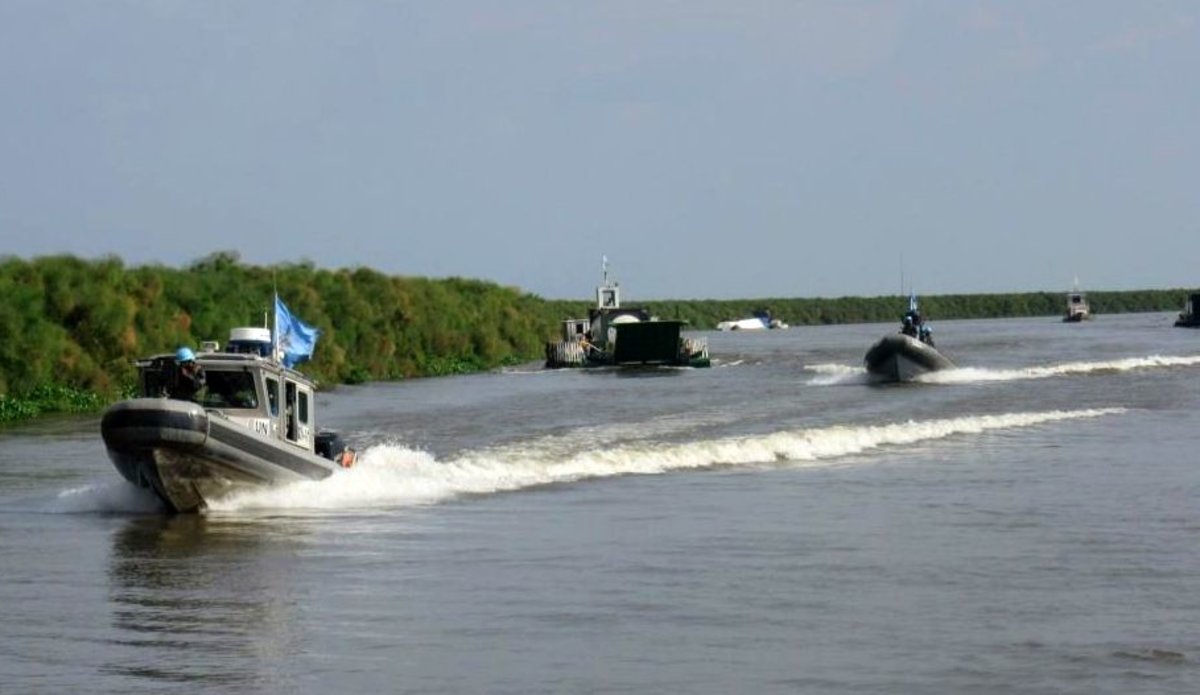
The World Food Program (WFP) has announced the suspension of its activities in Baliet County, Upper Nile State, following attacks on its river convoy over the weekend.

In a press statement shared with Eye Radio newsroom, WFP said that between 30 January and 1 February, a 12-boat convoy transporting over 1,500 metric tons of vital food assistance was attacked multiple times by armed youth.

The cargo, which included non-food items being transported on behalf of partners, was looted at various locations within Baliet County.

“As a result, WFP has suspended all activities in Baliet County until the safety and security of its staff, partners, and contractors is assured and the Government of South Sudan has taken immediate measures to recover the stolen commodities,” the statement read.

The agency emphasized: “We strongly urge all parties involved in the conflict to respect the critical role of humanitarian workers and to safeguard the facilities and resources that are indispensable for providing humanitarian assistance.”

WFP further warned that access constraints and attacks on humanitarian convoys threaten its ability to reach more than 4.2 million of the most vulnerable women, men, and children.

In recent weeks, the international medical humanitarian organization, Médecins Sans Frontières (MSF) also ceased activities in parts of South Sudan due to ongoing insecurity and threats to its staff and operations.

MSF has previously suspended operations in counties such as Yei River and Morobo in Central Equatoria State, halting medical services after security incidents, including the abduction of staff members and other attacks. Continue reading “WFP suspends activities in Baliet county after convoy attacks”

Saif al-Islam Gaddafi, son of ex-Libyan leader, reportedly shot dead

Saif al-Islam Gaddafi, son of Libya’s former leader Col Muammar Gaddafi, has reportedly been shot dead, the BBC has learnt.

The death of the 53-year-old, who was once widely seen as his father’s heir apparent, was confirmed by the head of his political team on Tuesday, according to the Libyan News Agency.

His lawyer told the AFP news agency a “four-man commando” unit carried out an assassination at his home in the city of Zintan, though it was not clear who may have been behind the attack.

In a competing version of events, his sister told Libyan TV that he had died near the country’s border with Algeria.

Born in 1972, he played a key role in Libya’s rapprochement with the West from 2000 until the collapse of the Gaddafi regime.

After his father’s removal, Saif al-Islam Gaddafi – who was accused of playing a key role in the brutal repression of anti-government protests – was jailed by a rival militia in the city of Zintan for almost six years.

The International Criminal Court wanted to put him on trial for crimes against humanity for his alleged role in the suppression of opposition protests in 2011.

In 2015, he was given a death sentence in absentia for his role in the crackdown by a court in Tripoliin the west of the country, where control is in the hands of the UN-backed government.

But he was released by militia in Tobruk, in the east, under an amnesty law two years later.

Since the overthrow of Gaddafi, Libya has been split into areas controlled by various militias and is currently divided between two rival governments.

During his father’s time as leader, he shaped policy and led high-profile negotiations despite having no official role in government, including those which led his father to abandon his nuclear weapons programme.

Such agreements saw international sanctions on the north African country lifted, and some considered Gaddafi a reformist and acceptable face of a changing Libya.

Gaddafi had always denied that he wanted to inherit power from his father, saying the reins of power were “not a farm to inherit”.

However, in 2021 he announced he would run for the presidency in elections which were then postponed indefinitely.

Sharif waives fees for Wau traders reeling from 2025 attacks

The Governor of Western Bahr el Ghazal State, Sharif Daniel Sharif, has exempted over 30 traders from government charges for the year 2026, following severe losses they suffered during the January 17, 2025 attacks in Wau.

That’s according, the Chairperson of the State Chamber of Commerce, Wol Charles Aleu,

A total of 34 traders, mainly operating in Hajar and Abdullatif Markets, lost all their goods during the incident, which targeted Sudanese communities and destroyed property.

According to Charles, the exemption covers local taxes, trade licenses, and business registration certificates, and is aimed at helping traders rebuild their businesses.

“Some of these traders had taken goods on credit from other traders and were expected to pay later, but due to the losses they suffered, they are unable to meet government charges. The exemption is meant to help them rebuild and sustain their businesses, he said.

Aleu praised Governor Sharif for the timely decision, noting that it demonstrates responsive leadership and will strengthen relations between the state government and traders across local markets.

The exemption comes as part of efforts to support economic recovery and ensure that affected traders can continue operating despite the devastating losses of last year. Continue reading “Sharif waives fees for Wau traders reeling from 2025 attacks”

States called to bridge gaps as World Bank support ends for 101 facilities

The Ministry of Health has urged state authorities to mobilize local resources, strengthen oversight, and guarantee the safety of health workers following the withdrawal of World Bank support from 101 health facilities across South Sudan.

The support was provided under the Health Sector Transformation Project (HSTP) 2024–2027, which seeks to transition the country’s health system from emergency response to a sustainable service delivery model.

Speaking during a press conference in Juba, Minister of Health Sarah Cleto Rial said the government must acknowledge current fiscal realities and take responsibility for sustaining health services.

“The government must confront current fiscal realities,” Minister Cleto said. “Global economic pressures, funding gaps, and a comprehensive project review require us to align our resources to ensure that the HSTP remains viable through June 2027.”

She confirmed that support will be withdrawn from 101 health facilities that were assessed as having low functionality, security challenges, or close proximity to other supported facilities.

“As part of this adjustment, support will be withdrawn from 101 health facilities,” she said. “Six hospitals will scale down selected non-core services to concentrate resources on life-saving care.”

Minister Cleto added that administrative expenditure and in-service training costs will be reduced so that limited funding is directed toward critical needs.

“Administrative expenditure and in-service training costs will be reduced so that limited funds are prioritized for medicines, frontline health workers, and direct patient care,” she said, stressing that the decisions were “not taken lightly.”

Dr. Harriet Akello Pasquale, Director General for International Health and Coordination, said the Ministry applied careful criteria to avoid disrupting essential services.

“We decided collectively to develop criteria on how to utilize the limited resources available without creating major disruption in health services,” Dr. Pasquale said.

She explained that some facilities were underutilized due to accessibility challenges.

“There are health facilities that are really underutilized because people cannot access them,” she said. “Continuing to pay incentives to health workers and deliver drugs to such facilities was not cost-effective.”

Meanwhile, Chairperson of the National Transitional Legislative Assembly’s Specialized Committee on Health and Population, Benjamin Malek, said the national health budget remains critically low.

“The health sector allocation stands at only 1.3 percent,” Malek said, emphasizing the need to increase domestic funding in light of global financial shocks.

In her closing remarks, Minister Cleto called on state governments to take an active role in supporting affected facilities.

“We call upon state authorities to mobilize local resources and partnerships to support facilities no longer covered under HSTP,” she said. “We also urge stronger oversight by county health departments and cooperation with security actors to guarantee the safety of health workers.”

Despite the withdrawal of donor support, the Ministry of Health emphasized that essential medicines, frontline health workers, and emergency services will continue as the government works to build a resilient and sustainable health system. Continue reading “States called to bridge gaps as World Bank support ends for 101 facilities”

S. Sudan delegation returns from AU talks, pushes for Abyei agenda inclusion

 A South Sudanese delegation led by Deputy Minister of Foreign Affairs Akuei Bona Malual has returned to Juba after meetings with the African Union (AU) to discuss the final status of Abyei.

The delegation, which departed Juba last week, included officials Deng Biong and Deng Arop Kuol. Upon arrival at Juba Airport, Deng Biong said the primary goal of the trip was to lobby for the inclusion of the Abyei issue in the agenda of the upcoming AU Summit.

“We aimed to ensure that the Abyei issue is recognized and discussed in the summit’s agenda,” Deng Biong said.

“We met with AU Chairperson Mahmud Ali Yousif, the Commissioner for Peace and Security, and senior AU directors. The outcome was successful, with promises to highlight Abyei starting from the Executive Council and across various agenda items.”

The delegation’s visit signals Juba’s continued diplomatic efforts to place Abyei’s status at the forefront of continental discussions.

Background:
Abyei is a disputed border region claimed by both South Sudan and Sudan and has remained one of the most sensitive unresolved issues since South Sudan gained independence in 2011. The area is rich in natural resources and is home to communities whose livelihoods depend on seasonal migration and access to land.

Despite several agreements brokered by regional and international bodies, the final status of Abyei has yet to be determined. The African Union has played a key mediation role in efforts to resolve the dispute, including proposals aimed at organizing a referendum and ensuring peace and stability in the area.

South Sudan’s engagement with the AU is part of ongoing diplomatic efforts to secure regional support for a lasting solution to the Abyei question.

Continue reading “S. Sudan delegation returns from AU talks, pushes for Abyei agenda inclusion”

Minister Dr. Bak tables long-overdue SSP 7 trillion national budget

The Minister of Finance and Planning, Dr. Bak Barnaba Baak, has tabled a long-overdue 7 trillion South Sudanese Pounds national budget for the Fiscal Year 2025/2026 before the Transitional National Legislature.

The draft budget was submitted alongside the Appropriation Bill, the Finance Bill, and proposed amendments to the Public Financial Management and Accountability Act, in line with constitutional requirements.

Presenting the budget, Dr. Bak said the 2025/2026 fiscal framework is designed “to foster economic recovery through macroeconomic stability, improve livelihoods and support the democratic transition.”

Acknowledging delays in submission, he told lawmakers: “This budget should have been presented in June 2025 as required by law, but due to circumstances beyond the control of the Ministry, it is being submitted beyond the expected timeline, which has negatively impacted government expenditure and service delivery.”

Dr. Bak said the budget was prepared amid significant economic challenges, including fiscal stress, inflationary pressure, oil production disruptions, and external shocks.

“The budget has been prepared in an environment characterised by fiscal stress, inflationary pressure and structural vulnerabilities,” he said.

According to the Minister, total projected revenue for the fiscal year stands at SSP 7 trillion, while total expenditure is estimated at SSP 8.58 trillion, resulting in a fiscal deficit of SSP 1.58 trillion, which the government plans to finance through domestic resources, grants, and concessional financing.

He said the government’s fiscal policy for 2025/2026 is deliberately anti-inflationary and focused on stabilisation rather than expansion.

“The fiscal year 2025–2026 budget is a discipline-driven stabilisation framework focused on restoring macroeconomic balance, honouring public obligations, strengthening institutions, supporting elections, and laying the foundation for sustainable growth,” Dr. Bak said.

Key allocations in the budget include wages and salaries, debt servicing, infrastructure development, capital projects, and priority sectors such as security, rule of law, education, agriculture, and election preparations.

Dr. Bak concluded by urging lawmakers to support the budget: “I hereby submit the draft national budget, the Appropriation Bill, and the Finance Bill for consideration and approval by this August House.” Continue reading “Minister Dr. Bak tables long-overdue SSP 7 trillion national budget”

Suspect in Rumbek East ambush, civilian killing arrested

The newly appointed Governor of Lakes State, Madhang Meen, has announced that a suspect has been arrested in connection with two recent violent incidents in Rumbek East County that left two people dead and four others injured.

According to Lakes State authorities, one person was killed and four others wounded on Sunday night when a South Sudan People’s Defence Forces (SSPDF) Tiger Division vehicle was ambushed by unidentified gunmen in the Pacong area.

The vehicle had been traveling from Juba to Cueibet when it came under attack.

Speaking to the media, Lakes State Acting Minister of Information and Communication, William Koji Kirjok, said the assailants opened fire on the vehicle, killing one person on the spot and injuring four soldiers. Some of the victims sustained additional injuries while jumping from the vehicle during the attack.

Koji further explained that the same suspect later targeted civilians in nearby homes, shooting and killing a woman through a window. The intended male target was reportedly not present at the time of the attack.

Addressing a consultative meeting in Juba on Sunday, Governor Madhang Meen identified the suspect as Mathiik Makur, who is now in state custody. Meen assured the public that the case would proceed swiftly under the law.

“I want to announce to the people of Lakes State that the culprit behind the killing of a woman and the ambush on the vehicle in Rumbek East has been identified as Mathiik Makur and has been apprehended by the state authorities,” Governor Meen said.

“I want to assure you that swift legal action will be taken. The suspect will not wait for me to reach the state; the authorities will deal with him,” he added.

Lakes State has experienced a series of violent incidents in recent weeks following the removal of former governor Rin Tueny, raising concerns about security in the region. Authorities have urged residents to remain vigilant and report suspicious activities to maintain law and order. Continue reading “Suspect in Rumbek East ambush, civilian killing arrested”

Western Bahr el Ghazal receives three tractors to boost agriculture

Western Bahr el Ghazal State has received three agricultural tractors from the National Ministry of Agriculture in Juba, a support initiative from President Salva Kiir aimed at boosting agricultural production and assisting farmers across the state.

Speaking at the handover ceremony held on Monday at the State Secretariat General in Wau, Governor , Sharif Daniel Sharif, expressed gratitude to the President and the Ministry of Agriculture for facilitating the delivery.

“On behalf of the government and people of Western Bahr el Ghazal, I thank the President and the National Ministry of Agriculture for this support. It shows the national leadership’s strong commitment to agriculture as the backbone of food security and economic development in South Sudan,” Governor Sharif said.

He noted that the state is endowed with fertile land and capable farmers, urging citizens to fully utilize available resources.

The Governor said the tractors will be deployed to serve farmers across the state, helping to expand cultivated land and increase agricultural production ahead of the upcoming farming season.

Governor Sharif directed the State Ministry of Agriculture to establish clear and transparent mechanisms to ensure the tractors benefit farmers.

He also reassured farmers that the state government will protect the farming season by maintaining security and stability in agricultural areas, in coordination with organized forces and local authorities.

The Governor encouraged communities to embrace farming, not only to feed their families but also to contribute to the food supply for the state and the nation.

The three tractors were officially handed over to the State Ministry of Agriculture through the State Minister of Agriculture, Valentino Akec Akuar. Continue reading “Western Bahr el Ghazal receives three tractors to boost agriculture”

SSRA, KRA move to curb diversion, dumping of transit goods

The South Sudan Revenue Authority (SSRA) and the Kenya Revenue Authority (KRA) have agreed to strengthen regional cooperation to address the diversion and dumping of transit goods, a challenge blamed for significant revenue losses in both countries.

The agreement followed a high-level meeting held in Nairobi, where officials from the two revenue authorities reviewed persistent challenges affecting cross-border trade. Key issues discussed included the diversion of goods destined for South Sudan, congestion at the Port of Mombasa, and the need to strengthen regional trade facilitation and revenue protection systems.

Speaking after the meeting at the KRA headquarters, SSRA Commissioner General William Anyuon Kuol said diversion and dumping of transit goods remain a long-standing problem undermining revenue collection.

He said the two authorities agreed to pursue integrated systems to ensure transit goods reach their intended destinations, in line with East African Community directives.

“Most of the goods destined for South Sudan are sometimes diverted or dumped, leading to revenue losses on both sides,” Kuol said. “We have agreed to establish integrated systems to address goods that overstay at the Port of Mombasa and consignments identified as counterfeit. Technical teams from SSRA and KRA will jointly work to ensure such goods are properly handled and transported to the South Sudan border.”

KRA Commissioner General Humphrey Wattanga said discussions also focused on improving the movement of goods through the Port of Mombasa and reducing congestion through enhanced monitoring mechanisms.

He said the two authorities agreed to pursue closer integration of regional electronic cargo tracking systems, with the possibility of South Sudan joining a common regional system used by other East African countries.

Wattanga also noted ongoing cooperation in capacity development, particularly in supporting SSRA as it develops its own training institute. He said KRA has committed to providing subject matter experts, including in value-added tax administration.

The meeting also discussed the development of a dry port in Naivasha to improve the movement of cargo from Mombasa to South Sudan. Wattanga revealed that the Kenyan government allocated land to South Sudan and other hinterland countries in August 2022 to facilitate efficient cargo movement and enhance coordination among regional revenue authorities.

The engagement was described as a significant step toward strengthening regional revenue cooperation, improving trade facilitation, and safeguarding public revenues across borders. Continue reading “SSRA, KRA move to curb diversion, dumping of transit goods”

Support Eye Radio, the first independent radio broadcaster of news, information & entertainment in South Sudan.

Make a monthly or a one off contribution.