2nd May 2026

Juba’s small-scale businesswomen turn to social media amid rising costs

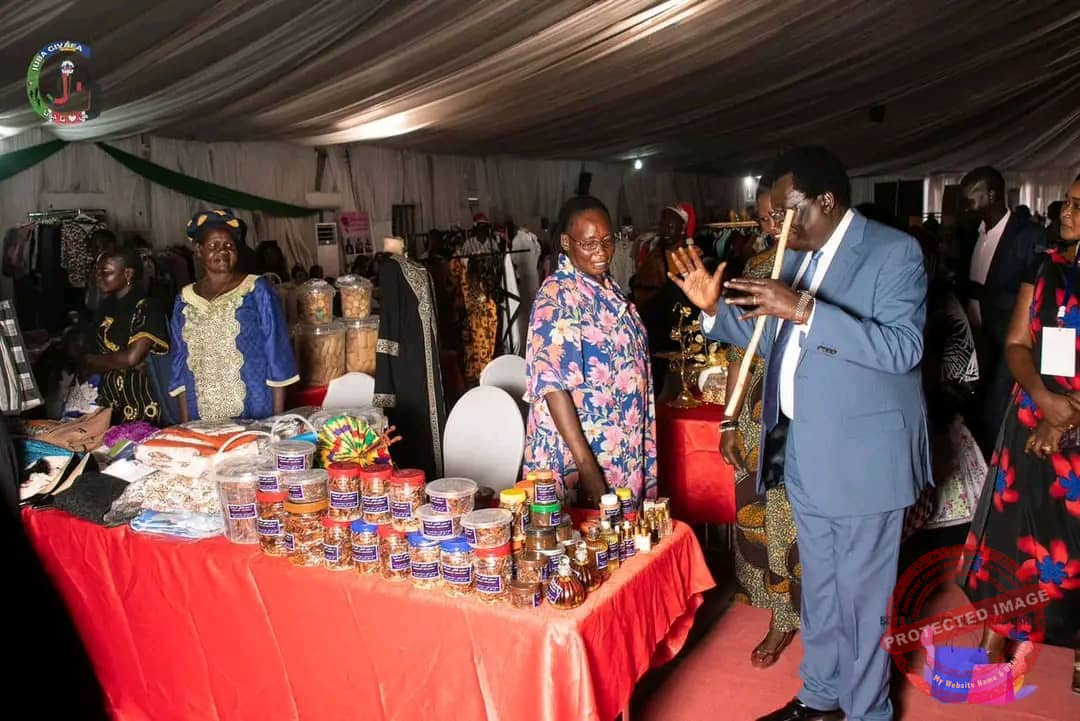
As the cost of renting shops and the increasing taxes imposed by the Juba City Council continue to rise, many small-scale businesswomen in Juba have turned to social media platforms as an alternative way to sell their products.

These women have embraced digital technology, using platforms like Facebook, WhatsApp, and Instagram as essential tools to reach customers without the financial burden of maintaining a physical storefront.

Akor Paul, a mother of five, is one such entrepreneur. She uses social media to showcase and sell her handmade crafts, including intricate beadwork.

Her journey in the handicraft industry is rooted in family tradition. Her father, who returned to South Sudan in 2023 after fleeing the war in Sudan, learned the craft from his mother and began working in the field in 2008. While living in Sudan, Akor found a high demand for her products through her Facebook page, connecting with buyers from across the region.

However, when Akor returned to South Sudan, the country’s struggling economy and declining purchasing power impacted her sales. Despite these challenges, she credits social media platforms for helping her transform her life.

“I decided to work to support my husband with household expenses, and I succeeded. When my husband retired, I took full responsibility for our family’s financial needs, including paying for our children’s education,” Akor said.

Through her business, Akor has managed to educate her children and provide job opportunities for young people. “My son and daughter have graduated from university, while my three younger children are still in high school. I even hired young people as delivery riders, using motorcycles to distribute orders,” she added.

To stay afloat, Akor adapted her business model, focusing on smaller product quantities and diversifying her offerings. She began selling additional items, such as women’s perfumes and cosmetics.

Akor’s story reflects the experience of many women in Juba who, like her, have turned to social media platforms to sell their products. The rising cost of rent and high taxes imposed by the city council have made physical storefronts unaffordable for small businesses.

From fashion and handmade crafts to beauty products and food items, women across South Sudan’s capital are leveraging platforms like Facebook, WhatsApp, and TikTok to reach customers without the burden of expensive rental fees.

Mari Charles, who started trading online in 2017, shared her journey: “I began selling on social media when I joined university to cover tuition fees and daily expenses. I initially sold cosmetics, clothes, and perfumes. The high cost of renting shops and the city council fees made it difficult to maintain a physical store, so I turned to social media.”

Now that she has completed her studies, Mari is expanding her production with the support of online trade.

Jackleen Romano, who sells baked goods and sweets, also turned to social media two years ago to overcome rising costs.

“The prices of essential ingredients like flour, sugar, coal, and oil have negatively impacted my business and the quantity I can sell. The main advantage of trading on social media is the ability to reach a wide customer base, but high rents and taxes remain significant challenges,” she said.

Meanwhile, Angelina Deng, who once rented a shop, now sells her products online, employing young people to deliver items like sheets, towels, and tablecloths, which are often given as wedding gifts.

“I took advantage of women’s groups on social media to understand their needs and fulfill their requests,” she explained.

“Over time, I expanded my business to include other items. The high rental prices in Juba meant I no longer needed to rent an expensive shop, which also helped me avoid harassment from the city council,” she narrated.

As South Sudan celebrated International Women’s Day (IWD) on March 8, 2025, Akor’s story stood as a testament to the resilience and determination of women entrepreneurs.

This year’s IWD theme, “Accelerate Action,” calls for urgent and effective measures to advance gender equality and women’s empowerment across all sectors.

NB: “This story is reported with a grant from Journalists for Human Rights under the ‘Tackling Mis/Disinformation Project,’ funded by the Peace and Stabilization Program of the Government of Canada”

Western Embassies condemn deadly attack on UN helicopter, urge urgent end to violence

The Embassies of Canada, France, Germany, the Netherlands, Norway, the United Kingdom, and the United States, as well as the Delegation of the European Union strongly condemn the March 7 attack on a United Nations helicopter in Nasir County, Upper Nile State, in which one crew member was killed and two others were seriously injured. 

“We equally condemn those who failed to respect the assurances of safe passage for the South Sudanese military personnel whom the helicopter crew were seeking to extract to safety”, the statement emailed to Eye Radio newsroom partially reads. 

The western ally embassies  expressed ‘our deepest sympathy to the families of those who were killed.”

The went on to call for urgent action by transitional government leaders, including from SPLM-IG and SPLM-IO, and direct dialogue at the highest level to prevent further violence and loss of life. 

“Leaders must put the interest of the South Sudanese people above their own political agendas,” the statement concludes.


NSS arrests individuals linked to Nasir and Ulang clashes

The National Security Service (NSS) has announced the arrest of several individuals following an extensive intelligence operation aimed at identifying those fueling the ongoing clashes in Nasir and Ulang, Upper Nile State.

David John Kumuri, the Director of the Public Relations Department at the Internal Security Bureau, stated that substantial evidence was carefully analyzed before the arrests were made.

“The arrests followed an extensive intelligence operation to gather information from individuals, both within the country and abroad, who had been fueling the conflict in the areas of Nasir and Ulang.” he said.

However, he emphasized that it is still too early to disclose the identities of those arrested as the investigation is ongoing.  Some of the individuals, he said will eventually be taken to court.

“The intelligence reports were carefully analyzed, using both technical and human resources, before being deemed credible enough to justify the arrests,” said the NSB spokesperson.

Kumuri further explained that arrests will continue for anyone involved in crimes against the state or conspiring against the government.

Earlier this week, the SPLM-IO claimed that several of its members, including Deputy Chief of Defense Forces Gen. Duop Lam and Petroleum Minister Puot Kang, had been “arbitrarily arrested.”

On Wednesday, Information Minister Michael Makuei confirmed that the officials were arrested for violating the law.

In a press conference at the NSS general headquarters this afternoon, Kumuri stressed that the arrests were not politically, regionally, or ethnically motivated. He clarified that these actions are within the authority of the National Security Service as outlined in Sections 54 and 55 of the 2014 National Security Act, as amended in 2024.

“This is part of our duty to uphold the peace process under the Revitalized Agreement on the Resolution of Conflict in South Sudan (R-ARCSS) signed in 2018.”

He reassured the public that the NSS, the Internal Security Bureau, and other law enforcement agencies are fully aware of the situation and remain committed to safeguarding the citizens’ security and safety.

Kumuri urged the public to remain calm and trust that the authorities will handle the matter in accordance with the law.

UN reports SSPDF commander, several soldiers, UN personnel killed in Nasir helicopter attack

The UN mission in South Sudan has announced that an SSPDF commander in Nasir, several soldiers, and UNMISS personnel were killed when armed youth opened fire on a helicopter involved in an evacuation operation.

Continue reading “UN reports SSPDF commander, several soldiers, UN personnel killed in Nasir helicopter attack”

President Kiir, Dr Igga discuss repositioning SPLM

SPLM leader Salva Kiir Mayardit and Dr James Wani Igga have reportedly discussed “restructuring and strengthening the SPLM to make it well positioned to address nation-building challenges,” according to Presidential Press Unit.
The head of State and  his First Deputy Chairman and Secretary General of the SPLM Dr. James Wani Igga highlighted on Thursday in Jube where they also “discuss critical issues affecting the nation, including the conflict in Upper Nile, Western Equatoria and Western Bahr el Ghazal States respectively.”
The Presidential Press Unit quoted the Secretary General as saying “the discussions also focused on restructuring and strengthening the SPLM to make it well positioned to address nation-building challenges.”
Dr. Igga reportedly stressed that the SPLM is committed to fostering peace and national unity against South Sudan’s pressing challenges.

Former Vice President Dr. James Wani Igga – who is also First Deputy Chairman of Sudan People’s Liberation Movement (SPLM) – took oath on Tuesday as the party’s Secretary General, in Juba.

The ceremony was presided over by President Salva Kiir, who is also SPLM Chairman.

Dr. Igga was appointed to the role on February 10, 2025, following a cabinet reshuffle by President Kiir. He expressed his commitment to the unity and welfare of the SPLM.

Makuei calls out FVP Machar for his letter to President Kiir on social media

Government spokesperson Michael Makuei Lueth has criticized First Vice President Dr. Riek Machar over what he described as an unprocedual letter to President Salva Kiir, which surfaced on social media before it reached the head of state.

Dr. Machar’s letter, dated February 27 and copied to the heads of IGAD member states, representatives of Troika countries, and the European Union, requested a meeting with President Kiir to discuss the security situation in Upper Nile, Western Equatoria, and Western Bahr el Ghazal states.

According to Information Minister Michael Makuei, the letter, which detailed alleged violent incidents in SPLM/A-IO-controlled states, was delivered to the President’s office at 4:00 pm—by which time President Kiir had already left for the day.

To the government’s dismay, Makuei said the letter was seen on social media an hour before it reached the President.

In response to the allegations, Makuei, who also serves as the government spokesperson, criticized Dr. Machar for the letter’s premature appearance on social media, stating that it violated established norms of formal communication.

“The letter appeared on social media before it had even reached the addressee, His Excellency President Salva Kiir.

“What justified the publication on social media, against the established norms for  correspondence and requests for meetings?” Makuei asked, adding that “under normal circumstances, when you request a meeting, you do not publicize your request on social media.”

The letter, seen by Eye Radio, detailed Dr. Machar’s claims of violent incidents in Western Equatoria both prior to and after the removal of the state’s governor, Alfred Futuyo, on January 11, 2025.

Dr. Machar alleged that, immediately after Futuyo’s removal, South Sudan People’s Defense Forces (SSPDF) attacked his residence, looting it entirely and forcing him and his family to flee for their lives.

However, Makuei dismissed the involvement of the army in the attack, claiming that Futuyo’s residence was looted by angry civilians who were unhappy with his leadership.

He also refuted Dr. Machar’s claim that Futuyo fled with his family, adding that Futuyo’s wife and children were under the protection of Deputy Governor Daniel Badagbu.

In his letter, Dr. Machar also accused the SSPDF of attacking seven senior SPLM-IO members, including ministers appointed by the party, and launching a campaign targeting seven other officials, forcing them to flee.

“The acting governor, who is the deputy governor, decided to protect the family of the former governor and all government employees. Even Futuyo’s wife and children are now in the deputy governor’s house,” Makuei clarified.

When asked why President Salva Kiir removed Futuyo, Makuei explained: “The President removed him because he was intransigent. He did not listen to the orders or directives of the President and acted on his own will. The people of Western Equatoria were fed up with him.”

Makuei also addressed allegations that the SSPDF had attacked an SPLA-IO cantonment site in Li Rango and burned down the base. He explained that Futuyo had occupied Li Rango, turning a health facility into his headquarters, which led the leadership to order his evacuation. Despite these orders, Futuyo defied them and continued to use the site as his base.

“Li Rangu is a hospital and health facility between Yambio and Anzara. Instead of handing it over to the health authorities to maintain its functionality, Futuyo decided to use it as his headquarters, even though there were orders to vacate the facility,” Makuei said.

Dr. Machar also claimed that a combined force of the SSPDF and National Security Services attacked Kubiri Ngap in Jur River County, Western Bahr el Ghazal, displacing civilians in Kuang and Bar Wol villages.

However, Makuei dismissed these claims, stating that there were no significant incidents in the region, only communal clashes where the SSPDF intervened to separate the parties involved without taking sides.

“In Western Bahr el Ghazal, there has been nothing of note. What we have are communal skirmishes, and the government forces intervene to separate the warring groups,” Makuei stated.

Regarding Upper Nile State, Dr. Machar mentioned the deployment of a joint force comprising the SSPDF, Aqwelek, and Abusok, which he said had provoked tensions among local youth in Nasir and Ulang counties.

Makuei clarified that this deployment was done at the request of the opposition, and the mobilization of the White Army was politically agitated.

“These forces are being sent to Nasir to disarm the local population. The I.O. requested the transfer of these forces. Now, when the transfer is taking place, people are calling them militias, which is part of the negative agitation that led to the mobilization of the White Army,” Makuei explained.

As for the removal of Western Equatoria’s former governor, Futuyo, Dr. Machar claimed he had written to President Kiir requesting a replacement for him, with outstanding requests dating back to October 2024.

Dr. Machar stated that these alleged violations prompted him to raise the issues with the guarantors in hopes of intervention to break the deadlock.

However, Minister Makuei said the meeting between President Salva Kiir and Dr Riek Machar will be held adding that the government is committed to the peace process for the country to hold elections in 2026.

How mobile courts bridge South Sudan justice gap

Mobile courts in South Sudan are helping address critical cases of Gender-Based violence in South Sudan where access to justice present tough challenge due to geographical barriers and a shortage of judicial infrastructure.

These courts play crucial role in resolving cases of sexual and gender-based violence (SGBV), cattle-related disputes, and other serious crimes in remote areas where courts are absent.

By bringing legal services directly to undeserved communities, mobile courts play a crucial role in strengthening the justice system in the post-civil war era.

The introduction of mobile courts in South Sudan represents an innovative approach to addressing the chronic shortage of magistrates and judicial officers.

With the saying  “justice delayed is justice denied”  in mind, mobile courts help expedite legal proceedings, ensuring that victims and defendants receive timely trials.

Instead of waiting years for a case to be heard, communities now have access to justice through these traveling courts.

The first mobile court was launched in Juba in 2021, marking a significant step in improving access to justice. More recently, a mobile court in Mayom County, Unity State, handled 33 cases in four weeks, securing 24 convictions and facilitating the release of 22 prisoners.

Similarly, mobile court hearings in Malakal addressed 129 backlog cases, including nine related to SGBV, benefiting displaced populations and their host communities.

Mobile courts have also been instrumental in addressing juvenile and gender-related cases. In December 2024, Judge Andrew Jashuw Lado revealed that a mobile court initiative, launched in collaboration with the Judicial Authority and the United Nations Development Programme (UNDP), helped process numerous cases.

However, some cases dating back to 2015 and 2016 remain unresolved due to incomplete investigations and logistical challenges.

While mobile courts offer an effective stopgap measure in the absence of permanent judicial infrastructure, they face significant challenges.

One of the main obstacles is the difficulty in reaching complainants and witnesses, particularly in rural areas where communication and transportation are limited.

Judge Andrew Jashuw Lado noted that many complainants changed their residential addresses and phone numbers, making it difficult to notify them of court sessions, which led to delays in case resolutions.

In Terekeka County, a mobile court adjudicated 126 cases involving sexual assault, murder, and grievous harm between August and October 2024.

County Court Judge Ajok Tito highlighted the difficulties in notifying parties to attend court sessions, as many were engaged in farming activities and were often unavailable.

The absence of a permanent judicial presence in Terekeka further complicated matters, but the government has since allocated land for the construction of a permanent court.

Another challenge faced by mobile courts is the reliance on traditional justice systems in areas where formal legal structures are absent.

Advocate Martha Jobe emphasized the need for clear laws on personal matters such as marriage and divorce, as the absence of formal regulations often leads to inconsistent application of justice.

She suggested that “training and equipping local customary court leaders with knowledge of legal frameworks could improve legal consistency in these areas.”

Despite these challenges, mobile courts have made significant strides in empowering communities by providing accessible legal services.

Lawyer Estella Faulino, who worked with the mobile court in Terekeka County, noted that the presence of six female lawyers encouraged more women and girls to come forward and report cases, particularly those involving sexual assault and underage marriage.

Mobile courts have also helped reduce pre-trial detention periods, preventing scenarios where defendants remain in custody for years before trial.

” As a lawyer who is part of the judicial team in Terekeka County, said that she and six conservators acted as defense and prosecution attorneys in 50 cases decided by the mobile court in Terekeka County, from August to late September of this year.

“The most common cases were sexual assault, cattle theft, murder, and underage marriage,” she said.

Advocate Aluel Makuac highlighted the importance of these courts in handling case backlogs, particularly in states where the number of judges and legal personnel is insufficient.

She also stressed the need for better coordination with law enforcement, community leaders, and legal aid groups to ensure that individuals are informed about their court dates and able to attend their hearings.

While mobile courts are an innovative and necessary stopgap, legal experts agree that South Sudan needs permanent judicial infrastructure to ensure sustainable access to justice.

Establishing courts in major cities and larger rural areas, alongside continued investment in training local judicial officers, is crucial for long-term justice reform.

Mobile courts have proven their effectiveness in delivering justice to under served communities, but they are not a permanent solution.

South Sudan’s legal system must work towards building sustainable legal institutions that guarantee justice for all, regardless of their location.

Rights groups strive for justice, accountability amidst challenges in South Sudan

Human rights organizations say despite playing crucial role in promoting and protecting fundamental freedoms in South Sudan – a country plagued by conflict, political instability, and systemic human rights abuses, they operate in a challenging environment

Through monitoring, advocacy, legal support, and capacity building, these organizations work to uphold justice and accountability, despite facing significant challenges.

Deng John, Chairperson of the African Center for Legal and Human Rights Studies, highlights the multifaceted approach these organizations take.

“Human rights organizations are instrumental in monitoring violations, advocating for victims, providing legal assistance, and strengthening institutional capacity,” he said.

One of their critical functions is raising awareness about constitutional rights. John emphasizes that citizens must understand their rights, including access to housing, education, healthcare, and the freedom to form associations.

“In South Sudan, citizens can seek justice through the Supreme Court’s Constitutional Circuit, the highest authority for constitutional violations, or through the Human Rights Commission, which works with government bodies to address abuses,” he explained.

In addition to legal avenues, human rights organizations provide direct support to victims.

“These organizations assist individuals by submitting complaints, raising issues with relevant authorities, and, if necessary, holding officials accountable to ensure justice,” John adds.

Despite their vital role, human rights organizations in South Sudan operate in a challenging environment.

The Secretary General of the Democratic Lawyers Association, Lwa Nyokdeng, noted that many organizations function reactively rather than proactively.

“Their response is often tied to specific incidents, rather than long-term strategies for preventing violations, he said.

For example, when a young girl was raped and killed in Aweil, organizations quickly mobilized to condemn the crime and push for justice.

However, the momentum faded, reflecting a broader issue where actions are event-driven rather than part of sustained efforts to strengthen human rights protections.

Nyokdeng stressed that awareness campaigns, such as the upcoming 16 Days of Activism Against Gender-Based Violence, must extend beyond short-term projects.

“Outreach in markets, schools, and hospitals is necessary, but these efforts should not be limited to annual campaigns—they need to be continuous and institutionalized,” he argued.

Since gaining independence in 2011, South Sudan has ratified over 15 international human rights treaties and conventions,

This including the African Charter on the Rights of Women. However, Nyokdeng points out that many of these treaties were adopted not for the sake of improving human rights but to gain international goodwill, such as aid and sanctions relief.

“The real challenge is implementation,” he said, citing weak institutions, ongoing conflict, and governance failures as major obstacles.

Human rights activist Santino Beber Ochan echoes this concern, emphasizing that many organizations lack the infrastructure needed to function effectively.

“Some don’t have proper headquarters, a consistent presence, or even basic communication tools like websites or hotlines. This limits their ability to engage with the public and fulfill their mandate,” he explains.

He also stresses the need for increased public education.  “Many citizens remain unaware of their rights due to limited awareness campaigns. Human rights organizations must prioritize training, workshops, and community engagement,” Ochan said.

Restricted Civic Space and Government Barriers 

A significant challenge facing human rights organizations in South Sudan is restricted civic space. Lawyer and activist Abraham Kot explains that government security forces often hinder their operations. “Even securing a venue for a seminar requires permission from security agencies. This creates a climate of fear and control that undermines their ability to function independently,” he said.

Kot insists that the state must guarantee fundamental freedoms to allow human rights groups to educate citizens and conduct advocacy work. Without an open civic space, these organizations struggle to make a lasting impact.

Lawyer Matilda Robert believes that promoting human rights in South Sudan requires an environment that encourages open dialogue and public participation.

“To truly protect human rights, we must foster a culture of discussion where citizens feel free to express opinions and demand accountability, she said.

Robert emphasizes that organizations must do more than raise awareness they should actively contribute to implementing international agreements ratified by the state.

“Recognition of rights comes after awareness. We need to establish platforms that educate people, change perceptions, and build a society that values human rights,” she conclude.

Despite the numerous challenges, human rights organizations remain a cornerstone of justice and advocacy in South Sudan.

Their work in legal support, public education, and government accountability is vital for shaping a future where human rights are upheld.

However, for these efforts to be sustainable, there is an urgent need for stronger institutional support, an open civic space, and a shift from reactive to proactive human rights engagement.

With persistent advocacy and increased citizen participation, these organizations can help build a stronger foundation for justice, accountability, and lasting peace in South Sudan. Continue reading “Rights groups strive for justice, accountability amidst challenges in South Sudan”

UN’s Lacroix meets President Kiir as extended peace roadmap begins

The UN Undersecretary for Peace Operations Jean-Pierre Lacroix accompanied by UNMISS chief has met with President Salva Kiir on Monday in Juba where he delivered António Guterres message, reaffirming the UN’s commitment to supporting South Sudan’s stability and development.

The discussions according to President Salva Kiir’s  press unit, “centered on South Sudan’s preparations for its upcoming elections and the implementation of security arrangements as stipulated in the 2018 Revitalized Peace Agreement.

Lacroix reportedly stressed the importance of collaboration between the government and the UN to achieve progress in these areas.

Kiir and the UN stressed the need to ensure security in the region with Lacroix expressing UN’s call for dialogue to  advancing cooperative security measures while also acknowledging the impacts of ongoing conflict in neighboring Sudan.

The President Kiir was said to have “expressed gratitude for the UN’s continued support and highlighted the importance of international cooperation in building a peaceful future for South Sudan.”

Kiir was reported to have” reaffirmed his government’s commitment to fulfilling its obligations under the peace agreement and creating a conducive environment for development.”

Support Eye Radio, the first independent radio broadcaster of news, information & entertainment in South Sudan.

Make a monthly or a one off contribution.