15th July 2026

President Kiir urges inclusive, just and responsive EAC integration

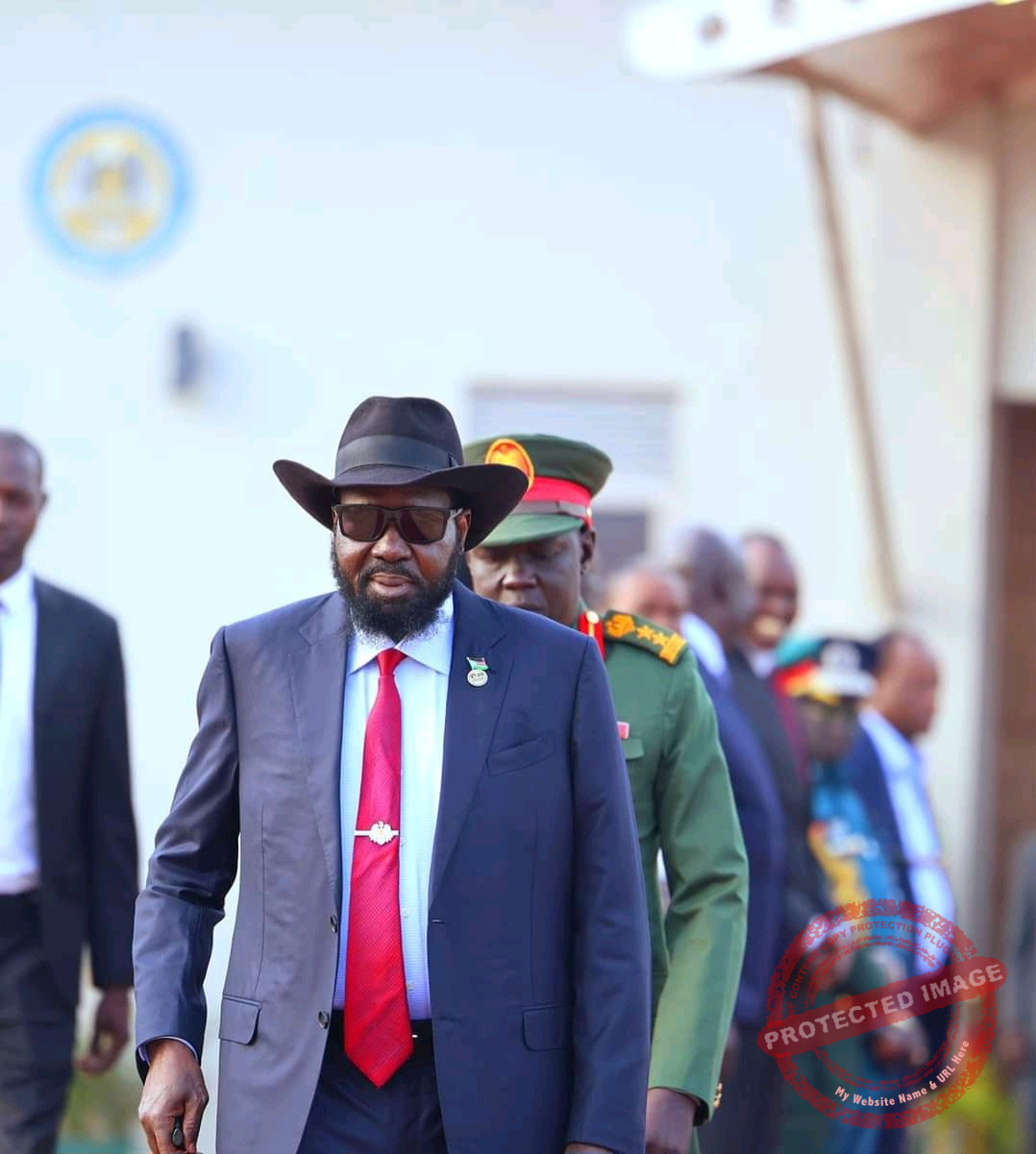
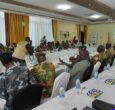
President Salva kiir has said his tenure at the East Africa Community was  confronted with regional and global challenges and urged counterparts for a unified approach and decisive action concerning regional integration.

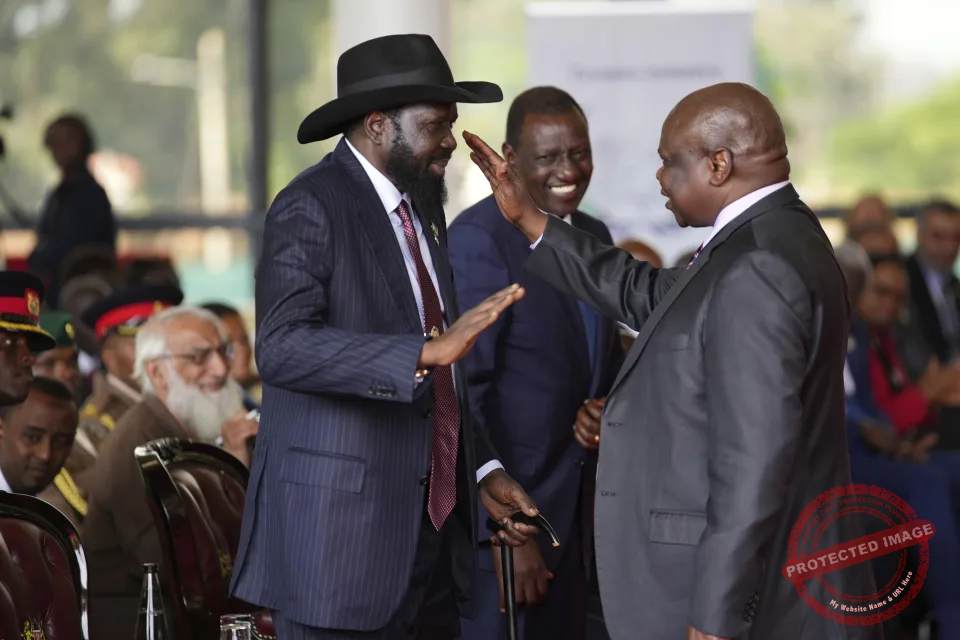
Kiir handed the mantle of EAC to his Kenyan Counterpart William Ruto at the bloc’s 24th ordinary submit in Arusha, Tanzania on Saturday.

“It has been a profound honor to steer this great community especially as we are confronted regional and global challenges that require a unified approach and decisive action.

According to Kiir,  the 25th-year -old EAC has seen the aspirations and expectations of our citizens on regional integration still remaining high, asserting that “the people want an inclusive, just and responsive integration process that addresses the daily needs for prosperous, peaceful and united East Africa.”

He emphasized the need for a collective resolve to drive the region forward which he said required commitment  “to our citizens.”

During his term Kiir said he witnessed devastating consequences of insecurity in the region where he guided critical dialogue on peace and security in our region.

“It is my firm believe that East African must be a region where peace is actively natured and preserved through dialogue, reconciliation and cooperation that we can build the lasting peace that our people truly deserve.”

Concerning inter-state  infrastructure development, Dr Ruto  noted progress and urged commitment of member state to the 167 million US dollars to expedite regional connectivity

“We have made a satisfactory progress in the implementation of projects and programs in four pillars of the customs union, the common market, the monetary union, and the political federation.”

In his recommendations, Kiir urged for enhanced regional peace and security, political process for economic development of the community, strengthened trade within the East Africa Community, eased digital transformation capacity to strengthening our industrial-based  community as well as enhanced regional finance value addition.

He also called for the advancement of monetary integration, building of climate resilience, empowerment of youth innovation and free enterprise to ensuring integration benefits.

“Enhancing efficient infrastructure in all the partner state in line with priorities infrastructure program approved by the member Heads of State”, he said.

Meanwhile he expressed optimism on regional peace saying “We face challenges, the peace may sometime look slow but I want to assure you our commitment; one people, one destiny remains unshakable.”

Angelina urges end to repression amid constitution-making process

The Interior Minister Advocates has urged the need for awareness among organized forces in protecting democratic values during the constitution-making process.

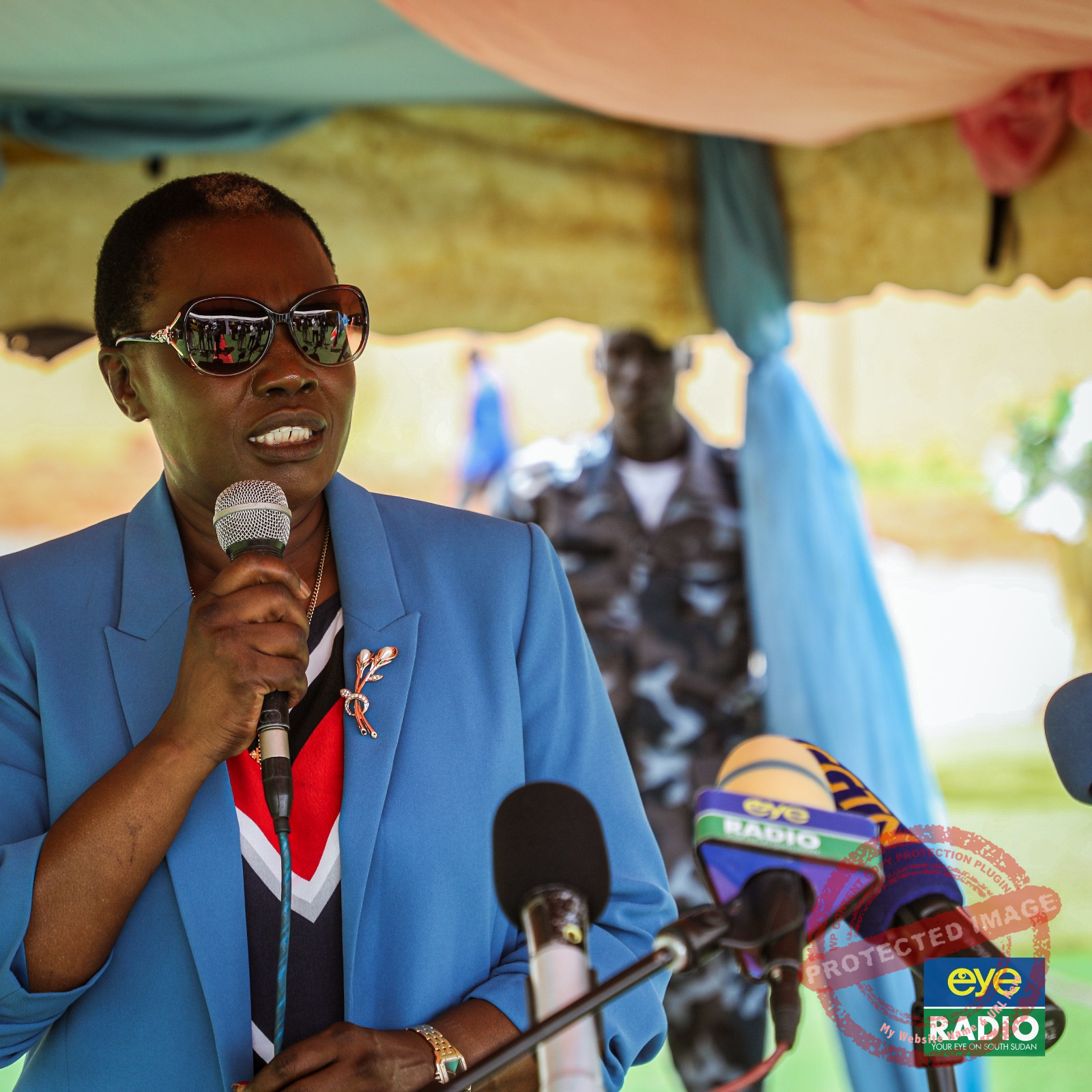
Speaking at the 8th Governors’ Forum on Friday, Angelina Teny emphasized the importance of educating these forces to allow the public to express their desires without fear of intimidation.

“Awareness amongst the organized forces, the organized forces who usually deal with the public, because most of the time we are the culprit when people talk about denying political space”, she said.

Teny asserts that the legitimacy of the constitution relies on active civic participation, which can only thrive in a safe environment.

“This is important for the constitution making because constitution making is a people’s process. People will be expressing their desires, what they want to see in their constitution, and the nature of the country they want to see .

“So we need to really free our people from fear by also educating and making awareness for our organized forces so that we don’t intimidate.

“Their job is basically to safeguard, protect. We are supposed to be protecting the civic and political space for people to be able to express themselves freely.

”According to Angelina Ten, this approach is vital for ensuring that the constitution-making process truly reflects the will of the people and foster a democratic culture.

She warns that unintentional actions by these forces may foster fear among the citizens.

“They need to have that freedom to be able to express themselves without fear. So sometimes even if there’s no intention of not allowing you to express yourself, there is the fear.

Diplomats, opposition politicians, and rights activists said the lack of civic and political space allows boils down to the National Security service Act which grants the agency arrest or detain with warrant.

On Monday, the leader of the Real SPLM, Pagan Amum, stated that the National Security Law must be repealed, warning that without its repeal, the country will never achieve peace, as it continues to be a source of insecurity.

The former secretary-general of SPLM strongly criticized the law, arguing that it has become a tool of repression, fostering insecurity rather than providing protection for the people of South Sudan.

According to him, the misuse of the law has created a climate of fear, discouraging citizens from exercising their rights to free expression and peaceful assembly.

In a statement at the 8th Governor’s Forum, First Vice President Dr. Riek Machar revleaded the the Presidency resolved that the Act be re-tabled before the council of ministers and then to the parliament.

Govt launches anti-GBV National Task Force

The National Ministry of Gender, Child, and Social Welfare has launched the South Sudan National Task Force on the prevention of Gender-Based Violence and Conflict-Related Sexual Violence.

This initiative aims to establish a comprehensive platform for information-sharing, integration, and coordination in addressing the pervasive issue of sexual and gender-based violence (SGBV) in South Sudan.

Speaking at the event yesterday, Vice President Rebecca Nyandeng, who chairs the Gender, Youth, and Humanitarian Affairs Cluster, emphasized the task force’s role in promoting national efforts to combat and raise awareness about GBV.

National Minister of Gender, Child, and Social Welfare Aya Benjamin Libo Warille highlighted the initiative’s guiding principles of equality and non-discrimination.

She stressed that the task force’s mission is to protect survivors, promote prevention, and foster accountability and empowerment.

“The initiative is to safeguard the rights and freedoms of all without any distinction.  As we launch this task force, our own, by us and for us, let us allow our commitment to create a safe and justice South Sudan for all”, she said.

Ms. Aya Benjamin Libo Warille saids this milestone marks a critical step in South Sudan’s efforts to curb SGBV, support survivors, and foster an environment where every individual can thrive.

“Our mission is protecting the survivors. It is about prevention, empowering survivors, calling for religious accountable, and fostering an environment where every individual can thrive in that field”, she added.

The  Friday’s event was attended by gender focal points from line ministries, UNMISS’s head and the deputy , law enforcement agencies, women in uniform, women networks, executive leadership, judiciary, Faith-Based Organizations, Civil Society Organizations (CSOs) and other relevant stakeholders who play a key role in SGBV prevention and response in South Sudan.

On the 25th of November 2024, during the launching of the 16 days of activism, the UN population agency (UNFPA) said it documented 6,779 gender-based violence cases since 2015.

Deputy Governor Badagbu laments escalating Tambura insecurity

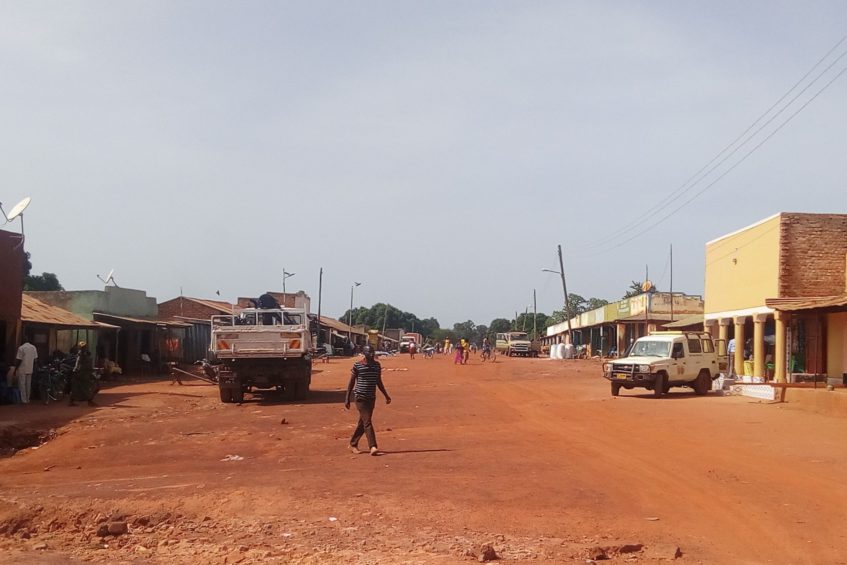
The Deputy Governor of Western Equatoria State has voiced grave concerns over the deteriorating security situation in Tambura following a series of violent incidents in recent days that have left scores dead.

In statement via a WhatsApp to Eye Radio on Saturday, Badagbu Daniel Rimbasa cited reported incidents the escalating violence in Tambura has reportedly led to multiple deaths and devastating incidents in recent weeks.

In separate incidents, he said a young boy in Mabia was killed, a community leader attacked in Mopoi and a mother and her child burnt.

Deputy governor Daniel added that other incidents involving the shooting at the residence of Tambura Commissioner, and of a medical officer, kidnapping of a teacher, Joseph Ezoyo and burning of civilian homes.

Mr Daniel did specify when the sporadic incidents took place.

However, he said, the latest incident involved the shooting of a security personnel this morning.

Mr. Daniel condemned these acts of violence and called for immediate measures to restore peace and protect lives.

” I  strongly condemn that barbaric act, the shooting of innocent people,  the shooting in the house of the commissioner, the killing of the young men in the mafia, the attack on the chief in Mopoi, the burning of the house of a mother with her child,  the cutting of Susan with the panga, the shooting of a medical officer in barracks,  the burning of civilian houses, the kidnapping of a teacher, Joseph,  and the shooting this morning of a member of the security organs in Tambura County.

“I want also to express and extend my absolute sympathy to those who are affected, injured and lost their dear lives in this senseless, tragic situation, which is happening when we are implementing the peace. This situation is not good.

The deputy governor has urged the residents of Tambura county to refrain from taking the law into their hands.

He assured them of the state government’s tireless effort to contain the situation and restore normalcy.

“I want to also assure all the citizens of Tumbura that we shall not tolerate any form of such acts or actions that threaten the lives, the peace, the safety, and the security of our people in Tambura.

” We as government, we are working tirelessly to make sure that the situation in Tambura come to normality.

“I urge you all our citizens in Tambura to refrain from taking the law in their own hands or revenge attack. So that we can be able to improve their lives and support and empower our communities.

‘Notorious’ NSS Act to be sent back to cabinet-Dr Machar

The Presidency has resolved to re-table the unassented-to National Security Act before the Council of Ministers, according to First Vice President Dr Riek Machar.

Dr Machar confirmed this after Vice President Taban Deng Gai hinted the resolve while responding to concerns raised  about the status of the law  during the 8th Governor’s Forum on Friday

According to Dr. Machar, the parliament acted against the advice of the Executive which resolved that articles 54 and 55 of the bill be scrapped.

“The National Constitutional Amendment Committee amended the National Security Bill 2024. In the Bill, they could not agree on the two sections 54 and 55.

“Then, they said these would be decided by the principles. When President and I sat, we decided based also on legal opinion of the Minister of Justice who is also the chief advisor of the Government, that these two should be scrapped and this was brought back to the council.

“Actually, the Council of Ministers went further, and if you looked at the resolution of council of Ministers it stated the Abolition of Warrant of Arrest. The Minister of Justice went and tabled the whole bill and he got a standing ovation, and we thought the matter was finished.

The First Vice president said the leadership of the National Security was blamed for lobbying the retention of the arrest without warrant provisions.

“When it delayed, people began to lobby in parliament that these (arrest without warrant sections) should not be scrapped and parliament passed it with 54/55/57.

“Who passed it, they were blaming the leadership of the National Internal Security. We said the parliament is supreme, it is the one making law, but the president didn’t sign. The meeting we had, we resolved it as Vice President Taban said.

Dr Machar went on to stress the need to also scrap two more sections of the bill which still give similar power to the national security to arrest without warrant.

In actual fact in that bill, there are four sections that are bad section, 13 sub section 15. That gives the national security power to arrest.  Article 57 is operationisation of subsection 13. So, the four sections should be scrapped if we are going to have a democratic state.

FVP suggested that crimes against the state such as terrorism and subversion of the constitution should be prosecuted under article 70 of the penal code Act 2008.

Scrapping the four articles, Dr Machar said will guarantee the rights of the citizens as enshrined in the bill of rights upon which the President decision was based

‘The difference is that, in the penal code you have to do a due process. You have to get a warrant of arrest from the Ministry of Justice. So, section 70 can be used while you scrap those, but you are guaranteeing the rights of the citizens.

Dr Machar said the mandate of the National Security should only be confined to its mandate of information gathering and analysis for the relevant authorities.

“When we agreed that we should scrap those sections, we looked at the bill of rights, 24, 35. We also looked at article 159 E which says national security shall be professional and its mandate shall focus on information gathering and analysis for the relevant authorities.’

Real-SPLM Leader Pagan Amum on NSS Act

On November 25, 2025, the leader of the Real SPLM, Pagan Amum, stated that the National Security Law must be repealed, warning that without its repeal, the country will never achieve peace, as it continues to be a source of insecurity.

The former secretary-general of SPLM strongly criticized the law, arguing that it has become a tool of repression, fostering insecurity rather than providing protection for the people of South Sudan.

According to him, the misuse of the law has created a climate of fear, discouraging citizens from exercising their rights to free expression and peaceful assembly.

Pagan stated that the law has undermined citizens’ fundamental rights, creating an atmosphere of fear that discourages criticism of the government or demands for essential services

He pointed out that civil servants and citizens are unable to protest unmet demands, such as unpaid salaries, due to threats and intimidation by state security forces, including National Security, the police, and the army.

Pagan referenced government officials’ statements claiming that live bullets, rather than rubber bullets, are used against demonstrators.

He highlighted the situation around General Akol Koor’s residence as an example of excessive and repressive force being employed.

“The national security law is causing more insecurity and has never provided any real protection,” Pagan said. “It undermines the rights of our people and creates a climate of fear.”

“It frightens the people, making them afraid to criticize the government or demand services,” he added.

“Imagine a situation where people have not received their salaries and are unable to protest because the national security, police, and army are being used to intimidate them,” he explained.

“Government officials have repeatedly said they don’t have rubber bullets, so no one should protest or demand their rights, or they will be shot with live bullets, as we saw around General Akol Kur’s house,” he said.

Pagan reminded all South Sudanese that the continuation of this law, which allows the national security or government to arrest citizens without a warrant, is both illegal and unconstitutional. “It must be repealed. Without its repeal, I do not see peace for this country,” he concluded.

USAID-supported program equips 14,000 youth with essential skills in two years

The USAID’s Youth Empowerment Activity has surpassed its halfway target after graduating 14,000 young people with literacy and business skills across 14 counties in South Sudan in the first two of the four-year initiative. Continue reading “USAID-supported program equips 14,000 youth with essential skills in two years”

Support Eye Radio, the first independent radio broadcaster of news, information & entertainment in South Sudan.

Make a monthly or a one off contribution.