13th June 2026

Bank official convicted to 14 years in jail for embezzlement

A Court in Juba has sentenced a government official to 14 years imprisonment for corruption and embezzlement.

Adiing Agudiyar, who was a financial controller at the Agricultural Bank was found guilty of giving uncovered cheques.

Uncovered cheques or rather dishonored cheques are those that a bank has refused to pay due to insufficient funds or a bad cheque in a form of larceny.

Convict Agudiyar was among six individuals from the Agricultural Bank the High Court General Prosecutor petitioned over an alleged embezzlement of 290 million pounds and 40,000 US dollars.

Sabino Okuj told Eye Radio that the fraud was discovered during an internal audit of the Bank.

However, the court acquitted five of the accused including the Bank’s Juba branch Manager Pashay James and the financial controller, Abraham Goum.

Others were Butrus Charles, Clement Augustino and Madut.

During a court verdict Wednesday, Adiing Agudiyar made a judicial confession of issuing uncovered cheques.

The High Court Judge Duoth Kulang then convicted Agudiyar in accordance with section 351 of the South Sudan Penal Code 2008.

”Adiing Agudiyar is sentenced to imprisonment for fourteen years from the date of his arrest ON 11\2\2022 for Violation of the section 351 of South Sudan 2008 Penal act. And a fine of 500,000 pounds in case of non-payment Imprisonment for Violation of the section 353 of South Sudan 2008 Penal act,” the ruling read.

The convict will also pay different fine totaling nearly a million pounds or risk additional years of imprisonment.

Judge Duoth Kulang granted the defendant the right to appeal within a period of 15 days.

According to section 351 of the penal code, whoever, being in any manner entrusted with property in his or her capacity as a public servant, nanker or agent commits criminal breach of trust in respect of that property, and shall upon conviction, be sentenced to imprisonment for a term not exceeding fourteen years and may also be liable to fine.

MoH refutes claims of dead bodies in Malakal inpatients ward

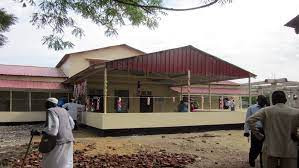
The National Minister of Health has labeled as untrue reports that lack of mortuaries at Malakal Teaching Hospital in Upper Nile State has forced health workers to keep dead bodies with inpatients in the same wards.

Early this week, a senior official in the state hospital said they have no choice but to keep dead bodies in the same room with inpatients after the only mortuary was destroyed during the civil war.

Dr Nyango Adwok who is the acting Director General of the hospital said the health facility receives about 100 outpatients a day and admits about 20 patients daily who get to be mixed up with dead bodies.

But in an interview with Eye Radio Wednesday, Minister Yolanda Awel Deng refuted the claims adding that it is against the ethical perspective of the health sector.

“So what they are saying is that dead bodies and patients are being mixed is not true. Do you know why I am saying that? Because from a health perspective, we have respect for the dead bodies and the living,” Dr. Awel told Eye Radio.

She also said there are indeed separate rooms designated for corpses before being taken for burial.
“There is no way you would mix the two. We have a room that is allocated for dead bodies as they wait to be buried. It is not a mortuary but it is a room.”

As we know, our resources are very limited, even here in Juba, the two mortuaries we have are overwhelmed because the population is growing and the facilities and infrastructures are the same ones we had before independence,” Yolanda defended.

Asked about the mortuary in Juba, the Minister admitted that the facility at Juba teaching hospital is overwhelmed due to a limited space and the growing population in the city.

The challenge, according to Yolanda, will be addressed upon the completion of the ongoing construction of another mortuary adjacent to the UN house along Yei road.

“In Juba, we are building a big mortuary along Yei road near UNMISS around the POC. We are trying our level best to build the best mortuary with proper supply of electricity for fridges to keep the dead bodies.”

Awel also said plans are underway to construct mortuaries at the referral hospitals of Malakal, Wau and Kiir Mayardit Maternal Hospital.

In March this year, Minister Yolanda Awel was appointed as a successor to Elizabeth Achuei Yol who served during the pandemic.

Adil, Lobong demand enactment of laws to regulate cattle keepers.

The governors of Eastern and Central Equatoria have recommended the enactment of a legal framework to regulate the movement of cattle keepers in the states.

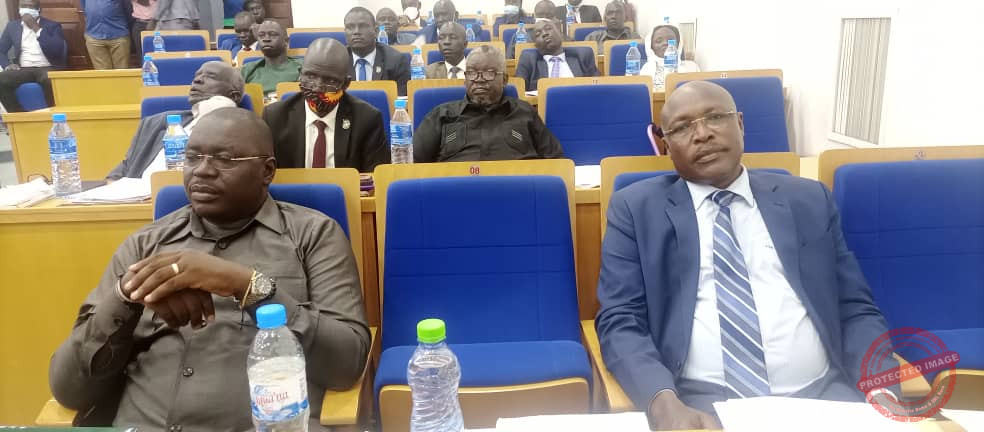
Governor Emmanuel Adil and Louis Lobong made the appeal during questioning by the Council of States to explain insecurity related to herders in the region on Wednesday .

Responding to inquiries by the lawmakers, Governor Louis Lobong of Eastern Equatoria State suggested the need to enact laws to address the frictions between farmers and the pastoralists.

“In order to avoid clashes between cattle keepers and the predominantly farming communities as well as between different cattle keeping communities, there is a need to establish a legal framework to guide the movement of cattle in South Sudan,” he said.

He also emphasized on the need to strengthen law enforcement agencies for effective curtailing of conflict situations in the states.

“The organized forces in the States are poorly equipped. They lack the logistics needed for robust and effective interventions. Therefore I plead with you to lobby for a security fund to be allocated to the States to help them equip and prepare the organized forces for urgent response to security situations,” Governor Lobong stated.

Tensions have reportedly continued following the incidents between cattle keepers and the host communities.

Last week, herders and the host communities clashed in the areas of Abara, Ayii, Kit and Agoro-Somboro in Magwi County leaving scores dead and hundreds of others displaced.

“The presence of such laws and proper sensitization of our citizens will be of great importance in preventing clashes between different communities,” Lobong added.

For his part, Emmanuel Adil Anthony who is the governor of Central Equatoria state echoed the remarks of Louise Lobong.

‘The enactment of laws to regulate the movement of cattle across the State is one of the steps we believe will significantly mitigate the recurring cattle related conflicts.”

Adil said the security forces need logistical support to help particularly in the evacuation of the herders and to regulate the movement of the herders.

“Inadequate financial support from the national government to provide logistics for the forces engaged in the cattle evacuation exercise.”

Conflict between farmers and cattle keepers in some parts of the Equatoria region remains a major security concern.

In the recent years, there have been reports of cattle grazing uncontrollably on farmlands, destroying precious food crops cultivated by settled communities in areas like Pageri, Abara, Agoro, Omeyo, Ayii, Nyolo, and parts of western Torit County.

This is in defiance of a 2015 order by President Salva Kiir for the evacuation of cattle from the Equatoria region.

A committee was set up to ensure that the animals were returned to their respective states, but these have not been implemented due to unclear reasons.

When asked why the presidential orders for the evacuation of cattle from the Equatoria region were not effected, the Minister for Presidential Affairs, Dr. Barnaba Marial Benjaminhe argued that the two orders were implemented.

“Honorable Speaker, my answer is, they have been implemented. Whether they have followed up to the right conclusions is another thing but the implementation was there and I gave you one example of one of our citizens who responded to the order and took his cattle where they should be,” he said.

Marial also concurred with the governors’ call for laws regulating movement of cattle in designated farmlands.

However, on Monday, authorities of Mugali Payam in Eastern Equatoria’s Magwi County decried displacement of the natives due continued harassment allegedly by herders in the area.  

Cattle keepers, the local authorities described as “Illegal IDPs”, allegedly attacked Avumadrici area, allegedly abducting and raping a 13-year old girl last week.

In a written statement, the area leaders said residents are still experiencing unprecedented violence including looting of their properties.

They noted that the settlers went on rampage immediately after the recent visit of the Deputy Minister of Foreign Affairs, Deng Dau, and UN agencies to the area.


 

Jonglei legislature appoints specialized committee chairpersons

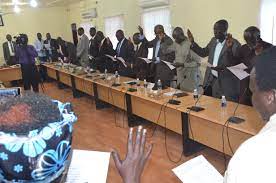
Jonglei State Legislative Assembly has become the first august house to appoint chairpersons of its Specialized Committees among the states.

In a press statement Wednesday, Ameer Ateny Alier who is the Speaker of the August house appointed 16 officials from the peace parties to the various committees as below.

1- Honorable Bol Jok Jiek – Chairperson of the Committee for Members Affairs.
2- Honorable Peter Mabor Bol – Chairperson for Committee for Peace building, Human Rights, Reconciliation and Conflict Resolution.
3- Honorable Samuel Paul Chuol – Chairperson of Committee for Security, Local Government and Law Enforcement.
4- Hon. Hellen Akec Marial – Committee of Parliamentary Affairs, Legal Affairs and Anti-Corruption
5- Wany Buom Maker – Committee for Information and Communication.
6- Hon. Kuol Bol Ayom – Committee of Culture, Youth and Sports.
7- Hon. Mathew Yoal Lam – Committee of Finance, Planning and Investment.
8- Hon. Samuel Majak Kon – Committee of Trade and Industry.
9- Hon. Jacob Changkuoth Wal – Committee of Agriculture, Environment and Forestry.
10- Hon. Nyamal James Lok – Committee for Animal Resources, Fisheries and Tourism.
11- Hon. Chuol Lim Banban – Committee of Cooperative, Rural Development and Humanitarian Affairs.
12- Hon. Matthew Matiok Lem – Committee for Housing, Land and Public Utilities.
13- Hon. Abiel Chan Anyang – Committee of Road and Bridges
14- —- Committee for Labour, Public Service and Human Resource Development.
15- Hon. Badria John Char – Committee for Health and Environment.
16- Hon. Kuong Nyuot Diu – Committee of General Education and Instruction.
17- Hon. Christina Joseph Akol – Committee of Child and Social Welfare.

According to the Legislative Assembly Conduct of Business Regulation 2010, the Assembly shall elect the Chairpersons of Standing Committees, taking into consideration specialization and scientific and practical experiences.

The Assembly, when assigning offices, may consider broad basis of
participation.

It also indicates that the Chairpersons and Deputy Chairpersons of Standing Committees shall be selected by public.

RRC withdraws restrictions on national, international NGOs

The Relief and Rehabilitation Commission has revoked its request to national and international NGOs to obtain clearance before conducting workshops and conferences.

The circular issued on 7th, April 2022, had required that aid partners apply to carry out such activities.

Others include, seminars, consultative meetings, conventions, summits, public lectures, debates, discussions and field research.

In a letter dated 26th, April, 2022, addressed to the South Sudan NGO forum, RRC said, it has resolved to withdraw the decision.

The statement partly read “The new procedures have shifted away a considerable amount of resources and energy from intended goals and objectives which may slow down humanitarian response amid rising humanitarian needs across South Sudan.”
The commission said NGOs can now revert to the previous clearance procedures without any fees.

The South Sudan’s Relief and Rehabilitation Commission is an agency of the Government of South Sudan.

It is the operational arm of the Ministry of Humanitarian Affairs and Disaster Management, regulating activities of humanitarian organizations in the country.

RRC in coordination with the International Office of Migration and United Nations Office for the Coordination of Humanitarian Affairs is responsible for resettling internally displaced persons across South Sudan.

Govt, partners to extend GBV court beyond Juba

The UN Development Agency,UNDP and its partners have expressed willingness to support the government’s plan to extend the Gender-Based Violence Court to the states.

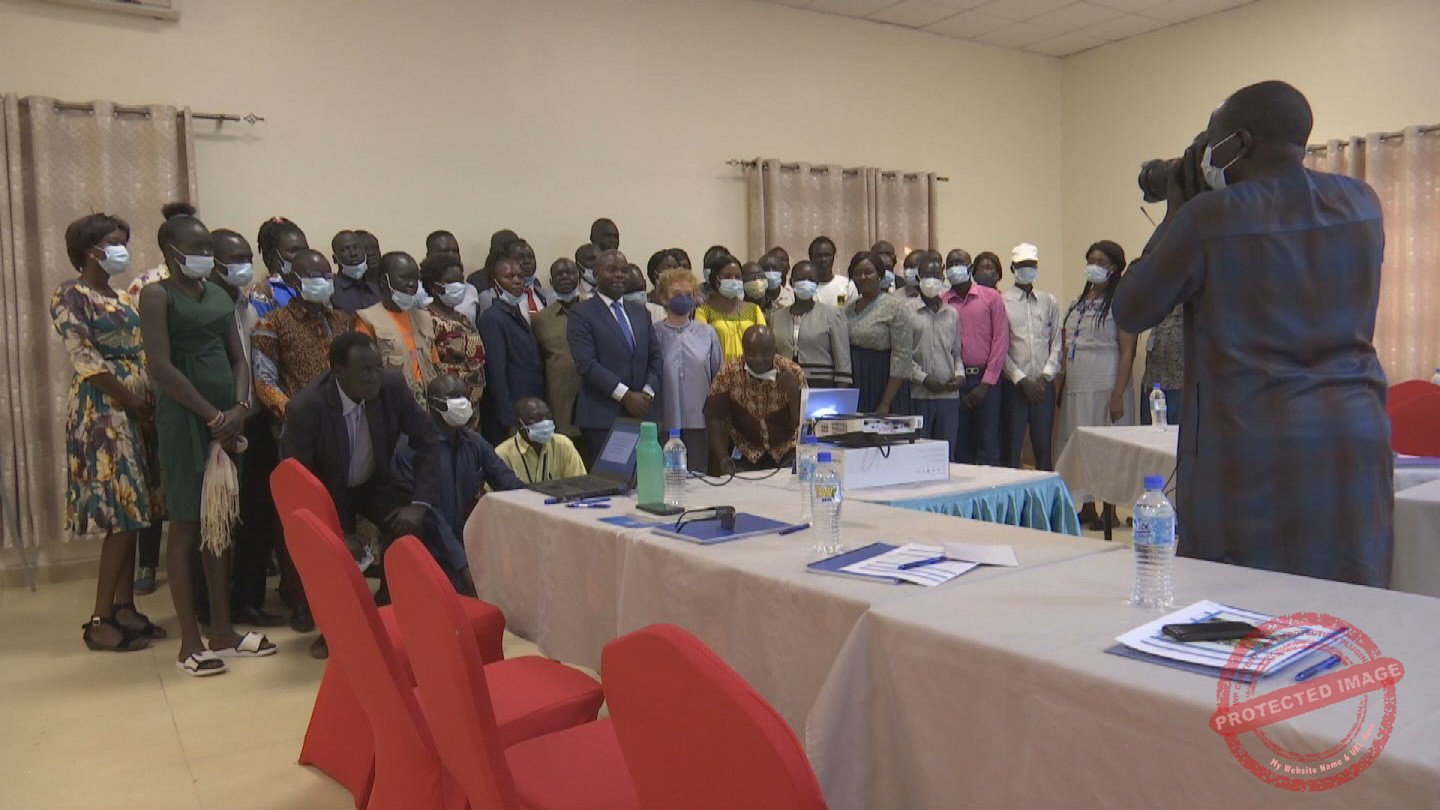
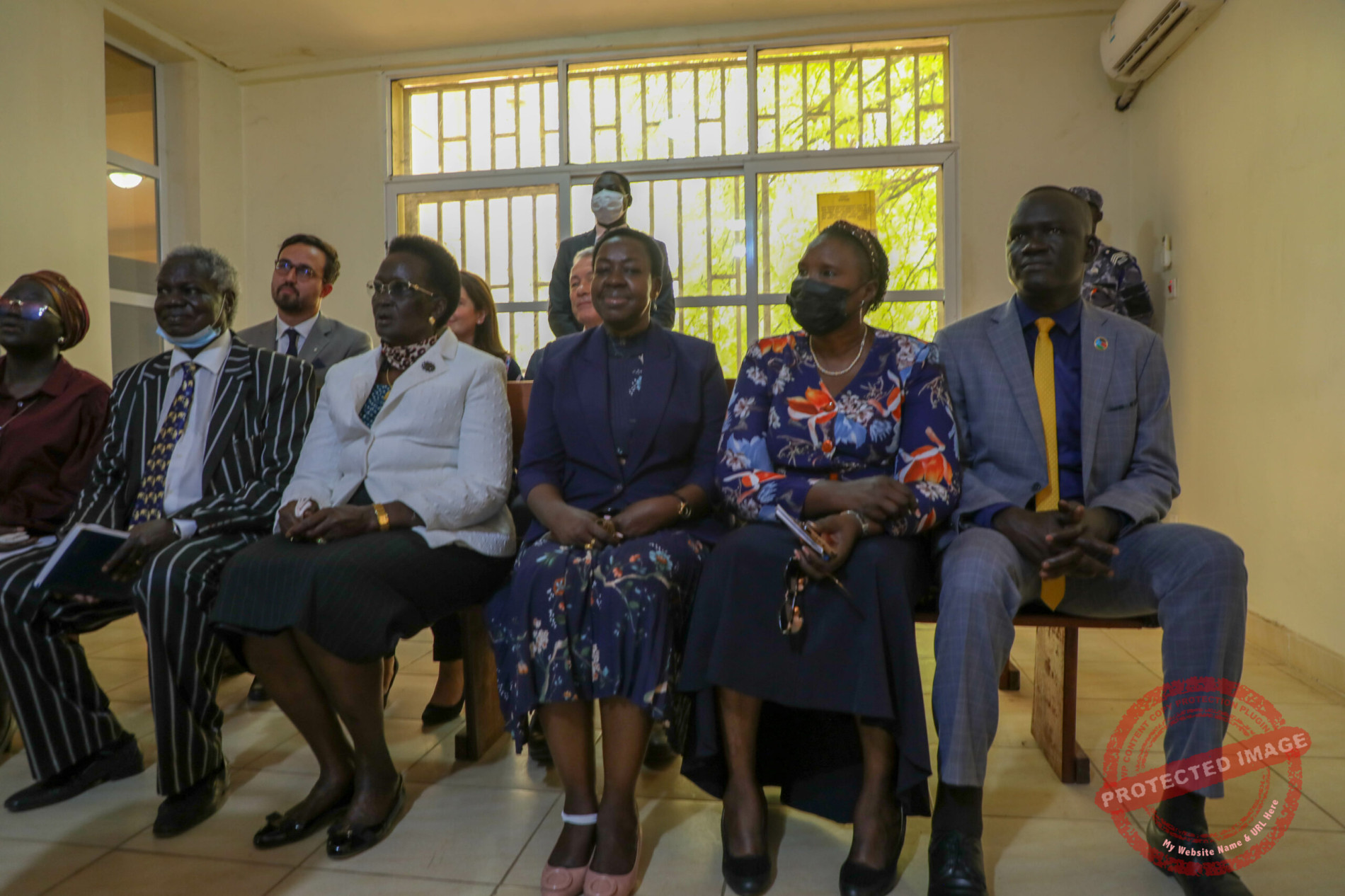
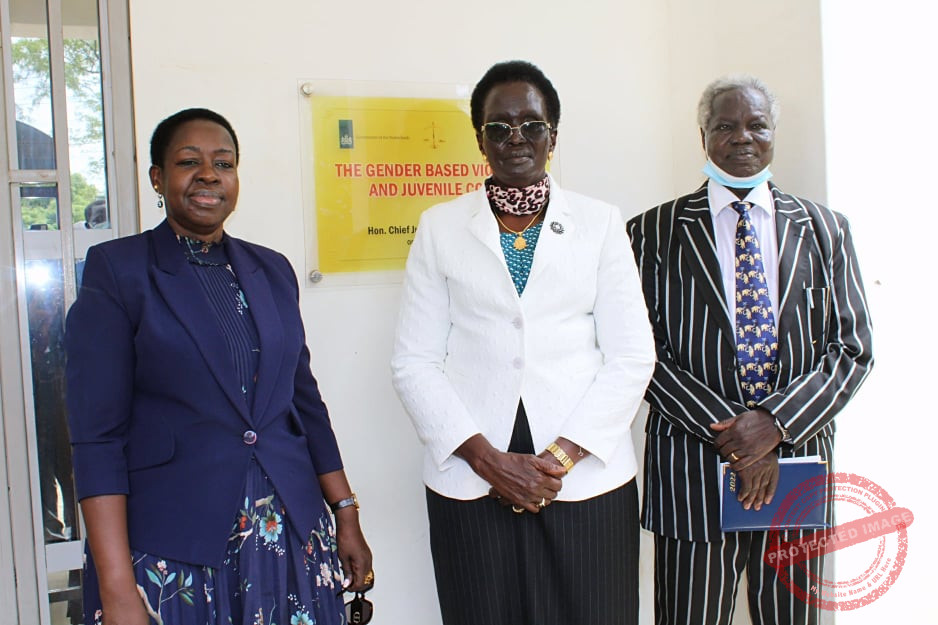
The remark was made during a high-level advocacy visit to the GBV Court by a delegation of the Vice President for Gender and Youth Cluster, Rebecca Nyandeng De Mabior.

Nyandeng’s visit was to enable a platform for discussion and raise awareness on GBV-related issues with key stakeholders.

It was also intended to discuss the functionality of the GBV Court as well as highlighting key challenges and success of the court.

Dr. Samuel Doe, who is the UNDP Resident Representative said the UN and partners are ready to assist the government with the necessary support.

“UNDP continues to engage the court to support the court technically and materially to offer it at its optimum and we also hear the message we need to extend the court beyond juba UNDP and partners stand ready to accompany the government in achieving that goal,” Mr. Doe said.

Gender Based Violence is any act of violence that results in physical, sexual, or psychological harm or suffering to the victim.

It can also include threats of such acts, coercion or arbitrary deprivation of liberty, whether occurring in public or private life.

According to UNICEF South Sudan, GBV is one of the most critical threats to the protection and well-being of women and children in South Sudan.

In December 2020, the country’s judiciary declared operationalization of the country’s first Gender Based Violence and Juvenile Court, in a commitment to end impunity for gender-based crimes and hold perpetrators accountable in South Sudan.

Since its establishment, the court has received nearly 700 cases of gender based violence, out of which 180 were tried.

Meanwhile, VP Rebecca Nyandeng who is also the head of gender and youth cluster in the presidency said the court is crucial in elevating the public confidence in the justice system in the country.

“This court does not facilitate access to justice to survivors it also safeguards individual liberty privacy security and human right dignity I hope that by visiting this court today we can highlight the strength of this institution and elevate public confidence in our judicial process, especially among women and girls,” Nyandeng said.

Studies indicate that some 65 percent of women and girls in the country have experienced physical or sexual violence in their lifetime, and some 51 percent have suffered intimate partner violence.

It also indicates that majority of girls and women experience sexual violence for the first time under the age of 18, with children comprising around 25 percent of all reported cases of conflict-related sexual violence.

However, under-reporting remains one of the biggest challenges in addressing GBV and there are concerns the cases could be higher in the far flung areas of the country.

Chief Justice Chan Reech Madut also suggested that the GBV court be streamlined in the mobile courts across the country.

“It is in my mind that not everybody can come to Juba to open a case of based violence. We want to make this with a mobile project that I also establish. We send out agents to distant places where there are no even court buildings,
They sit under trees and address such conflicts,” Madut said, suggesting that “we should bring it up with this mobile court project, in which we are being supported by our partners the UNMISS, we can send out some judges to different places around South Sudan to address such conflicts.”

For her part, Speaker Juma Nunu Nkumba called on the court to carry out its tasks without fear or fear.

“This court should take this issue very seriously. As I said before we don’t exclude ourselves but all of us should take the Gender-Based Violence issue very seriously. And this court should handle the issue of gender-based violence with absolute objectivity and without fear or favor.”

She also appealed for the integration of more women judges in the court.

“Because sometimes we don’t know how many women are there as judges addressing these cases here, but sometimes men tend to sympathize with their fellow men,” Speaker Nunu stated.

“And actually, they address the issue as a very simple issue. Sometimes when perpetrators are arrested, the following day they are released. This should stop and should not continue,” She added.

Aweil police officer detained for shooting wife

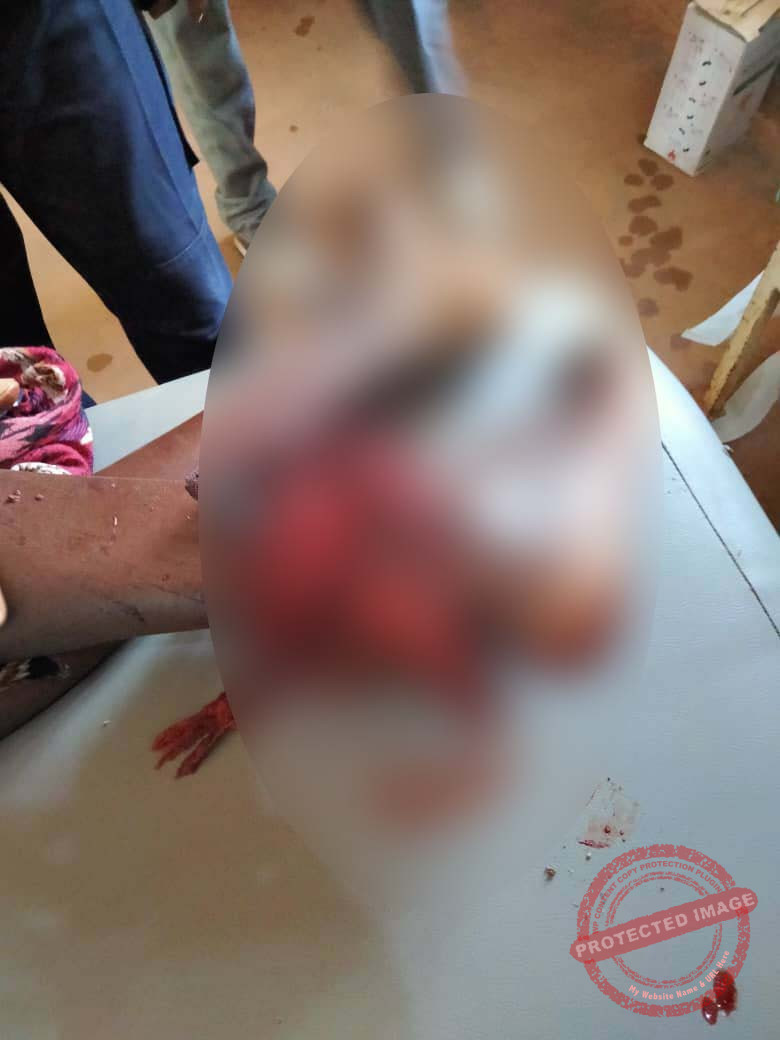
Police in Northern Bahr-el-Ghazal state have Wednesday detained an officer for shooting and injuring his wife in Aweil town

52- years-old Samuel Yuot Yuot, a Warrant Officer is accused of domestic violence, according to Captain Guot Guot Akol, the state police spokesperson.

“The incident happened at 7am Wednesday at Muduria Junction.The accused is a police warrant officer by the name Samuel Yuot Yuot.He shot his wife, Abuk Akeen Tong on her right leg,” Captain Guot said.

Abuk Akeen Tong, 28-years- old was on her way to a workplace when her husband shot her. Suspect Yout’s motive to shoot Akeek is unclear.

Captain Guot said Yuot Wife has filed a case against the husband in the police and has been charged with injuring his wife.

“No one is above the law. Pointing a gun against innocent citizens is against our police regulation and it’s unprofessional in nature.”
   
Injured Abuk Akeen is receiving treatment at the Aweil Civil Hospital.

“On the behalf of the police, I apologized for this unfortunate incident,” Captain Guot added.

Support Eye Radio, the first independent radio broadcaster of news, information & entertainment in South Sudan.

Make a monthly or a one off contribution.