
17th August 2026
You are here: Home | National News | World News | India loses $2.5bn to digital fraud in 2025 as central bank moves to tighten controls
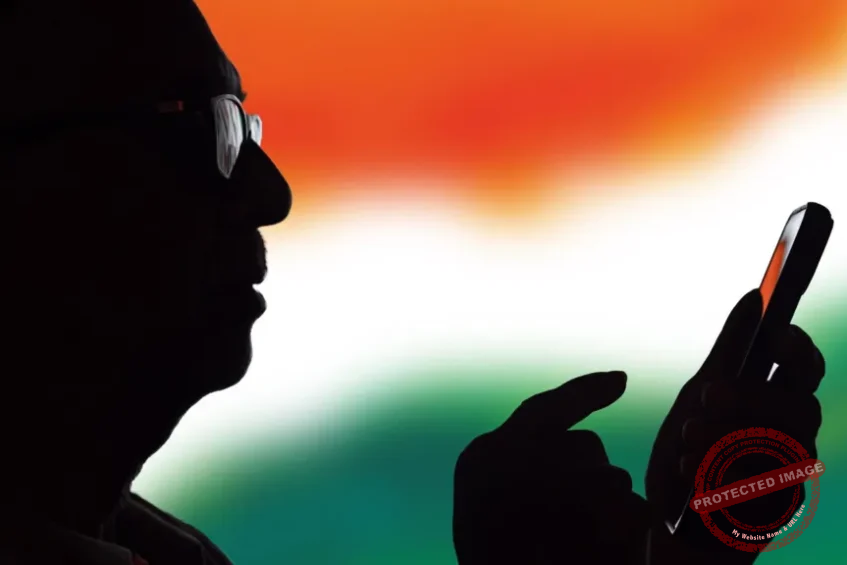
Photo|BBC
Nearly 2.5 million people in India lost about $2.5bn to digital fraud in 2025, a sharp rise that has prompted the country’s central bank to propose new measures aimed at curbing cybercrime in the rapidly expanding digital payments sector, according to a BBC report.
The scale of losses marks a 4,300% increase since 2021, driven largely by a surge in scams linked to the widespread adoption of online transactions across the country.
One victim, Alok, a business analyst in Pune in western India, said he received a text message in February instructing him to pay a 1,000 rupee ($10.75; £7.9) speeding fine to avoid suspension of his driving licence.
He clicked on a link provided in the message and was asked to enter a one-time password (OTP) to complete the payment. Minutes later, his credit card was charged $3,225, its maximum transaction limit.
Alok had unknowingly authorised a much larger transaction, falling victim to a common scam in which fraudsters send fake messages mimicking official platforms to trick users into revealing sensitive banking information.
Experts describe the tactic as “social engineering”, where scammers use psychological pressure, urgency and fear to manipulate victims into approving fraudulent transactions.
The Reserve Bank of India (RBI) says it is considering a range of measures to address the growing problem, according to a discussion paper released earlier this month.
Among the proposals is a one-hour delay on account-to-account transfers initiated by payers, as well as additional verification by a “trusted person” for high-value transactions involving vulnerable groups such as elderly users.
The central bank is also proposing stricter monitoring of large credits to customer accounts to identify potential “mule accounts” used for laundering money, alongside tools allowing users to switch digital payments on or off and set transaction limits.
However, experts say the proposed measures may have limited impact.
Rajesh Bansal, former CEO of the RBI’s Innovation Hub, said the delay mechanism could help prevent OTP-based scams like Alok’s case, but warned that such frauds now form only a small portion of the overall problem.
“These scams were more common three or four years ago, but fraud has now moved to a more sophisticated level,” he said.
Security analysts also warn that implementing the proposed safeguards could prove difficult in practice as cybercriminal tactics continue to evolve rapidly.

Currently on air
07:10:00 - 07:55:00
 1
1Published August 10, 2026
 2
2Published August 10, 2026
 3
3Published 20 hours ago
 4
4Published 18 hours ago
 5
5Published August 11, 2026
 6
6Published August 12, 2026
 7
7Published August 10, 2026
 8
8Published August 10, 2026
Published 18 hours ago
Published 20 hours ago

Published 21 hours ago

Published August 15, 2026

Published August 15, 2026

Published August 15, 2026
Support Eye Radio, the first independent radio broadcaster of news, information & entertainment in South Sudan.
Make a monthly or a one off contribution.
Copyright 2026. All rights reserved. Eye Radio is a product of Eye Media Limited.