
13th August 2026

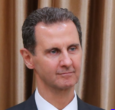
Bashar al-Assad sentenced to death. Photo: Wikimedia Commons
A court in Syria on Tuesday sentenced former President Bashar Assad and his younger brother, Maher Assad, to death in absentia after finding them guilty of crimes against humanity and war crimes linked to the country’s 14-year conflict, which claimed roughly 500,000 lives.
The ruling, delivered by the Fourth Criminal Court in Damascus, marks the first time that Assad or key figures from his inner circle have been convicted since the collapse of the Assad family’s five-decade rule nearly two years ago.
During proceedings broadcast live on state television, Judge Fakhareddine al-Aryan said Bashar Assad had used state institutions to carry out widespread human rights violations and war crimes.
The court also handed a death sentence to Assad’s cousin, Atef Najib, for his role in the crackdown on anti-government protests in the southern province of Daraa, an operation widely viewed as the spark that ignited Syria’s uprising and eventual civil war. Unlike the Assad brothers, Najib has the right to appeal the decision.
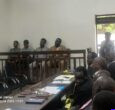
Wearing prison attire and held inside a secure courtroom cage, Najib listened as the verdict was announced. Outside the courthouse in central Damascus, crowds gathered to follow the proceedings.
Lawyer Adnan al-Masalmeh, who represented relatives of Najib’s victims, described the verdict as a landmark moment for Syrians seeking justice. He said it honored the sacrifices of those killed, imprisoned, injured, or forced into exile during the conflict.
Following the fall of the Syrian government in December 2024, Bashar and Maher Assad fled to Russia, where they were granted political asylum. Syria’s current leadership has since requested their extradition.
Najib, who was sanctioned by the U.S. Treasury in April 2011, later became one of the highest-ranking security officials to face trial. At the time of the unrest, he served as head of the Political Security Branch in Daraa.
His tenure is closely associated with the arrest and torture of several teenagers accused of writing anti-government slogans on a school wall. Their detention triggered widespread anger and helped fuel mass demonstrations against Assad’s government.
Authorities responded to the protests with a harsh crackdown that escalated into a devastating civil war, ultimately ending with Assad’s removal from power.
Several victims attended the hearing, including men who had been detained as teenagers in 2011. Mouawiya Sayasneh said the ruling brought a sense of justice to families who lost loved ones during the violence, while Nayef Abazeid, who was arrested at age 13, welcomed the sentence and said he hoped Bashar Assad would eventually face justice as well.
Maher Assad previously commanded Syria’s elite 4th Armored Division, a military unit accused by opposition groups of torture, killings, extortion, involvement in drug trafficking, and operating detention centers.
Human Rights Watch researcher Hiba Zayadin said the emotional scenes outside the courthouse reflected years of suffering and delayed justice. While acknowledging the significance of the trial, she reiterated the organization’s opposition to the death penalty in all circumstances, arguing that it is irreversible and raises concerns when fair trial guarantees are questioned.
Zayadin also stressed that Najib’s appeal process must meet international standards of fairness, adding that lasting accountability for crimes committed during the Assad era will depend on the development of a credible and independent justice system in Syria.

Currently on air
14:00:00 - 15:55:00
 1
1Published August 9, 2026
 2
2Published August 8, 2026
 3
3Published August 9, 2026
 4
4Published August 10, 2026
 5
5Published August 10, 2026
 6
6Published August 11, 2026
 7
7Published August 12, 2026
 8
8Published August 8, 2026

Published 1 hour ago

Published 2 hours ago
Published 2 hours ago

Support Eye Radio, the first independent radio broadcaster of news, information & entertainment in South Sudan.
Make a monthly or a one off contribution.
Copyright 2026. All rights reserved. Eye Radio is a product of Eye Media Limited.