9th June 2026

Experts urge strengthened legal aid, support systems for GBV survivors

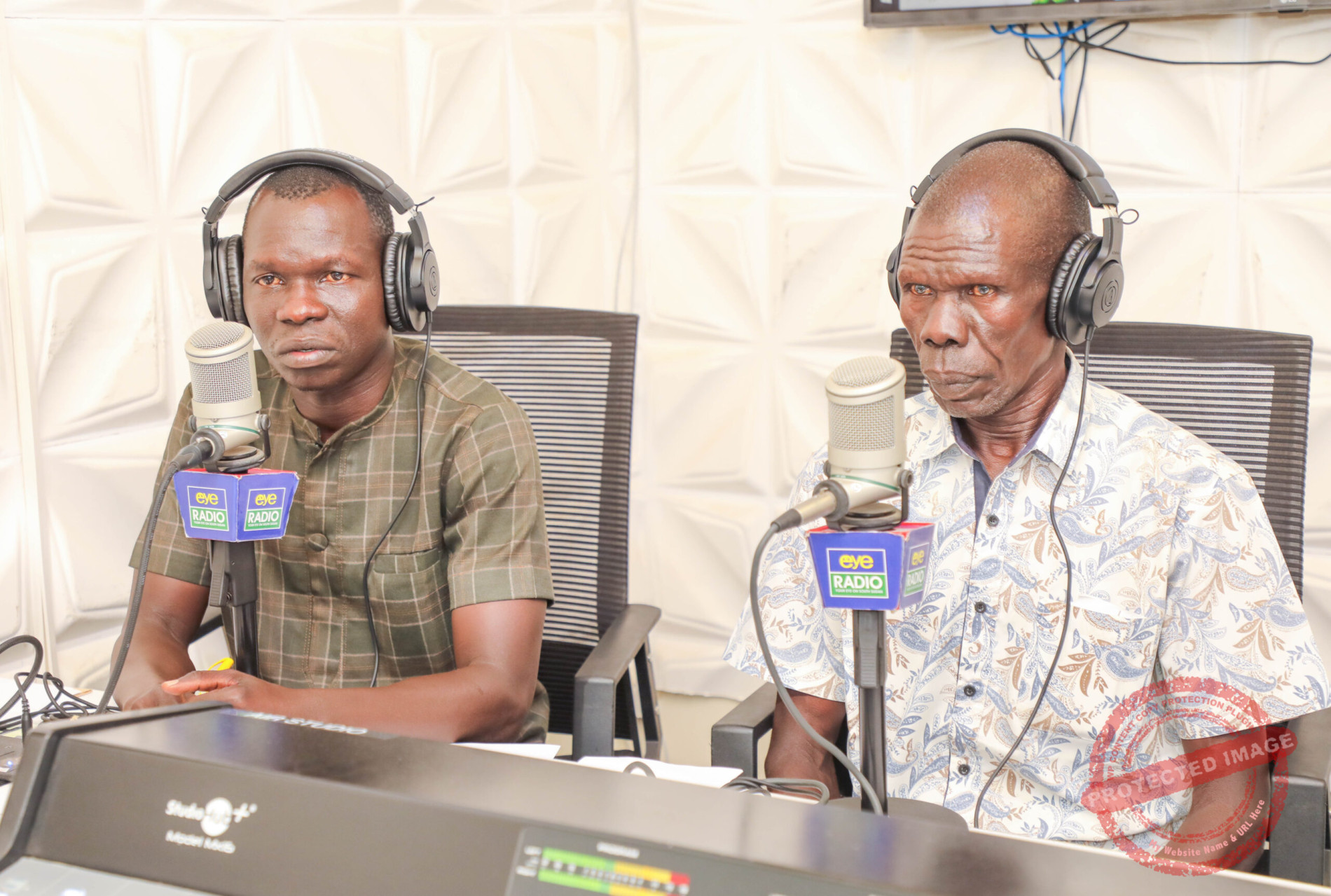
Experts are calling on South Sudan to strengthen legal aid, expand psychosocial and medical support, and promote community acceptance in order to better protect survivors and prevent gender-based violence (GBV).

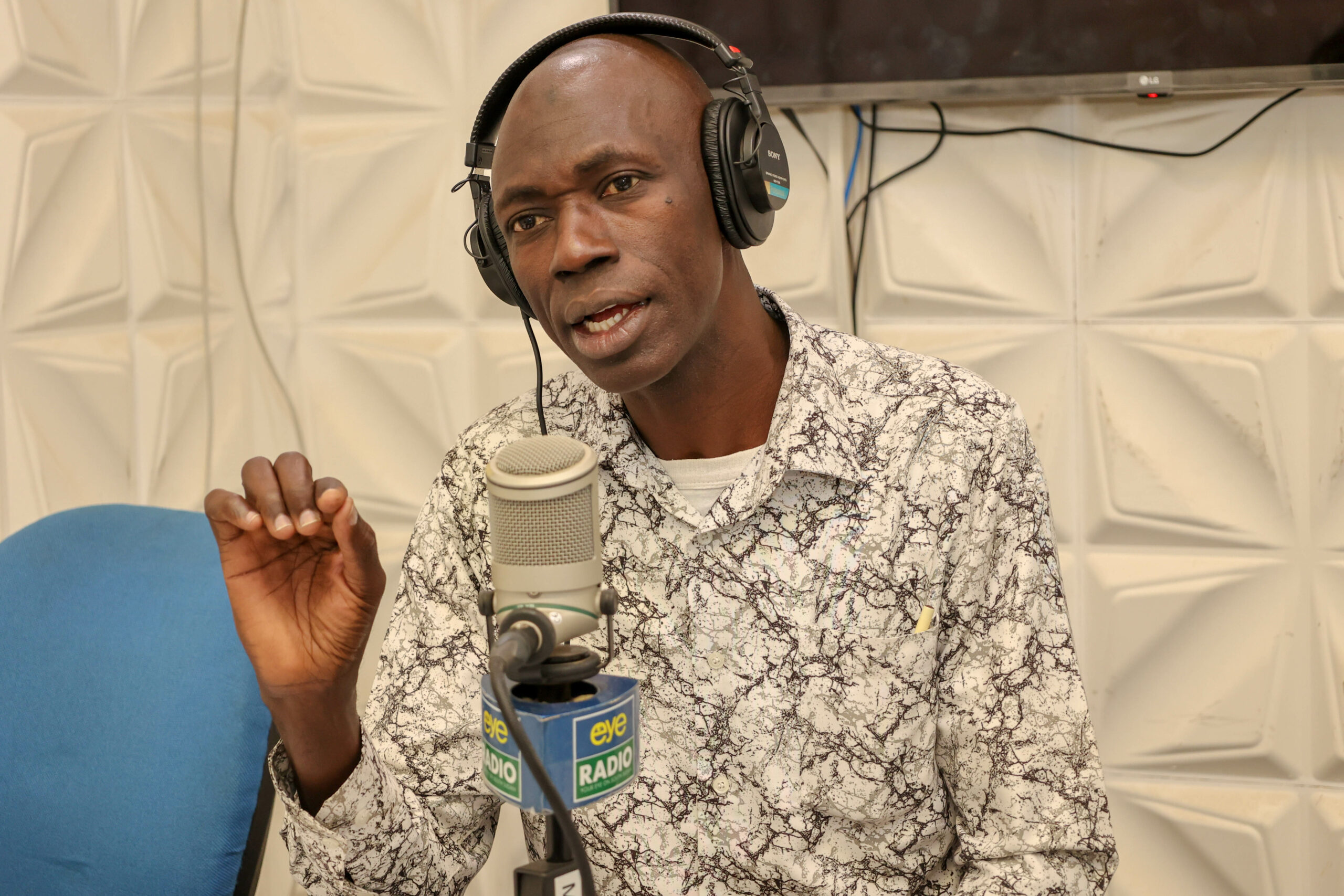
Morris J. Peter, a legal aid officer with FACE South Sudan, said the country’s long history of conflict has created an environment where some individuals use gender-based violence as a weapon of war.

Speaking on Eye Radio’s Sundown Show on Thursday, Peter said South Sudan ranks as the second-highest country in Africa for GBV cases, adding that conflict-affected areas often record the highest rates.

“Currently, reports indicate that South Sudan ranks as the second-highest country in Africa for GBV cases,” he said.

“Considering our history of conflict and civil war, this environment unfortunately fosters gender-based violence, as war often involves the use of such violence as a weapon. Areas affected by conflict tend to have higher rates of GBV.

“To address this, special courts for GBV and juvenile cases have been established across the country. These courts were created in response to the rising number of GBV reports, with ongoing efforts to document cases, enforce procedures, and hold perpetrators accountable in all states of South Sudan.”

Peter urged the government and its partners to establish more special courts and ensure survivors have access to justice and protection.

Bernard Longa, Director at the Ministry of Gender, Child, and Social Welfare, underscored the importance of coordinated support systems to effectively tackle the issue.

“It is crucial for us as a government to unite and work together,” Longa said. “

The Ministry of Gender, Child and Social Welfare has deployed social workers to police stations, hospitals, and other relevant institutions to support GBV survivors. Often, survivors are unaware of the proper procedures or how to access help. Our collective effort is essential to ensure survivors receive the assistance they need and that we effectively address GBV in our communities.”

Both experts emphasized that community awareness campaigns are essential in reducing stigma and encouraging survivors to come forward.

The program was organized by FACE South Sudan in collaboration with the United Nations Development Programme (UNDP), with support from the Kingdom of the Netherlands. Continue reading “Experts urge strengthened legal aid, support systems for GBV survivors”

JEDCO’s scheduled tariff reduction date takes effect 

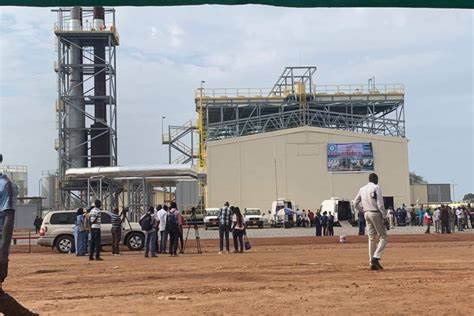
The scheduled date for Juba Electricity Distribution Company (JEDCO) to implement reduced electricity tariffs has arrived, following a directive issued by President Salva Kiir earlier this year.

It’s not clear whether an official launch of the tariff reduction has been carried out.

However, a social media page reported that a ceremoney was held  and attended by Engineer Matthew Ashwil Mawien Undersecretary at the Ministry of Energy and Dams, Engineer Joseph Kur Ajok, JEDCO’s Managing Director, and Simson Tekia, CEO of Ezra Group.

Ezra Group, the parent company running JEDCO, had previously confirmed plans to implement the tariff adjustment effective November 1, 2025, in line with the Republican Order aimed at easing electricity costs in the capital.

In earlier statements, JEDCO Project Manager James Akwi said the company’s technical team had been reconfiguring sales systems, restructuring internal operations, and reviewing its Power Purchase Agreement in preparation for the change.

However, as of press time, there has been no official communication confirming whether the new tariff rates have been activated.

Residents and business owners in Juba say they are hopeful the reduction will soon reflect in their electricity purchases, offering much-needed relief from high power costs.

The tariff review is expected to balance consumer benefits with investor interests, according to earlier statements from JEDCO officials.

Warrap State urges armed youth to comply as forceful disarmament begins

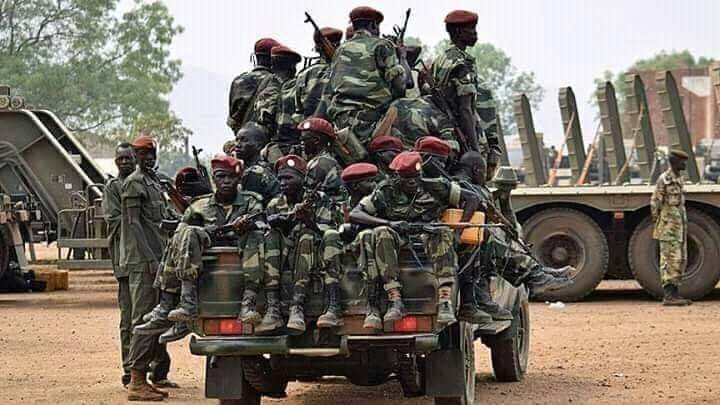
The Information Minister of Warrap State has urged armed youth in the state to comply with orders from the South Sudan People’s Defence Forces (SSPDF) as the deadline for the forceful disarmament begins today.

“The deadline is today, and we are expecting the SSPDF to move. I urge the youth to comply with all requests from the SSPDF. If they ask you to put down your weapons, do so. Resistance could lead to serious consequences,” said Minister Mamer Bath in an interview with Eye Radio Saturday.

The SSPDF set a 48-hour deadline on Thursday for youth to surrender their firearms peacefully. In September, the government of Warrap State said it would involve selected armed youth in the ongoing disarmament exercise, which is part of the state of emergency declared in June.

The minister said the youth will assist authorities in monitoring security, apprehending criminals, and collecting illegal firearms from civilians in a peaceful manner.

However, the state spokesperson confirmed this morning that the 48-hour period has ended, and forceful disarmament could begin immediately.

Bath appealed to armed youth to comply with the SSPDF orders to avoid potential harm:

“This time, the operation is different from previous exercises, with full military capacity. Compliance is the only way to avoid harm.”

The minister emphasized the importance of following instructions to ensure the disarmament process proceeds safely.

One year on: South Sudan’s protracted cholera crisis, a symptom of deeper failures

 I have spent a year watching a treatable disease, cholera, chew through South Sudan. And the hardest question isn’t how to treat it—we know how. The hardest question is this:  Why is the outbreak not able to be contained? Why, one year after the outbreak was declared on 28 October 28, are we still fighting a preventable enemy that has already stolen over 1,500 lives and sickened over 93,000 people?

The harsh reality is that the cholera epidemic is a symptom of South Sudan’s deepest vulnerabilities: systemic neglect, incessant violence, and a fragile, underfunded healthcare system, resulting in significant service delivery gaps and lack of proper response. The scale of the outbreak is the result of a slow, underperforming and uncoordinated response – which has been a challenge since it began.

As the Deputy Medical Coordinator for MSF in South Sudan, I was directly involved in leading our medical response. Our priority was setting up Cholera Treatment Units (CTUs) and Centres to ensure patients could get timely treatment. We started in Renk, in Upper Nile State in the north of South Sudan, then moved to Malakal and Ulang, followed by Bentiu in Unity State, and the capital, Juba. Over the next few months, our efforts rapidly expanded to numerous other areas across the country, allowing us to treat more than 35,000 people.

A worrying connection between underfunding, displacement and violence

At the heart of this crisis is the fragile nature of South Sudan’s public healthcare system, which depends almost entirely on external support. With the government allocating less than two per cent of its budget to health in recent years, the system is incapable of catering to the routine needs of its own population, let alone a robust emergency response.

Moreover, existing programs are on a precarious footing as a result of long-standing challenges, including insufficient domestic and international funding and critical implementation failures. The withdrawal of support from major donors—including USAID—has forced the closure of some health facilities, eliminating crucial lifelines. In Bentiu, for instance, we witnessed how the reduction in funding to organizations that run water and sanitation and primary healthcare have left major gaps in the response, leaving people at risk while desperately searching for care.

Added to this is the influx of people who have fled to South Sudan from Sudan, increasing the burden on limited services at a time the country was facing reduced services due to funding cuts. Since April 2023 when the civil war in Sudan broke out, more than 1 million people found refuge in South Sudan, equivalent to 10 per cent of the country’s population. These vulnerable, mobile populations are often cut off from essential services, including vaccination programs, increasing their risk of both contracting and spreading the disease. The situation in transit camps in Renk—where the camps now host more than three times their capacity—illustrates the crisis perfectly.

This overcrowding, combined with poor water and sanitation and limited access to clean water, creates the perfect environment for disease to spread. It’s no surprise that this has driven the rise in other new waterborne diseases such as hepatitis E – a severe threat, especially to pregnant women.

Attacks on healthcare and the impact of violence and insecurity

Perhaps the cruellest obstacle is the pervasive violence, insecurity and attacks on healthcare.

A heart-breaking example occurred in March 2025, when fighting in Ulang forced tens of patients to flee from the MSF hospital, including more than 30 patients admitted for cholera treatment. These patients fled into the community, not only facing the risk of death themselves, but also fuelling the spread of the disease. The hospital would later be closed permanently because of looting. Since the start of the 2025, MSF has been directly targeted in more than eight attacks, closing another hospital in Old Fangak in Jonglei state, and reducing or suspending activities in others. The result is hundreds of thousands of people cut off from healthcare.

Way forward: from crisis to responsibility

We know how to prevent cholera. It’s not a mystery. But until the government, the international community, and all parties face up to their failures and ensure a unified, multi-sectoral and sustained response, we are simply waiting for the next outbreak.

The government needs to step up and take its responsibilities to take care of its people. This includes scaling up emergency preparedness and response capacities, and prioritising service delivery in hot spot locations.

The international community must provide renewed humanitarian and development support, not only to try and close the massive gaps left by recent funding cuts but also to ensure a more effective humanitarian response with the limited resources that remain. This includes scaling up sustainable programs for water and sanitation services, and widespread vaccination for both cholera and hepatitis E.

Finally, all parties to ongoing conflict must respect international humanitarian law and guarantee safe access to people in need.

Without this fundamental shift, new outbreaks will continue to occur, condemning the people of South Sudan to a bleak future of avoidable suffering.

Here’s a polished version you could use for your web story disclaimer:

Disclaimer: The views expressed in this opinion article are solely those of the author. Eye Radio is not responsible for the accuracy or veracity of the claims made.

“War comes when we don’t talk”: Prof. Julia Duany urges leaders to reconcile

Professor Dr. Julia Duany has called on South Sudan’s leaders to set aside differences, forgive one another, and engage in dialogue to restore lasting peace and unity in the country.

Speaking at the closing session of the two-day Eve Organization Conference in Juba on Friday, Prof. Duany appealed to political leaders to end the cycle of division and bloodshed that has plagued the nation for years.

“Let our leaders forgive each other. Let our leaders talk to each other,” she said.

“It is through talking and understanding that they can bring back South Sudan together. For this very long time, the women of South Sudan are longing for peace. And we are telling our leaders that South Sudanese women are longing for a country where freedom and prosperity are for all. Can we not say enough is enough as women of this country? No more blood. No more blood.”

The conference, which concluded on Friday, brought together ministers, members of parliament, women leaders, representatives of civil society, and international partners under the theme “Restoring Hope and Commitment to Action in Advancing Women’s Role in Peacebuilding.”

Reflecting on South Sudan’s ongoing humanitarian and security challenges, Prof. Duany highlighted how conflict, displacement, and natural disasters continue to threaten livelihoods across the country.

She emphasized the central role of women, who have endured decades of suffering yet remain crucial to the pursuit of peace.

“Peacebuilding is not just a program — it is part of our daily life, in the way we greet each other, the way we talk to one another, the way we listen,” she said.

“War comes when people don’t talk. As I look at your faces, I don’t see Dinka or Nuer or Bari or Zande. I see the faces of South Sudanese. If our leaders talk, our children will sing songs of joy, our women will laugh at the water points, and our young people will gather around the fire to tell the story of a peaceful South Sudan.”

Prof. Duany also criticized growing political and regional divisions, warning that they risk undermining national unity and urging citizens to reject tribalism in favor of reconciliation and forgiveness.

The Eve Organization Conference is an annual gathering designed to strengthen women’s participation in peacebuilding, leadership, and development across South Sudan. This year’s event additionally marked the 25th anniversary of UN Security Council Resolution 1325 on Women, Peace, and Security.

Samia Suluhu Hassan wins Tanzanian election with 98% amid unrest

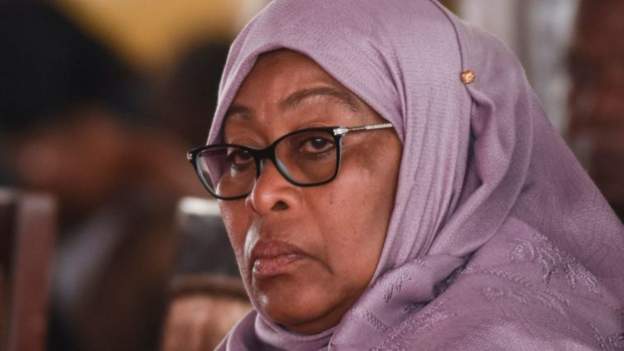
President Samia Suluhu Hassan has been declared the winner of Tanzania’s presidential election, securing another term in office with 98% of the vote, according to the electoral commission. The announcement comes amid days of unrest and protests across the country.

Electoral chief Jacobs Mwambegele announced the results on Saturday morning, saying, “I hereby announce Samia Suluhu Hassan as the winner of the presidential election under the Chama Cha Mapinduzi (CCM) party.

Nearly 32 million ballots were cast in Wednesday’s election.

The vote has drawn international concern over transparency, with reports of widespread turmoil that may have left hundreds dead or injured. A nationwide internet shutdown has complicated verification of casualties, while the government has extended curfews in an effort to restore order.

Protests have erupted in major cities, including Dar es Salaam, where demonstrators tore down posters and clashed with police.

Many protesters, largely young people, allege the election was unfair and accuse the government of sidelining opposition leaders—one in jail and another barred on technical grounds.

In Zanzibar, the semi-autonomous archipelago that elects its own president, CCM’s Hussein Mwinyi secured nearly 80% of the vote, though the opposition has claimed “massive fraud,” according to AP.

Foreign Minister Mahmoud Kombo Thabit described the unrest as “a few isolated pockets of incidents here and there” and defended security forces for responding “swiftly and decisively.”

Opposition sources, however, estimate that hundreds of people have been killed in clashes with authorities.

Samia, Tanzania’s first female president, assumed office in 2021 following the death of President John Magufuli. Her ruling party, CCM, has dominated national politics since independence and has never lost a presidential election.

Ahead of the vote, human rights groups raised alarms over government repression, citing enforced disappearances, torture, and extrajudicial killings of opposition figures. The government denied these claims, insisting that the election would be free and fair.

Yakani urges army, vigilante groups to embrace dialogue over violence

Civil society activist Edmund Yakani has appealed to the leadership of the country’s defense forces and vigilate groups to prioritize peace through dialogue rather than resorting to violence.

Speaking in an exclusive interview with Eye Radio Radio, Yakani urged all sides to put the safety and welfare of citizens first, warning that continued military operations could further endanger civilians.

“We really respect and honor your commitment to ensure that peace and stability prevail in our communities,” Yakani said.

“But don’t take it in a violent way. Embrace dialogue — and we are ready at any time. If the Chief of Defence Forces wants, we are ready to go talk to this Red Belt, we’re ready to go talk to this Tonj Youth — and we create a room where we don’t use a bullet to find a solution, but we use words to find a solution.”

Yakani commended Chief of Defence Forces, Gen. Dr. Paul Nang, for his ongoing efforts to restore peace, discipline, and stability, but stressed that military operations should not come at the cost of civilian lives.

His remarks after Gen. Nang has launched house-to-house weapon searches in Juba, crackdown on armed youth in Warrap, and the evacuation of violent groups from Jonglei fishing grounds, elimination ofghost names in the army payroll and a ban on the sale of soldiers’ food rations.

Supporters say these are long-overdue steps to restore order, discipline, and public trust in the national army. Critics, however, warn of the potential for abuse of power, militarization of civilian spaces, and question how far-reaching the reforms can be in a system long plagued by corruption and political interference.

“Some of these groups have very strong politicians that are in Juba,” Yakani cautioned.

“So, Juba is the center of political indiscipline. Juba is a center of political immaturity. And everything that can turn the country to square one is the leadership. His Excellency the President (Salva Kiir) has the responsibility to make an order — dialogue should prevail.”

Yakani emphasized that dialogue remains the best tool to address the root causes of discontent and prevent further loss of life. He called on both the military and armed groups to show restraint, act responsibly, and place the interests of peace above politics. Continue reading “Yakani urges army, vigilante groups to embrace dialogue over violence”

Women’s leader urges greater female role in S. Sudan’s peace, leadership

A senior women’s leader has called for stronger inclusion of women in leadership and peace processes in South Sudan, saying that despite making up more than half of the country’s population, women remain largely underrepresented in decision-making positions.

Maryam Suleiman, the Women, Peace and Security Specialist at UN Women in South Sudan, said women’s participation in leadership and peace efforts across the country remains below 26 percent — far below the 35 percent quota guaranteed under the 2018 Revitalized Peace Agreement.

“Women make up more than half of our population in South Sudan, which of course makes sense that their participation should be more meaningful, especially in leadership and in peace processes,” Suleiman said.

“Unfortunately, their participation in leadership and peace processes remains below 26 percent, even though the peace agreement has guaranteed 35 percent.”

She made the remarks on Thursday during the opening of the 5th National Conference on Women, Peace and Security held in Juba. The two-day event is organized under the theme, “Restoring Hope and Commitment for Action: Advancing Women’s Role in Peacebuilding.”

Suleiman stressed that women should not be viewed merely as beneficiaries of peace, but as “agents and architects of peace.”

“Women are not just victims or beneficiaries in peace. They are agents of peace, they are architects of peace, and across the country, women have led a lot of community dialogues — but unfortunately without recognition and often without resources,” she said.

“This tells us that when women are included, peace is not only achieved, it lasts.”

She called for stronger collaboration between national leaders and grassroots women’s networks to ensure that community voices are reflected in national decision-making.

“We must build stronger coalitions and connect national leaders with grassroots networks to ensure that the voices from the grassroots are heard at the national level,” Suleiman added.

“We must move from isolated efforts to collective action that truly shapes our national agenda. Peacebuilding should be designed with women, not for them.”

The conference aims to raise awareness on strengthening women’s leadership and participation in peacebuilding, governance, and recovery efforts as South Sudan continues to implement the peace agreement and prepare for its first elections since independence.

SSPDF chief orders arrest of troops over re-erected Juba–Bor checkpoint

The Chief of Defence Forces, Dr. Paul Nang on Tuesday ordered the arrest of soldiers who re-established a dismantled military checkpoint along the Juba–Bor road following the Sunday Mapau incident, according to SSPDF spokesperson.

According to Major General Lul Ruai Koang, the Chief of Defence Forces visited the site earlier and directed the immediate removal of the checkpoint, which was subsequently closed.

However, reports later indicated that the same checkpoint had been re-erected despite the earlier order.

In response, Dr. Paul Nang instructed the Chief of Military Intelligence and the Assistant Chief of Defence Forces for Operations to apprehend all personnel involved in re-establishing the checkpoint.

General Lul said the soldiers would be brought to Juba for detention and investigation.

General Koang questioned why the checkpoint was reinstated after clear instructions had been given to dismantle it, describing the act as a violation of command directives.

He said, “This morning, we received information indicating that it was re-established. In response, the Chief of Defence Forces directed the Chief of Military Intelligence and the Assistant Chief of Defence Forces for Operations to go and collect all those who re-erected the checkpoint. They will be arrested, detained, and investigated.”

He questioned why the soldiers defied direct orders, saying, Why are they re-establishing after clear orders were given?”

Meanwhile, the SSPDF Spokesperson said he had no confirmed information regarding reports of an aerial bombardment in Tonj County, adding that he will consult field commanders to verify the claims before issuing an official statement. Continue reading “SSPDF chief orders arrest of troops over re-erected Juba–Bor checkpoint”

Support Eye Radio, the first independent radio broadcaster of news, information & entertainment in South Sudan.

Make a monthly or a one off contribution.