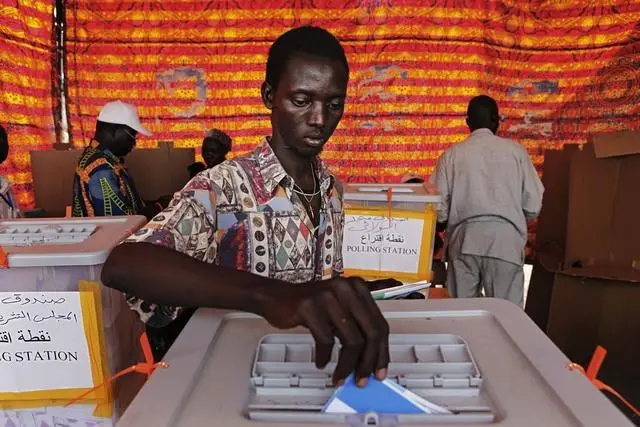
The South Sudan Human Rights Defenders Network has expressed deep concern over proposals by the National Elections Commission to base the 2026 general elections on data from the 2008 population census and 2010 constituency boundaries. Continue reading “Group says using old census, boundaries risks marginalizing South Sudanese voters”
Author: Memoscar Lasuba
Fighting in El-Fasher: RSF claim control of Sudanese Army Base
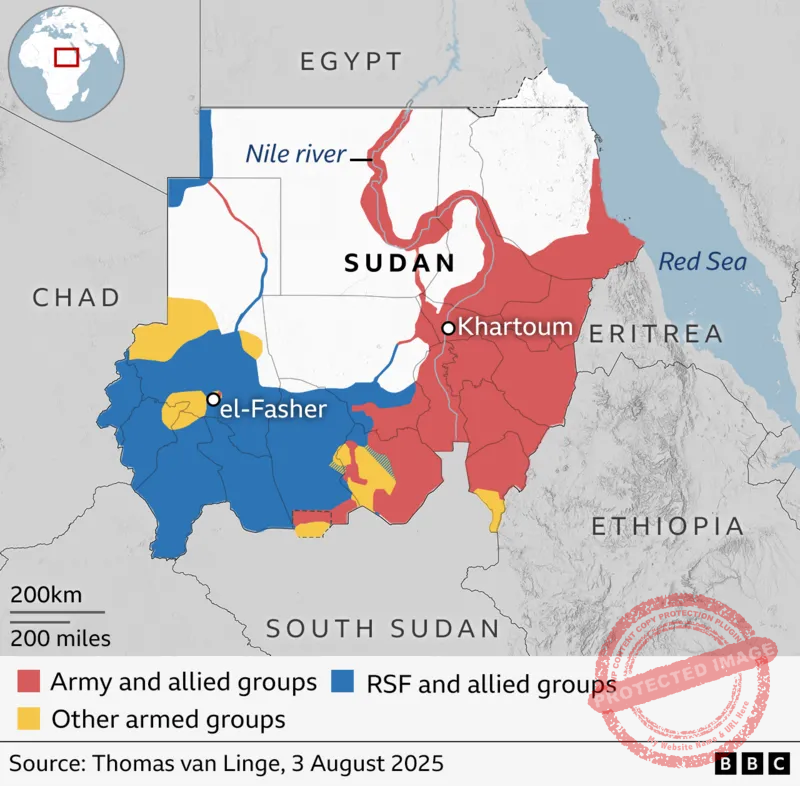
Fierce fighting in North Darfur’s El-Fasher continued this week after the paramilitary Rapid Support Forces (RSF) claimed they captured the Sudanese Armed Forces (SAF) 6th Division Headquarters—the government army’s final major base in the region, according to a BBC report. Continue reading “Fighting in El-Fasher: RSF claim control of Sudanese Army Base”
Torit mayor launches community-led road rehabilitation project

The Mayor of Torit Municipal Council, Ohito Baptist, has launched a community-driven road rehabilitation project aimed at improving the town’s internal road network.
Speaking to Eye Radio from Torit on Tuesday, Mayor Ohito said the initiative is a joint effort between the municipal government, local businesses, and residents.
He described the project as a model of community ownership that encourages collaboration among government officials, traditional leaders, and citizens.
“The road project is community-owned project, that an initiative has been shared with the chiefs and business communities that we need to do something,” said Mayor Ohito.
“It’s all about determination for the citizenship and preferably what they want to do. So we start together with my business community, with this one, the tourist community, they have also to contribute something small or five thousand each household and choose their road where they want to deploy their resources.”
Ohito said each household is encouraged to contribute 5,000 South Sudan Pounds toward improving roads in their respective areas, allowing residents to prioritize which roads to rehabilitate.
He emphasized that the initiative brings together all stakeholders — including government institutions, traditional authorities, and the private sector — to take joint responsibility for local development.
“So it is fully a kind of involvement where all the stakeholders, government stakeholders, in terms of something come together to say let us do something for the people of Torit,” he added.
According to the mayor, the project aims not only to fix poor road conditions but also to promote civic responsibility and community participation in urban development. Continue reading “Torit mayor launches community-led road rehabilitation project”
Parliament advances cybercrime and computer misuse bill to third reading

The National Legislative Assembly has passed the Cybercrime and Computer Misuse Bill 2025 to its third reading after extensive debate on its importance in protecting citizens and regulating online activities in the country.
The bill, first tabled in September 2024 by former Minister of Justice Ruben Madol Arol, aims to prevent and punish crimes committed using computers, mobile devices, or the internet.
It also seeks to protect citizens, businesses, and government institutions from online crimes such as hacking, fraud, and social media abuse as South Sudan continues to embrace digital technology.
Presenting the bill before the house, Hon. Natalina Amjima, the Acting Chairperson of the Committee on Information, Communication Technology, Security, and Justice, explained the key provisions that empower authorities to strengthen national cybersecurity.
“It also illustrates how the authority issues directive to the owners of critical infrastructure, cyber security service providers or service providers for the purpose of ensuring the cyber security of the country,” said Hon. Amjima.
“The chapter also empowers an authority to issue administrative penalties to the services providers, the owners of critical infrastructure in the event of contravention of lay down directive rule and regulation.”
Following the presentation, several lawmakers welcomed the bill, describing it as timely and necessary for a country transitioning into the digital age.
Hon. Bol Tobi from Warrap State said the bill would provide a much-needed legal framework to curb the misuse of social media and protect online financial transactions.
Hon. Dig Moi Oborabra of Lafon County also supported the bill, saying it would safeguard citizens from online threats as technology continues to advance.
Hon. Gatkouth Waat from Ayod County, however, cautioned that while the law is crucial, it should be harmonized with national security laws to avoid legal conflicts.
Women lawmakers also voiced strong support. Hon. Elizabeth James Bol from Twic County urged that the bill be gender-responsive and respect privacy and human rights.
Hon. Deng Dau Deng of Twic East Constituency, a member of the ICT Committee, said the bill aligns with the African Union’s Malabo Convention on Cybercrime and will help prevent election hacking and online fraud.
Other members, including Hon. Dr. Gada James from Yei River County and Hon. Samuel Lote from Torit County, said the legislation will improve data protection, strengthen the judiciary’s ability to handle digital evidence, and address emerging crimes such as hacking and human trafficking.
Hon. Anthony Lino Makana called for the inclusion of new offenses such as SIM-card swap fraud and deepfake technology, while Hon. Bol Pio from Northern Bahr el-Ghazal called for civic education to help citizens differentiate between freedom of expression and cyberbullying once the law is enacted.
The Cybercrime and Computer Misuse Bill 2025 now proceeds to the third reading stage, where members are expected to scrutinize its provisions in detail before final passage.
Eleven killed in clashes between Pibor and Kapoeta Youth
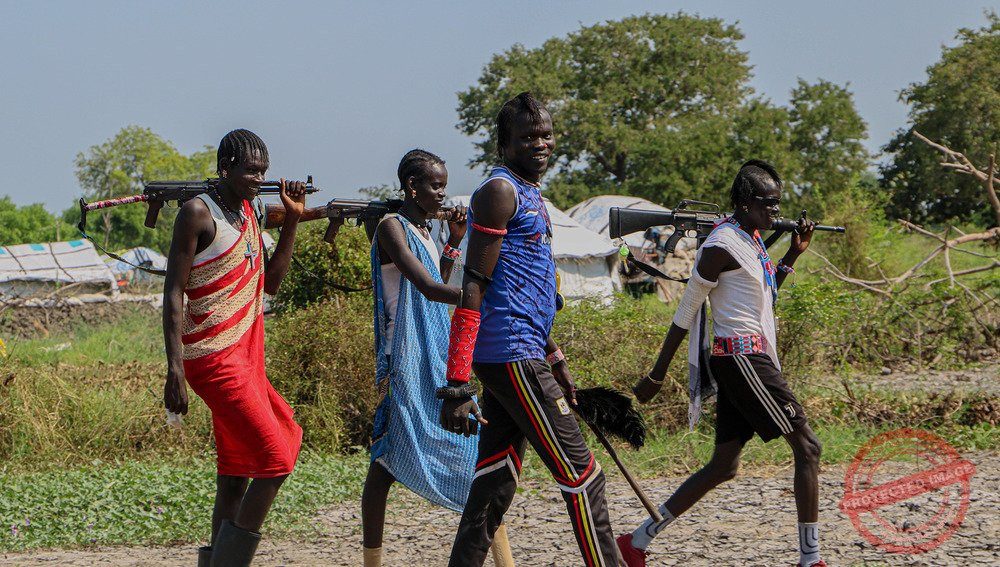
Authorities in the Greater Pibor Administrative Area have reported that eleven people were killed in inter-communal violence on Wednesday involving local youth and youth from Greater Kapoeta in Eastern Equatoria State.
According to Jacob Werchum, the Minister of Information in the Greater Pibor Administrative Area, said the clashes occurred mid-morning in Morech at Moruwo headquarter of Verteth County.
Werchum called on leaders in Eastern Equatoria to take steps to prevent further incidents along the border areas.
“Yesterday morning around 10:45 a.m., armed individuals from the neighboring Toposa tribe in Eastern Equatoria State launched an attack on the Greater Pibor Administrative Area. The assault resulted in the deaths of four local residents and seven attackers,” Werchum told Eye Radio.
He said no women, children, or livestock were harmed during the incident.
“Fortunately, there were no injuries to women or children, and no cattle were harmed during the incident. The local youth bravely responded to the attack and succeeded in repelling the militants back to their territory in Kapoeta East County, Eastern Equatoria State,” he said.
The minister condemned the repeated violence and urged the Eastern Equatoria State leadership to cooperate in restoring peace and security in the area.
“As a government, we strongly condemn these ongoing cycles of violence against our communities in southern Greater Pibor. We urge the leadership of Eastern Equatoria State, especially the governor and authorities in the border counties dominated by the Toposa tribe, to intensify efforts to put an end to these repeated attacks.
“The people of Greater Pibor remain committed to peace and good neighborly relations with all their regional neighbors,” Werchum added.
When contacted, John Elia Ahaji, the Minister of Information in Eastern Equatoria State, confirmed the incident.
He said the clashes followed intelligence reports that armed groups from both sides were preparing raids.
“We received credible intelligence from the Kauto area indicating that a group of youth criminals originating from Pibor was planning to conduct a raid in that region,” Ahaji said.
“According to patrol reports, these youth encountered members of the Greater Pibor Administrative Area, who were also planning to carry out a raid. The two groups clashed during this encounter.
However, he said “we currently lack detailed information about the incident, including the exact casualties and what transpired between the groups. The data collection on both sides is still ongoing. That is the information I can provide at this moment.” Continue reading “Eleven killed in clashes between Pibor and Kapoeta Youth”
MP decries harassment of lawmakers during Juba security searches

A member of the National Legislative Assembly has raised concern over ongoing security operations in the capital, Juba, saying some officers are disrespecting lawmakers and frightening families during house-to-house searches.
Hon. Nyayang Johnson told the Assembly that members of parliament are being mistreated by security personnel who accuse them of being responsible for the country’s problems.
“For us, members of the parliament, such attitudes are not acceptable. Right, honourable speaker, we are members of the parliament with our expired ID, because our ID, it is expired.
“When you present to them, I’m a member of parliament, I should be such in a certain way, they will never listen to you, they will tell you, you are the cause of all the problems of South Sudan, and they will walk to your house the way they want it,” Hon. Nyayang said.
The lawmaker added that members of parliament are representatives of the people and deserve to be treated with respect when security personnel visit their homes.
“Right, honourable speaker, we are representative of the people. Yes, we accept the sign. And by the law, we’re supposed to have an arm in our house, the guard. But very unfortunately, we don’t have the guard because our situation cannot afford us to pay for our guard. So I want the house with a committee of security, because they say it is us who passed certain resolution. When an arm come to your house with his full arm, he even is scared, the kids in the house, the way they put their arm, they should at least present to you the paper that has been approved by the division that allowed them to site.
“Because the same places may come to you at night and rob you in a different form. So right, honourable speaker, we want our houses as a member of parliament to be set in a very responsible manner.”
In response, Deputy Speaker Parmena Awerial acknowledged the frustration expressed by the lawmaker but said the challenges being faced are part of the country’s wider difficulties.
“Honourable Nyayang said that they said that we are the cause. I don’t know what cause do we have. If we see now the issue of finances, our economic situation, it is all over us. Even the MPs are not getting money now. So it is the situation of the country for all of us, not individuals,” the Deputy Speaker said.
He added that all lawmakers, including himself, are using expired identification cards due to administrative delays.
“They have seen us here talking all this morning, the Minister of Petroleum last time, the Minister of Finance, and they present the papers here. So they have seen that we, the members of the assembly, we have nothing here. We don’t print money or we don’t collect taxes. The money is collected by sentence section. And then we go and get money like them. So we don’t have money here.
The Assembly has referred the matter to the Security Committee for further discussion.
We will refer this to the security, say that you can follow that, you can write to them, the chairman of the security. The other thing is that we have got IDs which has expired, all of us, including mine, not you alone.” Continue reading “MP decries harassment of lawmakers during Juba security searches”
2025 most challenging year for South Sudan peace deal, says R-JMEC

The peace monitoring body, the Reconstituted Joint Monitoring and Evaluation Commission — R-JMEC — says 2025 has been the most challenging year for the implementation of South Sudan’s revitalized peace agreement since it was signed in 2018.
In its latest quarterly report, R-JMEC cites persistent political and security violations by the signatory parties as having “systematically affected the implementation of key provisions and weakened the institutions and mechanisms established under the agreement.”
The report, covering the period from 1st July to 30th September 2025, warns that the ongoing violations and delays pose serious risks to South Sudan’s transition, especially as the country prepares for its first democratic elections in less than 15 months.
R-JMEC said, “There is need for a deliberate effort for all the parties to dialogue and return to inclusive implementation of the R-ARCSS. Failure to do so risks putting the South Sudan peace process at risk and will set a bad precedence for future peace processes.”
According to the body, ceasefire violations significantly increased during the reporting period — particularly involving the SSPDF and SPLA-IO across Upper Nile, Jonglei, Western Equatoria, Central Equatoria, and Eastern Equatoria States — indicating widespread breaches of the Permanent Ceasefire and Transitional Security Arrangements.
Quoting data from the Ceasefire and Transitional Security Arrangements Monitoring and Verification Mechanism, CTSAMVM, R-JMEC revealed that:
“In August 2025, 35 out of 120 daily reports from our Mobile Verification Teams contained violations, representing 29% of the total. In September, 60 out of 120 reports contained violations — a 50% rate — constituting an increase of nearly 73%.”
The report further notes that CTSAMVM struggled to investigate these incidents due to access challenges and escalating violence in several areas.
The split in the political wing of the SPLM/A-IO has interfered with their representation in CTSAM-VM structures,” it adds, pointing to disruptions in the Monitoring and Verification Teams and the Joint Monitoring Coordination Office.
Meanwhile, R-JMEC reported no progress in the commencement of Phase II of the unification of forces, a key pending task under the peace agreement.
The monitoring body urged all parties to cease hostilities, embrace dialogue, and reactivate implementation mechanisms, calling for full adherence to the Permanent Ceasefire.
It also recommended that the Unity Government expedite the Council of Ministers’ meeting to discuss the national budget and the Finance Bill for 2025/2026, re-table the National Security Service Act before the Transitional National Legislature, and enact pending laws revised by the NCAC, including the two Petroleum laws and the NGO Bill.
R-JMEC stressed that all stakeholders must “faithfully adhere to the mandate to implement the peace agreement in letter and spirit to realize free, fair, and credible elections in December 2026.”
The body also called on IGAD to urgently convene a Council of Ministers meeting and an IGAD Heads of State and Government Summit to discuss South Sudan’s current situation and take timely, appropriate remedial actions.
According to the peace accord, R-JMEC is mandated to monitor and oversee the implementation of the 2018 Revitalized Agreement, including the adherence of parties to agreed timelines and commitments.
R-JMEC concludes that unless parties recommit to dialogue and inclusivity, South Sudan’s peace process and democratic transition could face serious setbacks. Continue reading “2025 most challenging year for South Sudan peace deal, says R-JMEC”
CES minister shuts down rock city, Khor Woliang slaughterhouses

Central Equatoria State Ministry of Animal Resources, Fisheries, and Tourism on Wednesday ordered the immediate closure of Rock City and Khor William slaughterhouses and banned all slaughtering activities at the sites following public complaints about illegal and hazardous practices that pose serious health risks.
Speaking to journalists, Minister Alex Latio Elia warned that slaughtering was being conducted “illegally on the ground, with butchers washing meat in nearby running water,” a practice he described as “unhygienic and a source of diseases for state residents.”
Latio stressed that “these sites have been closed and any activity there is prohibited,” warning that “anyone defying this decision will face legal action, have their license revoked, their meat confiscated, and a case opened against them.”
He affirmed that the state government “will not allow its butchers to engage in such illegal practices,” adding that these unhygienic operations contribute to the spread of many diseases.
The minister urged all relevant authorities to support the ministry’s efforts to curb these activities and called on citizens to report any illegal slaughter operations.
As part of long-term solutions, he appealed to “development partners, leaders, and private sectors to participate in establishing modern slaughterhouses to curb illegal practices,” while also urging the Ministry of Health to intensify monitoring efforts.
For his part, Angelo Wani Nyombi, head of the Butchers’ Union, confirmed the closure order and issued a message to butchers in Custom, Rock City, and Jebel, stating: “Rock City and Khor William slaughterhouses must be closed, and any violation of this order will result in legal action and license withdrawal.”
Nyombi emphasized that the only official and approved slaughterhouses in the state are Gumbo and Gudeli near Habooba Bridge, calling on all butchers to operate through formal channels to safeguard public health and food safety.
CES orders Juba city to report on cemeteries occupied by residents
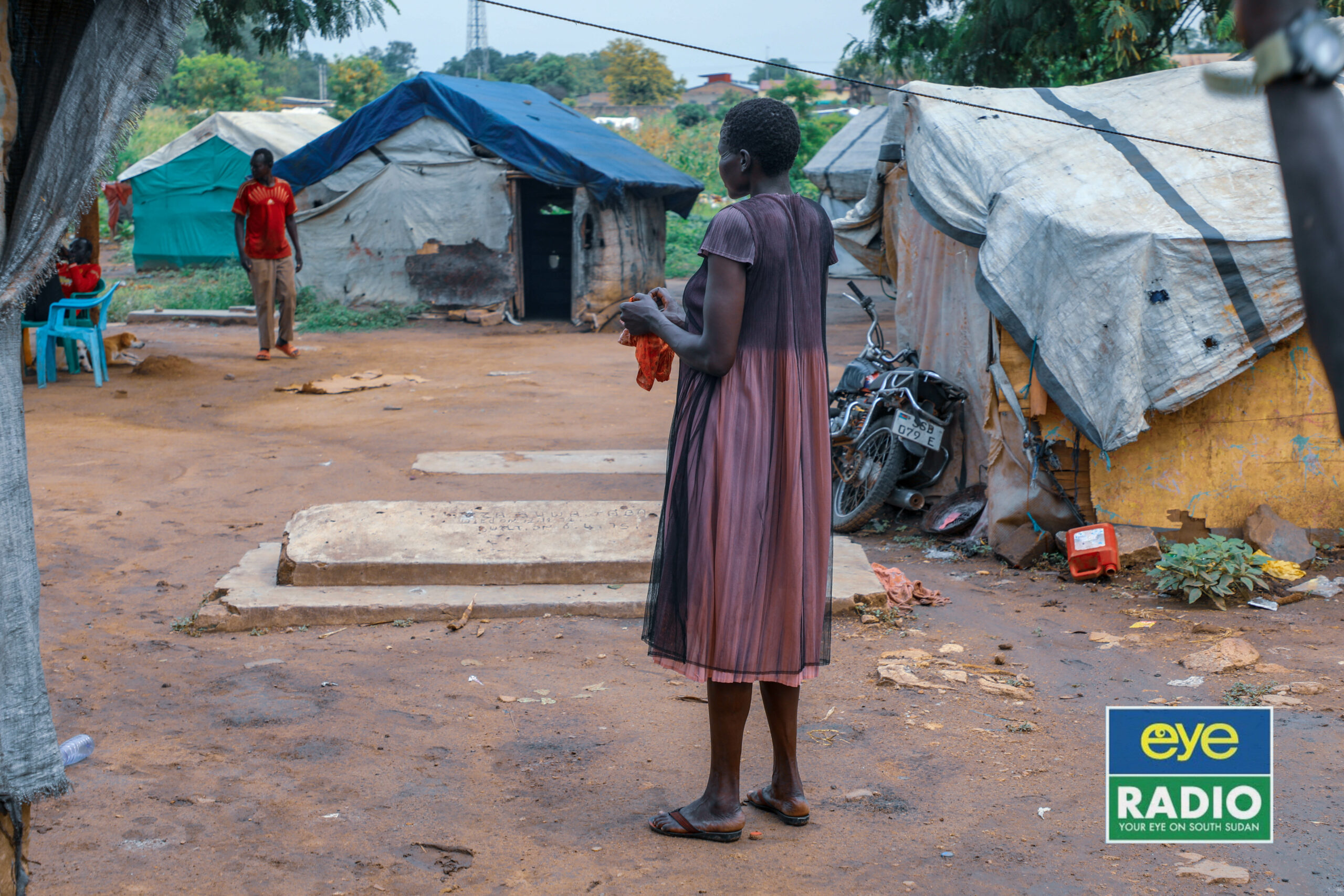
The Central Equatoria State Security Committee has ordered the Juba City Council and Juba County authorities to submit comprehensive reports identifying cemeteries currently occupied by residents, as part of efforts to develop sustainable solutions and reclaim public spaces.
The directive was issued during an ordinary meeting of the State Security Committee, chaired by Governor Rabi Mujung Emmanuel on Wednesday at Munuki Block.
The session focused on the status of public spaces in Juba, many of which have reportedly been grabbed or converted into residential areas.
Speaking after the meeting, Leon Abe Brown, Minister of Local Government and Law Enforcement Agencies, said the committee passed key resolutions to address the illegal occupation of cemeteries and other public land.
“The purpose is to find out who lives in these cemeteries and why, so we can guide the way forward,” Minister Abe said. “Some cemeteries have turned into residential areas, which is unacceptable.”
The Committee also discussed the operations of market associations, including the Boda-Boda Association, noting that some of their activities overlap with local government responsibilities.
Minister Abe reaffirmed the State Government’s commitment to maintaining law and order and called on the public to cooperate with security agencies in implementing these resolutions.
Following the meeting, Governor Rabi Mujung Emmanuel inspected offices at the Munuki Block Council and met with staff of the Juba City Council. He noted that, despite isolated incidents, the overall security situation across Central Equatoria State remains calm and under control.
GESS commences nationwide cash transfers for school girls, impaired learners

Girls’ Education South Sudan (GESS) has officially begun its 2025 round of cash transfers to girls and boys with disabilities across the country, with payments starting on Tuesday, 22nd October and expected to continue until 21st November.
The initiative aims to encourage school attendance and retention among some of South Sudan’s most vulnerable learners, especially girls in upper primary and secondary school, as well as boys with disabilities.
According to GESS, the cash transfers are targeted at girls in Primary 7 to Secondary 4, learners in Level 4 of the Accelerated Learning Programme (ALP), and boys with disabilities enrolled in those same levels.
Beneficiaries in candidate classes—Primary 8, Secondary 4, and ALP Level 4—will receive SSP 166,000, while learners in other eligible classes will receive SSP 129,000.
Daniel Geseka, Team Leader at GESS, confirmed the rollout during an interview on Eye Radio’s Daw Show.
“Officially, the payment begins today across the country, today the 22nd,” said Geseka.
“There is logistics involved in terms of moving and communication and all that. But one of the things where we come today is to announce that payment has started, and learners should be expecting payments from today onwards.”
Geseka also pointed to the urgency of disbursing the funds before schools close or national examinations begin in early December.
“We still have very low enrolment of learners with disability,” he added.
“That’s why we extended it to boys as well, because they are also disadvantaged. We still go out there and say we have more children with disability who are not even in school. We thank our partners and donors for their continued support, and we hope that, with time, the numbers will improve the way it has improved for girls.”
The cash transfers are part of GESS’s broader effort to eliminate the financial and societal barriers that prevent girls and children with disabilities from accessing education.
Since 2014, over one million girls have benefited from the program, which seeks to reduce dropouts linked to poverty, early marriage, and cultural biases against female education.
David Musisi, Deputy Team Leader for Essential Services at the British Embassy in Juba, reaffirmed donor commitment to the program.
“The amount will support children to go to school—to buy scholastic materials, to buy school uniforms, to do the things they need to do in order to facilitate that journey every day to school and achieve their qualifications,” said Musisi.
“We’ve seen donors move out of South Sudan. We’ve seen programs be cut or changed. Because it’s so imperative that girls finish their education, we are targeting those top classes to ensure that education is completed. This program has achieved a lot in 10 years, and we will continue to strive for equitable, quality education in South Sudan.”
While floods and ongoing insecurity remain a challenge for distribution in some areas, GESS says it is coordinating closely with partners on the ground to ensure that eligible learners receive their payments.
The inclusion of boys with disabilities, first introduced in 2024, marks a significant expansion of the program’s reach, acknowledging the double marginalization faced by learners living with disabilities in South Sudan. Continue reading “GESS commences nationwide cash transfers for school girls, impaired learners”