
14th February 2026
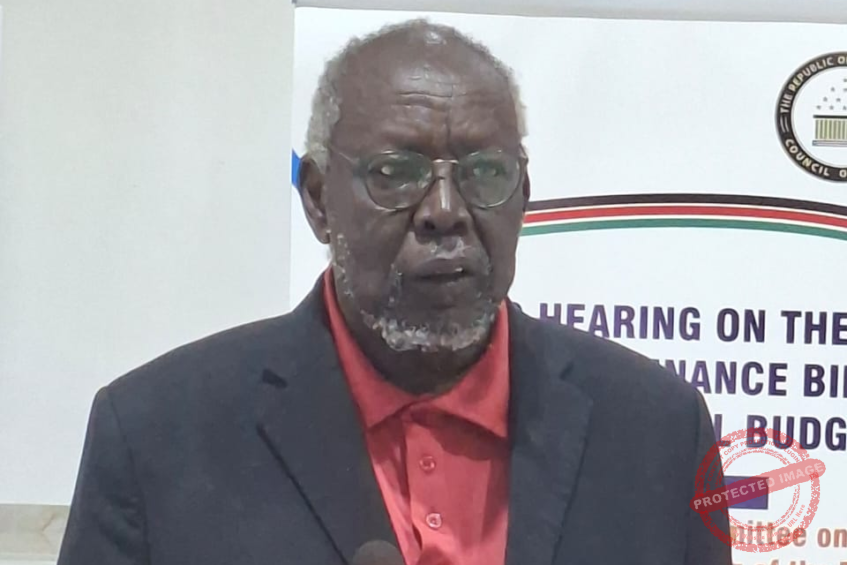
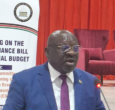
Dr. Lual Achuek, the Chairman of the Sub-Committee for Finance and Economic Planning on Macroeconomic Policy, speaking during Day 2 of the 2025–2026 Budget Public Hearing at the National Parliament on Friday, February 13, 2026 - Credit: Koang Pal Chang/Eye Radio
JUBA, South Sudan (Eye Radio) – The Chairman of the Sub-Committee for Finance and Economic Planning on Macroeconomic Policy, Dr. Lual Achuek stated that the 2025/2026 budget must prioritize youth empowerment, proposing a 300-billion-pound investment in youth production to provide economic alternatives to rebellion.
Speaking on the second day of the 2025–2026 Budget Public Hearing, on Friday, February 13, Dr. Lual told lawmakers to treat the budget as a “social contract” and a “definitive statement of the nation’s priorities.” He called for a shift from “cash budgeting” to a policy that addresses unemployment and economic stagnation.
The Chairman of the Sub-Committee for Finance and Economic Planning on Macroeconomic Policy told lawmakers to stop being “afraid” and to treat the budget as a “definitive statement of the nation’s priorities.”
From “Job Seekers” to Full Employment
Dr. Achuek stated that the primary “objective” of the budget must be full employment, warning that idleness among youth leads to rebellion.
“Our youth are unemployed. And those who are employed, they are underemployed,” Dr. Achuek said. He linked economics to security: “When they get angry… they run into bushes, become rebels. If they are employed, they will not be intimidated to march on Juba.”
To address this, he proposed a 300 billion pound Youth Empowerment Scheme. Dismissing fears of inflation, he said, “It is not inflationary. Because we are not increasing salaries. We are employing the youth, who will produce more… to grow tomatoes instead of bringing tomatoes from Uganda.”
Inflation and the Banking Sector
Regarding the “purchasing power of the pound,” Dr. Achuek argued that in South Sudan, “inflation is linked to the exchange rate.” “The dollar has become a commodity… it becomes the unit of account, it becomes the store of value. Because you cannot keep your pound as a store of value.”
He criticised banks for limiting salary withdrawals. “You go to the bank, the bank tells you, you cannot take more than 100,000… why do I keep my money? We are discouraging our people in the banking to bank.”
Oil Revenue Management
The Chairman spoke on the oil percentages for producing states (2%) and communities (3%). He stated that lawmakers are blocking these funds.
“I’m sorry to say it is some of our colleagues, MPs who are sitting in Juba who are making sure the money doesn’t reach the communities,” he said. Regarding the lack of payment in Upper Nile, he asked, “What the hell is happening? You have no reason not to pay your local staff.”
He told state leaders to use their financial rights: “The states… can borrow based on their own credit worthiness… open your bank account at the central bank and that’s where your money goes from the oil.”
Environmental Protection
Dr. Achuek spoke about the state of the Nile and the environment, calling for an Environmental Protection Fund to manage climate aid.
“Are we not ashamed of what we are doing to our environment? Are we not destroying the Nile?” he asked. He noted that the UN has provided $50 million and told civil society to monitor the funds “to make sure that those things don’t happen… not to be diverted like all the nonsense that happened in the past.”
The “Irrevocable Standing Order” for Salaries
To end “12 months of salary arrears” while collecting “more than what was planned,” Dr. Achuek announced a new policy recommendation.
“We are going to recommend what we call an irrevocable standing order,” he said. This order would require the Central Bank to pay salaries. “Your actual money, not civic advice, must come to your account at the end of every month from the central bank. No point for the Minister of Finance.”
He suggested South Sudan adopt the “American way” for budget delays: “If the budget is delayed, there is a government shutdown. You cannot spend until you come to Parliament.”

Currently on air
00:00:00 - 06:00:00
 1
1Published February 10, 2026
 2
2Published February 9, 2026
 3
3Published February 10, 2026
 4
4Published February 8, 2026
 5
5Published February 10, 2026
Published 9 hours ago
Published 11 hours ago
Published 12 hours ago
Published 14 hours ago
Support Eye Radio, the first independent radio broadcaster of news, information & entertainment in South Sudan.
Make a monthly or a one off contribution.
Copyright 2026. All rights reserved. Eye Radio is a product of Eye Media Limited.