
1st June 2026
You are here: Home | National News | News | WFP scales up emergency aid in Akobo as hunger crisis worsens
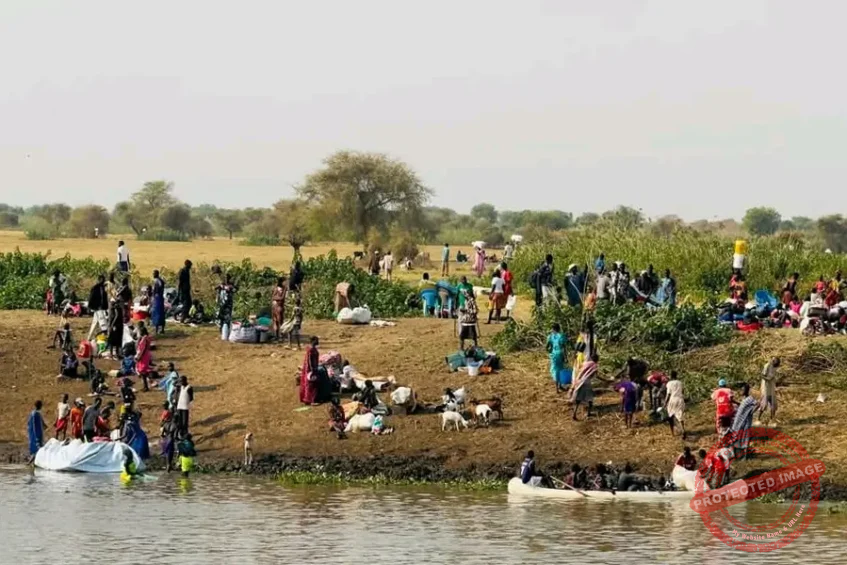
One Save the Children staffer who was caught up in the violence has told a harrowing story of suffering and survival, following the repeated evacuations of towns across Akobo County in eastern Jonglei state since the start of the year.|Courtesy
The United Nations World Food Programme (WFP) has scaled up its emergency response in Akobo County as catastrophic hunger and severe malnutrition continue to worsen in parts of the area amid ongoing conflict, displacement and limited humanitarian access.
In an operational update issued Thursday, WFP said it has expanded food and nutrition assistance in Akobo East, where thousands of people are facing acute food insecurity and famine-like conditions.
“The situation is critical and demands immediate attention to save lives of people who desperately need assistance,” said WFP Country Director Mutinta Chimuka.
“Our hope is to continue to reach people in need. Sustained safety and security of humanitarians and humanitarian cargo is therefore crucial to allow us to ramp up assistance and effectively reach all those in need.”
According to the latest Integrated Food Security Phase Classification (IPC) assessment, parts of Akobo County are experiencing IPC Phase 5 (Catastrophe), the highest level of food insecurity and one of four counties in South Sudan considered at risk of famine if conditions deteriorate further.
The assessment projects that about 97,000 people will face Crisis-level hunger, while 85,000 will experience Emergency conditions and another 12,000 will face catastrophic levels of hunger through July.
WFP said the nutrition situation has also deteriorated significantly, with acute malnutrition reaching IPC Phase 5 (Extremely Critical). The agency attributed the worsening crisis to conflict-related displacement, loss of livelihoods, disruption of health and nutrition services and increased disease outbreaks linked to overcrowding.
More than 142,000 people have been displaced from Akobo County and surrounding areas, according to WFP, while about 100,000 have fled across the border into Ethiopia. The agency added that conflict and looting have caused the collapse of local markets, severely limiting access to food.
Since launching its emergency response three weeks ago, WFP said it has reached more than 60,000 vulnerable people in Akobo.
The assistance includes emergency food support for more than 15,000 people, nutrition commodities for nearly 6,000 pregnant and breastfeeding women and high-energy biscuits for more than 30,000 people displaced by the conflict.
The agency has also provided specialized nutritious foods to more than 6,000 children and mothers, screened 15,000 children for malnutrition and enrolled 3,000 children suffering from moderate acute malnutrition into treatment programmes.
To support the response, WFP has transported hundreds of metric tons of food and nutrition supplies into the area through air operations and road convoys.
The agency said a 33-truck convoy carrying food assistance, nutrition supplies and relief items is expected to arrive this week and could be the last road convoy before heavy rains render key routes impassable.
Despite recent improvements in access, WFP warned that humanitarian operations remain heavily dependent on expensive air transport due to insecurity and damaged infrastructure.
The agency appealed for an end to hostilities and continued humanitarian access, warning that hunger and malnutrition are likely to worsen during the approaching lean season. WFP said it urgently requires $266 million to sustain life-saving food and nutrition assistance and support humanitarian operations across South Sudan in 2026.

Currently on air
16:00:00 - 18:00:00
 1
1Published May 30, 2026
 2
2Published May 25, 2026
 3
3Published May 28, 2026
 4
4Published May 29, 2026
 5
5Published May 29, 2026
 6
6Published May 26, 2026
 7
7Published May 29, 2026
 8
8Published May 27, 2026

Published 28 minutes ago
Published 1 hour ago
Published 3 hours ago
Published 3 hours ago

Published 4 hours ago

Published 4 hours ago
Support Eye Radio, the first independent radio broadcaster of news, information & entertainment in South Sudan.
Make a monthly or a one off contribution.
Copyright 2026. All rights reserved. Eye Radio is a product of Eye Media Limited.