
1st June 2026
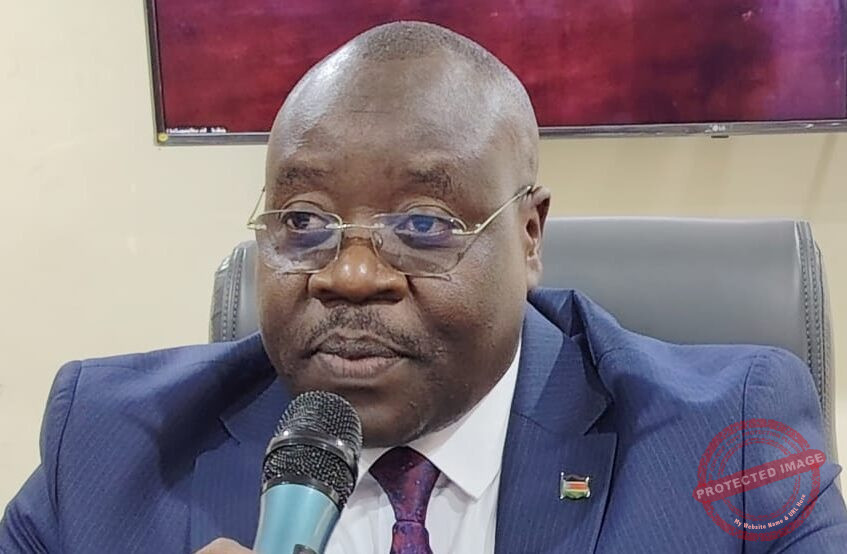
Hon. Losuba Ludoru Wongo, Minister of Mining - Courtesy
Speakers at a Mining and Community Rights workshop in Juba warned that weak regulation and poor management of mining activities could lead to environmental destruction, displacement of communities, and loss of livelihoods despite the sector’s potential to support economic growth and infrastructure development.
The one-day forum at the weekend, organized through a partnership between the Ministry of Wildlife Conservation and Tourism, the Ministry of Mining, African Parks, and the University of Juba, focused on community benefits and risks associated with mining, including environmental protection, land use, and social impacts.
Officials said the training and dialogue sessions are intended to improve understanding among stakeholders and promote informed participation in decision-making processes linked to extractive industries.
Minister of Mining Losuba Ludoru Wongo said oil, gas, and mining exploration have the potential to contribute significantly to economic growth, employment creation, infrastructure development, and national transformation if managed responsibly.
He warned that poorly managed mining activities could result in environmental degradation, destruction of livelihoods, displacement of communities, and damage to wildlife habitats, while also increasing the risk of human rights violations.
The minister said communities living in mining areas must be treated as key stakeholders whose voices, land rights, dignity, and livelihoods should be protected.
He also called for transparency, accountability, and fair benefit sharing, saying the ongoing workshops are intended to generate practical solutions for sustainable mining practices.
Deputy Vice Chancellor for Academic Affairs at the University of Juba, Professor Isaac Cleto Rial, said mining expansion in fragile legal and institutional environments could create serious social, environmental, and economic risks if not properly regulated.
He warned that weak legal and policy frameworks could undermine both micro and macroeconomic stability, deepen social divisions, and threaten ecological systems, particularly as interest in rare earth minerals grows in South Sudan.
Professor Cleto said no single institution can address the challenges alone and called for cooperation among government, academia, civil society, the private sector, and communities to build a mining sector that respects rights and protects the environment.
Representatives from African Parks also spoke about the importance of community participation, environmental safeguards, and free, prior, and informed consent in resource development.
Drawing from international experiences, they said properly managed mining projects can support development through improved roads, health facilities, education, and market access while ensuring communities benefit fairly from extraction activities.
Participants at the workshop also discussed land governance, saying land remains essential for infrastructure, agriculture, settlement, and cultural needs such as burial sites, and should therefore be managed through careful planning and suitability assessments.
Organizers said the dialogue series will continue in the coming months as part of efforts to strengthen responsible mining practices and ensure that development benefits are shared equitably while protecting communities and the environment.

Currently on air
16:00:00 - 18:00:00
 1
1Published May 30, 2026
 2
2Published May 25, 2026
 3
3Published May 28, 2026
 4
4Published May 29, 2026
 5
5Published May 29, 2026
 6
6Published May 26, 2026
 7
7Published May 29, 2026
 8
8Published May 27, 2026

Published 29 minutes ago
Published 1 hour ago

Published 3 hours ago
Published 3 hours ago

Published 4 hours ago

Published 4 hours ago
Support Eye Radio, the first independent radio broadcaster of news, information & entertainment in South Sudan.
Make a monthly or a one off contribution.
Copyright 2026. All rights reserved. Eye Radio is a product of Eye Media Limited.