From midwife to fractured ally: the troubled U.S.–South Sudan relationship
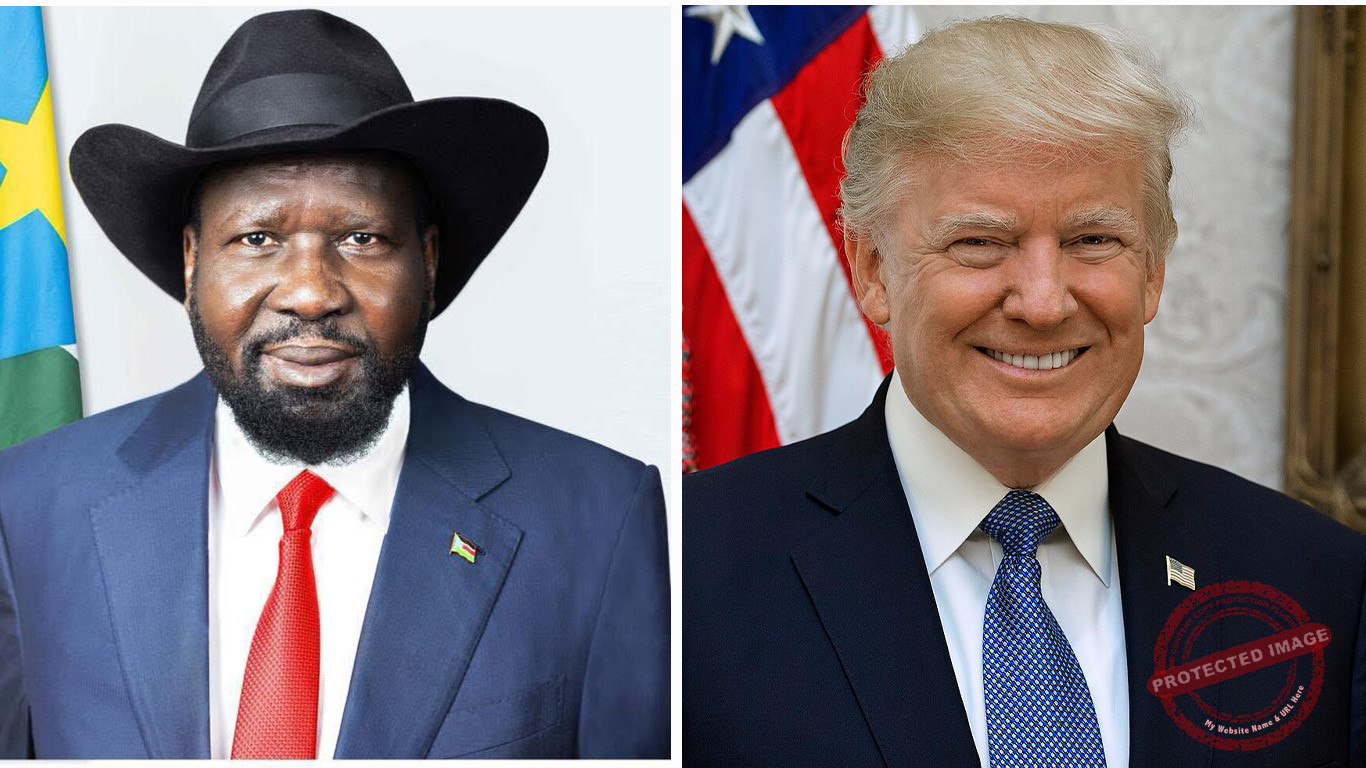
JUBA, South Sudan — Once hailed as the chief international architect of South Sudan’s path to statehood, the United States now finds itself at odds with leaders in the country it helped bring into existence.
From backing Sudan’s marginalized southern population during decades of civil war to championing the 2005 Comprehensive Peace Agreement and supporting independence in 2011, Washington played a pivotal role in South Sudan’s liberation story. Yet years of political instability, unmet democratic reforms, and growing diplomatic tensions have transformed a once-celebrated partnership into a strained and increasingly fractured relationship.
For decades, the story of South Sudan’s liberation struggle was inseparable from the influence of the United States. From the ashes of the 1955 Torit Mutiny to the signing of the 1972 Addis Ababa Agreement, from the rise of the SPLA/M in 1983 to the Comprehensive Peace Agreement (CPA) in 2005, and finally the birth of the world’s youngest nation in 2011, Washington stood as one of the most consequential foreign actors in South Sudan’s political journey.
But today, the relationship that once symbolized hope, liberation, and diplomatic partnership is increasingly defined by sanctions, visa restrictions, political mistrust, and sharp exchanges between officials in Juba and Washington.
The transformation reflects one of the most dramatic diplomatic reversals in modern African history.
America and the long road to South Sudan’s independence
When the first Anyanya rebellion erupted following the Torit Mutiny in 1955, the United States was not yet directly involved in Southern Sudan’s struggle. However, as Sudan’s civil wars evolved and Khartoum’s policies increasingly attracted international criticism, Washington gradually became more engaged.
Following the collapse of the Addis Ababa Agreement in 1983 and the formation of the Sudan People’s Liberation Army (SPLA) under Dr. John Garang, the conflict drew major Western attention. During the 1990s and early 2000s, the United States became one of the SPLM/A’s strongest international backers diplomatically and politically.
American evangelical movements, lawmakers, human rights groups, and diplomats amplified reports of marginalization, aerial bombardments, slavery, and religious persecution by the Sudanese government in Khartoum.
By the early 2000s, Washington had fully positioned itself behind efforts to end Sudan’s civil war. The administration of former U.S. President George W. Bush played a decisive role in pushing Sudan’s warring parties toward negotiations that culminated in the 2005 Comprehensive Peace Agreement.
The CPA ended Africa’s longest-running civil war and paved the way for the 2011 referendum, where South Sudan overwhelmingly voted for independence.
When South Sudan became independent on July 9, 2011, the United States was among the first countries to recognize the new nation. Then-President Barack Obama described the moment as “hard-earned.”
For many South Sudanese, America was viewed not merely as a foreign ally, but as a midwife of independence itself.
Billions in aid and a deep humanitarian footprint
Even after independence, the United States remained South Sudan’s largest humanitarian donor.
Washington has consistently spent hundreds of millions of dollars annually on humanitarian assistance, food aid, refugee support, healthcare, education, and emergency response programs in South Sudan.
According to U.S. government figures and humanitarian agencies, American assistance to South Sudan has often exceeded $1 billion annually during peak humanitarian crises, particularly after the outbreak of the 2013 civil war.
The aid has funded emergency food assistance, refugee camps, flood response, famine prevention, health programs, peacebuilding initiatives, and support for displaced communities.
Despite worsening diplomatic relations, the United States continues to finance major humanitarian operations in South Sudan through USAID, the World Food Programme, UNICEF, and other international partners.
Ironically, even as political tensions deepen, Washington remains one of the key financial lifelines sustaining humanitarian operations in the country.
From independence celebration to civil war
The optimism of independence, however, collapsed barely two years later.
In December 2013, political rivalry within the SPLM leadership erupted into civil war between forces loyal to President Salva Kiir and First Vice President Dr. Riek Machar.
The conflict shattered the image of the newly independent nation. Hundreds of thousands were killed, millions displaced, and accusations of atrocities emerged from both sides.
The United States, once South Sudan’s strongest advocate, became one of its harshest critics.
American diplomats repeatedly accused South Sudanese leaders of betraying the sacrifices that led to independence. Washington condemned corruption, violence, and repeated delays in implementing peace agreements.
Over the years, the U.S. imposed sanctions and visa restrictions on several officials accused of fueling conflict or obstructing peace implementation.
Among those sanctioned were current Minister of Justice and Constitutional Affairs, and the then Information Minister, Michael Makuei Lueth, Martin Elia Lomuro, Minister of Cabinet Affairs, Chol Thon Balok, Minister of Défense, Dr. Joseph Nguen Manytuil, Governor of Upper Nile State, among others in 2017.
Makuei fiercely rejected the sanctions and accused the United States of hypocrisy and interference.
“The Americans think they can intimidate South Sudan through sanctions, but sanctions will not solve the problems of this country,” Makuei said at the time.
In another response to U.S. pressure, Makuei dismissed American criticism by arguing that South Sudan’s sovereignty should be respected.
Similarly, Cabinet Affairs Minister Dr. Elia Lomuro frequently criticized Western pressure and accused foreign powers of attempting to dictate South Sudan’s political direction.
Lomuro once argued that some international actors were “behaving as if South Sudan is under trusteeship,” insisting that the country must be allowed to resolve its own affairs without external coercion.
America and the R-ARCSS peace agreement
Despite deteriorating relations, the United States remained deeply involved in efforts to rescue South Sudan from collapse.
Washington backed the IGAD-led mediation process that resulted in the 2018 Revitalized Agreement on the Resolution of the Conflict in South Sudan (R-ARCSS).
The agreement established the Revitalized Transitional Government of National Unity and halted large-scale fighting.
However, implementation of the peace deal has faced repeated delays, extensions, and political disputes.
The United States consistently demanded progress on key provisions, including security sector reforms, constitutional-making, civic freedoms, accountability mechanisms, and preparations for credible elections.
Washington repeatedly warned that elections without reforms could trigger renewed instability.
New conditions, Machar’s detention, and escalating tensions
Relations sharply worsened again in recent months following renewed political tensions and reports surrounding the detention and restriction of opposition figures.
The United States and Western partners reportedly pushed for the release of Dr. Riek Machar and other political detainees as part of broader confidence-building measures tied to peace implementation and support for South Sudan’s electoral process.
Washington also emphasized conditions including political freedoms, civic space, constitutional reforms, and security guarantees before meaningful support for elections could proceed.
But the South Sudanese government strongly rejected claims that there were political prisoners in detention.
Responding to the criticism, Justice Minister Michael Makuei insisted that those in detention were not political prisoners.
“South Sudan has no political detainees. These are criminals facing charges before competent courts of law,” Makuei said.
Cabinet Affairs Minister Elia Lomuro echoed the same position, arguing that the government would not allow political pressure from foreign countries to interfere with judicial processes.
Their remarks reflected growing frustration within sections of the government over what officials describe as excessive Western interference in South Sudan’s sovereignty.
Sanctions, Crawford Capital, and a fading partnership
The diplomatic rift deepened further after Washington imposed sanctions on Crawford Capital Ltd. and announced visa restrictions on members of the transitional government accused of corruption and obstructing peace implementation.
The United States accused officials and affiliated entities of undermining the R-ARCSS and siphoning public resources at the expense of ordinary citizens.
The measures triggered strong reactions from government officials, some of whom accused Washington of double standards and political bullying.
Meanwhile, the Ministry of ICT defended Crawford Capital, saying the company was involved in technological and electronic governance initiatives.
But Washington’s frustration has continued to grow.
American officials increasingly portray South Sudan’s leaders as obstacles to peace and democratic transition. In return, many South Sudanese officials now view the United States as punitive, intrusive, and dismissive of the country’s sovereignty.
The irony remains striking.
A country whose independence was championed by the United States now finds itself under mounting American sanctions, diplomatic pressure, and growing international isolation.
The same Washington that once celebrated South Sudan as a triumph of freedom now warns that the country risks sliding back toward instability and authoritarianism.
And as South Sudan approaches another uncertain political transition, one question continues to shadow the relationship:
Can the partnership that helped deliver independence survive the disappointments of statehood?