
17th August 2026
You are here: Home | Central Equatoria State | Featured | In-depth / Feature Stories | National News | News | Kulipapa, not “Jebel Iraq”: the fight to preserve Juba’s indigenous identity
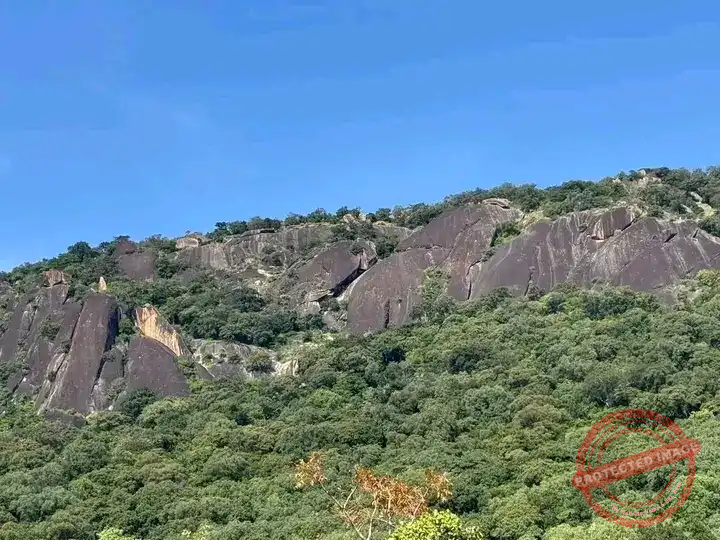
Jebel Kidi, Kulipapa Area, West of Juba County. Photo credit: Courtesy
Before gold miners arrived, before conflict maps and viral headlines renamed the hills, the people who lived beneath the rocky slopes west of Juba knew the place by another name, Kulipapa. It was a name rooted in memory, geography and identity. Elders knew it.
Hunters knew it. Fighters who crossed the terrain during the liberation struggle knew it. Yet today, many residents, media reports and even public conversations refer to the area as “Jebel Iraq,” a name local leaders say was never indigenous to the land.
Now, the debate over one mountain has become a larger battle over history, belonging and cultural erasure in South Sudan’s capital.
For indigenous communities in Central Equatoria State, the issue is no longer simply about maps or directions. It is about identity itself.
As Juba rapidly expands into a cosmopolitan capital where every South Sudanese has a constitutional right to live, local authorities warn that indigenous names are disappearing under layers of imposed or casually adopted labels, names that often ignore the history of the original inhabitants.
And nowhere is that concern more visible than in Kulipapa.
A mountain with two names
The rocky area currently known by many as “Jebel Iraq” recently gained national attention after deadly violence linked to mining activities. But even as the tragedy dominated headlines, officials in Central Equatoria State noticed another problem: many media outlets were reporting from a place they said did not officially exist.
Patrick Nyarsuk, the Central Equatoria State Minister of Information, said misinformation around the incident exposed a deeper issue, the growing disappearance of indigenous place names.
“There was an incident that happened in Kulipapa at the mining site,” Nyarsuk explained. “The information that went to media reported by some media houses would have increased the tension that was there.”
He said some outlets exaggerated the death toll, reporting more than 70 fatalities when state authorities later verified 36 deaths.
“This is the importance of communicating with the right authorized individual at the level of the government so that you will be able to provide accurate, verified information to the public,” he said.
But beyond casualty figures, Nyarsuk said the government had become increasingly alarmed that journalists and residents were “changing the name of the historical places” in Central Equatoria State.
“We have come to learn as the government of Central Equatoria that during your reporting, you people are even changing the name of the historical places of the government of Central Equatoria State because you are not communicating with the right authorized people and it is going on media,” he added.
For state officials, the concern is not merely administrative. They believe names carry the memory of communities that existed long before modern Juba expanded into a national capital.
The story behind “Jebel Iraq”
The term “Jebel Iraq” itself appears to come from wartime folklore.
Ambrose Lomin Pitia, the First Deputy Speaker of the Transitional National Legislative Assembly, said the name emerged after clashes involving Arab forces and alleged Iraqi fighters during the civil war years.
“The so-called Iraq, that is not the official name,” Pitia said.
“Jebel Iraq is named after the Arabs who brought Iraqi soldiers to that area. And the brave SPLA killed them there. So, the people nicknamed the place because of the Iraq soldiers that were killed.”
But he insists the mountain already had indigenous names long before the war.
“The real name of that mountain is called Kidi Mountain,” he explained.
Pitia went further, describing how several surrounding locations also carry meanings tied to the area’s history, environment and indigenous culture.
“The river is called Togolo and Kolia,” he said. “The area where these people are mining is Kanaret.”
According to him, the name Kanaret originated from hunting traditions practiced by local communities’ generations ago.
“Previously our people used to do hunting. So, elephant was killed there,” he recounted. “The elephant ran away with a spear wound. That wound is called ‘ret.’ So, that is how we named that area.”
His explanation reflects how indigenous names often emerge not from politics, but from lived experiences, hunting grounds, rivers, landscapes, migration routes and oral traditions passed down through generations.
The real name is “Kulipapa”
Even Gen. James Koang Chuol, now Governor of Upper Nile State and a veteran of the liberation struggle, says the name “Jebel Iraq” was based more on rumor than fact.
Koang recalled traveling through the area during the war years under SPLA command.
“We attacked Juba under the leadership of James Hoth, and we came through Khor Wiliang,” he said. “At that time, there was nobody in this place; the area was completely empty.”
Curious about the name Iraq Mountain, he said he asked local guides to explain its origin.
“They told me that during clashes with the Mujahideen, some fighters were killed, and they had very long bones,” Koang said. “That was why people believed tall men had come from Iraq.”
He later visited the site himself.
“I went to the site and saw the bones myself. They were indeed long bones,” he said.
But Koang questioned the assumption that the dead fighters were Iraqi simply because they were tall.
“Sudanese people can also be tall,” he argued. “That alone does not mean those people were Iraqis unless someone had actually captured a person and confirmed he was Iraqi.”
Then he delivered what many Central Equatoria leaders consider the central point of the debate:
“In fact, the real name of this place is called Kulipapa.”
Government Moves to Protect Indigenous Names
As the debate intensified, the Central Equatoria State government formally stepped in.
In April this year, state authorities issued a circular banning what they described as the illegal renaming of places across the state.
Signed by the Deputy Governor, the directive prohibited replacing original indigenous names of villages, streets, buildings, rivers, mountains, hills and forests with unofficial or foreign labels.
The order specifically urged media houses, humanitarian organizations, public institutions and private entities to stop using non-native names.
Authorities warned that legal action could be taken against individuals or organizations found replacing indigenous names with newly imposed ones.
The state government also pledged to monitor implementation of the directive closely.
For many indigenous residents, the move was long overdue.
As migration, urbanization and conflict reshape Juba, local leaders fear the city’s original identity is slowly fading beneath informal naming systems spread through conversation, social media, transport routes and even news reporting.
More than a name
Across South Sudan, names often preserve stories that formal history books never recorded.
A hill may remember a battle. A river may preserve the memory of migration. A forest may carry the name of a hunter, a clan or an ancient settlement.
When such names disappear, elders say entire pieces of cultural memory vanish with them.
That is why the argument over Kulipapa is about far more than whether people say “Jebel Iraq” or not.
For indigenous communities in Central Equatoria, it is about recognition in their own ancestral land.
For authorities, it is about historical accuracy and cultural preservation.
And for South Sudan, a young nation still struggling to define itself after decades of war and displacement, it raises a difficult question:
Who gets to name a place, and who gets remembered when the original name disappears?
Currently on air
07:10:00 - 07:55:00
 1
1Published August 10, 2026
 2
2Published August 10, 2026
 3
3Published 20 hours ago
 4
4Published 18 hours ago
 5
5Published August 11, 2026
 6
6Published August 12, 2026
 7
7Published August 10, 2026
 8
8Published August 10, 2026
Published 18 hours ago
Published 20 hours ago

Published 21 hours ago
Published August 15, 2026
Published August 15, 2026

Published August 15, 2026
Support Eye Radio, the first independent radio broadcaster of news, information & entertainment in South Sudan.
Make a monthly or a one off contribution.
Copyright 2026. All rights reserved. Eye Radio is a product of Eye Media Limited.