
30th June 2026
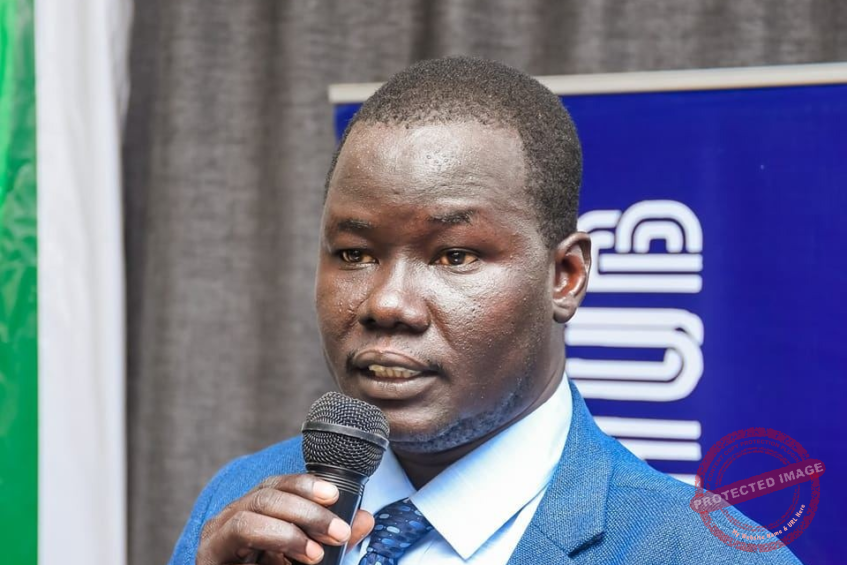
FILE: Lawyer Deng John, Director of the African Centre for Legal Studies - Courtesy
As public concern grows over cases of prolonged detention and alleged procedural violations, legal experts are shedding more light on the constitutional and legal safeguards that govern arrest and detention in South Sudan.
Lawyer Deng John, Director of the African Centre for Legal Studies, says the country has a well-defined legal framework designed to protect citizens from arbitrary arrest and unlawful detention, but stresses that enforcement remains key.
He explains that the Transitional Constitution of 2011, particularly the Bill of Rights, guarantees personal liberty and explicitly prohibits arbitrary arrest or detention without due process. “The Constitution is very clear—no one should be deprived of their liberty except in accordance with procedures established by law,” Deng said.
According to Deng, law enforcement agencies must follow strict procedures when making an arrest. In most cases, an arrest warrant issued by a competent authority is required. However, exceptions exist in situations of flagrante delicto when a suspect is caught in the act of committing a crime.
Once arrested, the individual must immediately be informed of the reasons for their arrest in a language they understand. They must also be granted access to legal counsel and allowed to contact their family. “These are not optional steps; they are legal obligations meant to protect the dignity and rights of the individual,” he stated.
Deng John provided a detailed breakdown of how detention is regulated under the law. According to him, Police are allowed to detain a suspect for up to 24 hours before presenting them to a prosecutor. The prosecution may authorize a limited extension of detention if investigations are ongoing and justified.
Judicial review: Any further extension must be approved by a judge, ensuring independent oversight. He noted that continued detention must be supported by evidence such as investigation reports or medical findings where relevant.
“Detention cannot be extended arbitrarily. Each stage must be justified and approved by the appropriate legal authority,” he said.
Deng further clarified that the law places limits on how long a suspect can be held during investigations. If the case is not concluded within a reasonable timeframe, the matter must be escalated to higher judicial authorities, including judges at different court levels.
In some cases, detention may extend for longer periods up to three months but only under strict judicial supervision and for serious offenses. Even then, such extensions must not violate the right to a fair and timely trial.
“Prolonged detention without trial is a violation of constitutional rights and weakens confidence in the justice system,”.
Citizens who believe their rights have been violated have several legal avenues available. Deng highlighted that individuals can file complaints before the courts, including the Constitutional Court, which is mandated to interpret the Constitution and address violations of fundamental rights.
The judiciary, including the Supreme Court’s constitutional bench, plays a critical role in ensuring that laws and procedures are applied correctly.
“Any citizen has the right to challenge unlawful detention and seek justice through the courts.
Deng John also emphasized the responsibilities of key institutions:
He noted that failure by any of these institutions to adhere to the law can result in legal action against them.
Despite the existence of these laws, Deng acknowledged that misunderstandings and violations still occur, partly due to limited public awareness and gaps in implementation.
“There is a need for continuous public education so that citizens understand their rights, and for institutions to strictly comply with the law.”
He concluded that respect for legal procedures is essential not only for protecting individuals but also for strengthening the rule of law and promoting accountability in South Sudan.
As the country continues to build its justice system, experts say ensuring that arrest and detention procedures are followed to the letter will be critical in safeguarding human rights and maintaining public trust.
Currently on air
09:00:00 - 12:55:00
 1
1Published June 28, 2026
 2
2Published June 25, 2026
 3
3Published June 23, 2026
 4
4Published June 23, 2026
 5
5Published 18 hours ago
 6
6Published 17 hours ago
 7
7Published June 24, 2026
 8
8Published June 23, 2026

Published 15 hours ago

Published 17 hours ago
Published 17 hours ago

Published 17 hours ago

Published 17 hours ago

Published 17 hours ago
Support Eye Radio, the first independent radio broadcaster of news, information & entertainment in South Sudan.
Make a monthly or a one off contribution.
Copyright 2026. All rights reserved. Eye Radio is a product of Eye Media Limited.