
12th February 2026

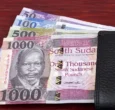
A wallet filled with South Sudanese Pounds.
JUBA, South Sudan (Eye Radio) – Behind the bustling stalls of Juba’s markets, where food, fuel, and medicine remain available for those who can afford them, lies a fragile economic paradox. While goods are present, the nation’s formal financial heart—the Bank of South Sudan—is beating on empty.
In a sobering briefing at the National Parliament on Thursday, February 12, Hon. Aggrey Tisa Sabuni delivered a blunt assessment of South Sudan’s liquidity crisis.
Speaking during the public hearing for the 2025–2026 Draft Budget and Finance Bill, the Technical Advisor for Revenue Matters revealed that the nation’s foreign reserves have plummeted to just $74 million—a critically low amount that covers a mere two weeks of imports.
A Critical Gap: South Sudan vs. The EAC
To understand the gravity of a “half-month” reserve, one must look at South Sudan’s standing in relation to its partners in the East African Community (EAC).
In international trade, foreign reserves act as a “savings account” that allows a country to pay for imports and back its currency. Currently, South Sudan sits at the bottom of the regional table, creating a significant vulnerability compared to its neighbors.
With only half a month of coverage, South Sudan trails the Democratic Republic of Congo (three months) and sits at the bottom alongside Somalia.
Where Did the Dollars Go?
According to Sabuni, the crisis was born from a “good policy” that went wrong. Years ago, the government decided to allocate crude oil directly to contractors to pay for major infrastructure projects like roads.
Prior to this, a specialized Oil Marketing Committee—including the Ministers of Finance and Petroleum—would vet bidders and sell the oil. The proceeds, paid in U.S. dollars, would flow directly into the Ministry of Finance’s account at the Central Bank. These dollars formed the “buffer” that kept the economy stable.
Under the current “oil-for-infrastructure” arrangement, however, the government no longer sells that oil. Instead, private contractors receive the crude cargoes directly.
“When the oil is sold by individuals and banks outside, you lose two things,” Sabuni explained. “You lose the money, and you lose the foreign currency as a reserve. The dollars no longer flow in.”
The Death of Banking Confidence
The impact of this policy has trickled down to every street corner in Juba. Without oil dollars flowing into the Central Bank, there are no dollars to auction to commercial banks. Without dollars in commercial banks, the business community has been forced to abandon the formal banking system entirely.
“The banking system has long ago lost confidence,” Sabuni noted. “The business community benefits nothing, so there is no incentive for them to take the money they realize from sales to the bank. They keep it outside.”
This has created a “parallel economy” where U.S. dollars bypass the Central Bank and flow directly into the streets and the states. In a practice Sabuni described as contrary to all regional norms, traders “scoop” dollars from the black market to fund their imports, bypassing the government’s ability to regulate or tax the flow of wealth.
The Path to Recovery
The solution, while “difficult and painful,” requires a total reversal of how South Sudan manages its primary resource. Sabuni urged Parliament to return to a system where the government sells its own oil, ensuring that every dollar earned first enters the Central Bank before being distributed to commercial banks and the public.
“We need to do this,” Sabuni insisted. “We let the dollars be in the parallel market… we have a lot of work to do to go back to the initial idea of selling oil by the government so that the dollar flow comes to the government first.”
By reclaiming control of oil revenues and charging realistic tax rates, Sabuni believes South Sudan can move from being an economic outlier to a “viable member of the neighborhood.” Until then, the nation remains in a state of high-wire survival, leaning on a shadow market while its official reserves sit at a critical low.
 1
1Published February 10, 2026
 2
2Published February 9, 2026
 3
3Published February 6, 2026
 4
4Published February 10, 2026
 5
5Published February 8, 2026
Published 2 hours ago
Published 5 hours ago

Published 6 hours ago

Published 7 hours ago
Support Eye Radio, the first independent radio broadcaster of news, information & entertainment in South Sudan.
Make a monthly or a one off contribution.
Copyright 2026. All rights reserved. Eye Radio is a product of Eye Media Limited.