
9th July 2026
You are here: Home | Editorial | National News | News | The dream of 2011, the reality of 2026: South Sudan at 15
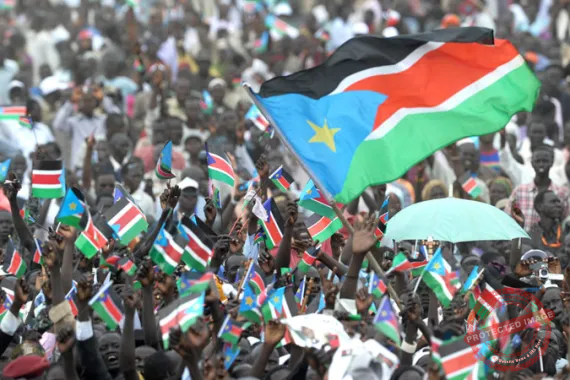
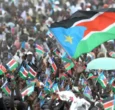
large crowd of South Sudanese chanting the birth of the country on 9th July 2011. Photo credit: Al Jazeera
On July 9, 2011, South Sudan did not simply gain independence. It inherited a promise.
A promise written in the blood of those who never lived to witness the raising of the national flag. A promise that the world’s newest nation would become a place where freedom meant more than sovereignty; where justice would replace oppression, opportunity would defeat poverty, and government would serve its people.
Fifteen years later, South Sudan still stands. That alone is worth acknowledging. A country that has endured conflict, political upheaval, economic hardship, floods, displacement, and humanitarian crises remains intact.
But survival was never the dream.
The dream was to build a nation.
That is where the celebration must give way to reflection.
For too many South Sudanese, independence has not yet translated into a better life. Across the country, families continue to struggle with the rising cost of living. Public servants wait for salaries that often arrive late or not at all. Hospitals lack essential medicines. Schools operate with few classrooms and limited learning materials. Young people graduate with ambition but encounter unemployment instead of opportunity.
These are not merely development challenges.
They are reminders of promises deferred.
Nothing better captures this unfinished journey than corruption.
In 2012, President Salva Kiir declared that his government would never tolerate corruption and appealed to officials accused of looting public funds to return what belonged to the people. The words were powerful. The expectation was greater.
Yet fourteen years later, corruption remains one of the country’s deepest wounds. Institutions mandated to fight it have struggled to demonstrate the independence, capacity, and results that citizens expect. The cost is measured not only in missing money, but in unfinished roads, underfunded hospitals, struggling schools, and a generation that increasingly questions whether public office exists to serve the nation or personal interests.
Every pound stolen from the public treasury is a classroom never built.
A hospital never equipped.
A road never completed.
A future quietly taken from a child who did nothing except be born with hope.
Still, reducing South Sudan’s story to failure would be as dishonest as pretending everything is well.
The country continues to endure because ordinary citizens refuse to surrender to despair. Farmers cultivate despite floods. Health workers save lives despite shortages. Teachers continue teaching despite limited resources. Journalists continue asking difficult questions, and provide public with credible information. Entrepreneurs create opportunities where few exist. Young people continue believing that tomorrow can be better than today.
They are the republic’s greatest resource.
As South Sudan enters its sixteenth year, the country’s defining challenge is no longer liberation from foreign rule. It is liberation from poor governance, corruption, impunity, and the politics that too often divide a people who once stood together under one dream.
The next chapter of independence will not be written by speeches on podiums or military parades beneath the flag.
It will be written in classrooms where children finally receive quality education.
In hospitals where patients receive treatment regardless of income.
In courts where justice applies equally to the powerful and the powerless.
In institutions that protect the public interest rather than private privilege.
And in leadership that understands a simple truth: history remembers those who build nations, not those who merely govern them.
This Independence Day should therefore be more than a celebration of where South Sudan has been.
It should be an honest reckoning with where it is, and a determined commitment to where it must go.
The generation of 2011 won South Sudan its freedom.
The generation of 2026 must ensure that freedom finally delivers.
Because the distance between the dream of 2011 and the reality of 2026 is not measured in years.
It is measured in promises kept, or promises broken.

Currently on air
14:00:00 - 15:55:00
 1
1Published July 5, 2026
 2
2Published July 3, 2026
 3
3Published July 6, 2026
 4
4Published July 6, 2026
 5
5 6
6Published July 7, 2026
 7
7Published July 3, 2026
 8
8Published July 8, 2026

Published 1 hour ago
Published 2 hours ago
Published 22 hours ago
Published 22 hours ago

Published 22 hours ago
Published 23 hours ago
Support Eye Radio, the first independent radio broadcaster of news, information & entertainment in South Sudan.
Make a monthly or a one off contribution.
Copyright 2026. All rights reserved. Eye Radio is a product of Eye Media Limited.