
24th April 2026
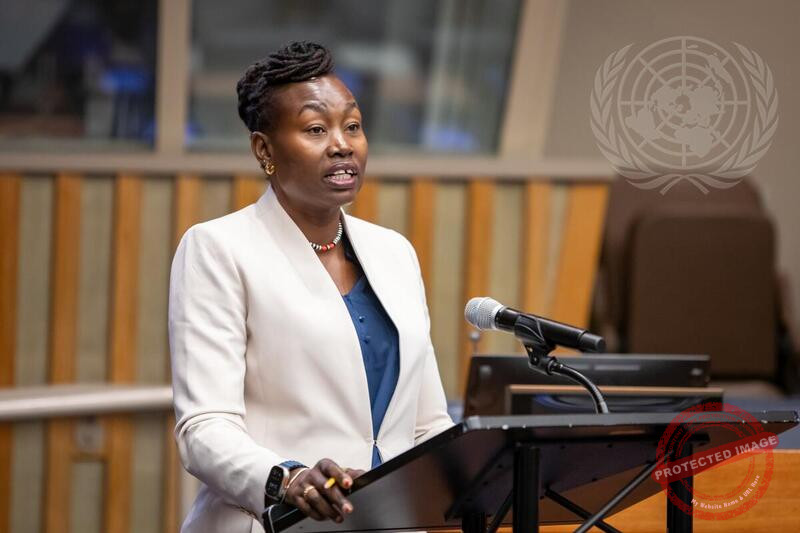
Health Minister Yolanda Awel Deng. (UNGA)
South Sudan’s health sector is faced with emerging challenges driven by climate change factors including prolonged floods and droughts which have left healthcare workers struggling to adapt to the evolving health needs, the minister of health said.
Yolanda Awel Deng, addressing a session of the United Nations General Assembly in New York last week, stated that climate change realities are felt in South Sudan in the form of catastrophic floods, record temperatures and prolonged droughts.
She said the natural adversities have severely impacted populations, prompting them to migrate to new places and creating a shift in population dynamic and new health care needs.
“We are facing new health challenges driven by climate change – challenges that will require resilience in our healthcare system, most importantly, our workforce which is our backbone,” she said.
“Climate-induced migration and displacement have led to shift in population dynamic, creating new and evolving health care needs.”
Ms. Awel stated that regardless of the burden, healthcare workers are trying their best to build resilience meet the evolving health needs of South Sudanese.
While contending that the new challenges would not only require a program to build resilience but a system that could challenge them, Minister Awel said this would demand collaborative strategies among relevant ministries.
“Our health care workers already overburdened must adapt quickly to changing circumstances, we recognized that building resilience requires not just program but system change.”
“It demands collaboration between health strategies, environmental and agriculture sector to address the root causes of climate related health risk.”
Since May 2024, floods have affected more than 730,000 people in nearly 40 counties across South Sudan, with livelihoods including farmlands and livestock destroyed, and hundreds of thousands forced from their homes, the UN humanitarian agency said.
South Sudan has some of the worst health indicators in the world, with the maternal mortality ratio estimated at 789 deaths per 100,000 live births, child mortality rate at 93 per 1,000 live births, and infant mortality rate at 60 per 1,000 live births.
According to Health Pooled Fund, access to healthcare service remains a challenge for many communities in South Sudan, and even reaching a health facility does not guarantee access to appropriate care.

Currently on air
06:00:00 - 06:55:00
 1
1Published April 18, 2026
 2
2Published April 18, 2026
 3
3Published April 17, 2026
 4
4Published April 22, 2026
 5
5Published April 20, 2026
 6
6Published April 21, 2026
7Published April 18, 2026
 8
8Published April 19, 2026

Published 12 hours ago

Published 13 hours ago

Published 13 hours ago

Published 14 hours ago

Published 14 hours ago

Published 16 hours ago
Support Eye Radio, the first independent radio broadcaster of news, information & entertainment in South Sudan.
Make a monthly or a one off contribution.
Copyright 2026. All rights reserved. Eye Radio is a product of Eye Media Limited.