
26th August 2026
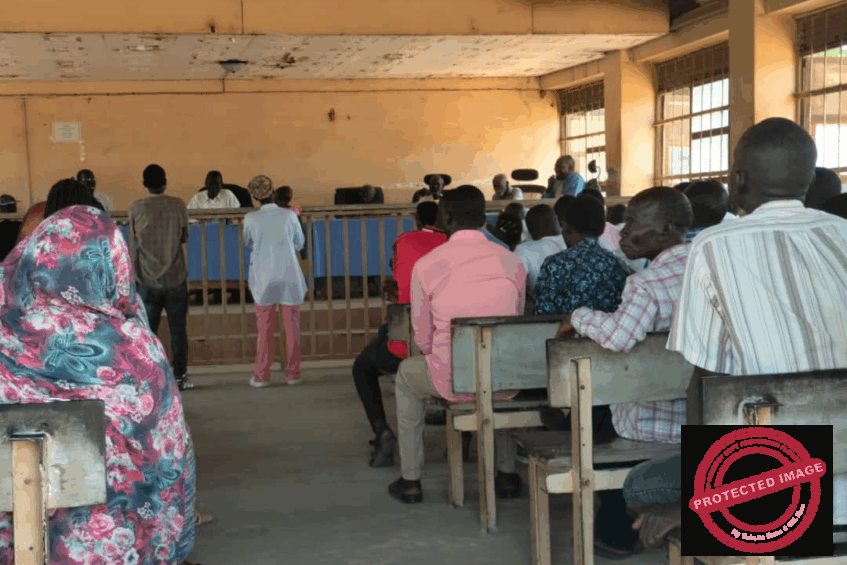
A customary court judge presides over a session at B Court in Kator, Juba, on Friday, July 25, 2025.
JUBA, South Sudan (Eye Radio) — In South Sudan, a person’s identity, rights, and sense of belonging are inextricably tied to their lineage. For many ethnic groups, a child’s place in the community, their right to inheritance, and even their burial rights are determined primarily by the father’s bloodline.
This ancient custom, however, is creating a new and painful reality for children born outside of marriage, especially when the father denies recognition. These children are left in a legal and social limbo, often excluded from both paternal and maternal lineage structures.
This cultural dilemma is compounded by the harsh realities of conflict. Jackline Nasiwa, Executive Director of Inclusive Governance, Peace and Justice, is a fierce advocate for children born from conflict-related sexual violence.
“I work with mothers of children born out of rape, and the stigma is crushing,” Nasiwa explains. “First, the trauma of the violation itself, and then the pain of raising a child without recognition.”
Nasiwa warns that this trauma is generational, affecting both mother and child. “The mother is traumatized, and this pain is transferred to the child. In some communities, it even leads to revenge,” she says. “We must stop this cycle. Every child deserves to be born in dignity, recognized, and accepted within the family and society.”
She points to the significant legal gaps in South Sudan’s legal framework. Current laws on nationality and birth registration often require a father’s name on forms, leaving many children without birth certificates or legal citizenship. While some are informally recognized by maternal uncles, this can lead to confusion and identity crises as they grow older.
Nasiwa is calling for strong government action, urging the state to protect these vulnerable children, ensure their access to education and health, and guarantee their legal rights. She also emphasizes that communities must stop stigmatizing victims and survivors of sexual violence.
Tradition vs. Modern Law
To understand how these issues are handled at the community level, Eye Radio consulted several customary court judges. Judge Asta Bent Wai Way of the Gudele Court explained the traditional approach. “As long as the son’s lineage is unknown, according to customs, this child is attributed to his maternal uncle,” she said. “This child has the right to inherit from his maternal uncle.”
Judge Sultana Awida Khamis of the Zande Market Court and Judge Thomas Lah confirmed this practice, highlighting a mechanism that provides a safety net for children with disputed paternity. This customary law ensures the child’s rights and social integration, with a path to paternal recognition if the father later comes forward.
The Legal Vacuum
While customary law offers some solutions, a significant legal vacuum remains. Suhila Deng, Chairperson of Women Advocates in South Sudan, points to the profound gaps in modern law. She explains that while the law classifies a man impregnating a minor girl as rape, it offers little guidance for an unmarried woman over the age of 18 who becomes pregnant.
According to Deng, Article 226 of the 2008 Penal Code instead treats such cases as adultery, which is narrowly defined as a man having relations with another man’s wife. This legal ambiguity leaves unmarried women over 18 without clear legal recourse. For women over 25, the law is completely silent, pushing cases into the hands of customary courts where chiefs or sultans may simply impose fines on the man, especially if he denies responsibility.
This legal gap, Deng argues, highlights the urgent need for a comprehensive family law that can regulate issues of paternity, child recognition, and responsibility. The issue is further complicated by religious interpretations—both Islamic and Christian laws often deny inheritance to “illegitimate” children, directly contradicting the South Sudanese Constitution, which grants every child the right to a name and inheritance.
With courts already struggling with lineage disputes and name changes, it is clear that until a unified family law is enacted, children born outside of marriage will continue to face an uncertain future, caught between tradition, legal silence, and the promise of a Constitution.
NB: “This story is reported with a grant from Journalists for Human Rights under the ‘Tackling Mis/Disinformation Project,’ funded by the Peace and Stabilization Program of the Government of Canada.”
Currently on air
09:00:00 - 12:55:00
 1
1Published August 23, 2026
 2
2Published August 23, 2026
 3
3Published August 19, 2026
 4
4Published August 24, 2026
 5
5Published August 19, 2026
 6
6Published August 20, 2026
 7
7Published August 24, 2026
 8
8Published August 21, 2026
Published 8 minutes ago

Published 14 hours ago
Published 14 hours ago
Published 14 hours ago
Published 16 hours ago
Support Eye Radio, the first independent radio broadcaster of news, information & entertainment in South Sudan.
Make a monthly or a one off contribution.
Copyright 2026. All rights reserved. Eye Radio is a product of Eye Media Limited.