
26th August 2026
You are here: Home | Featured | National News | News | “We are forgotten”: Inside Juba’s Mahad camp where hunger, sickness, and despair rule daily life
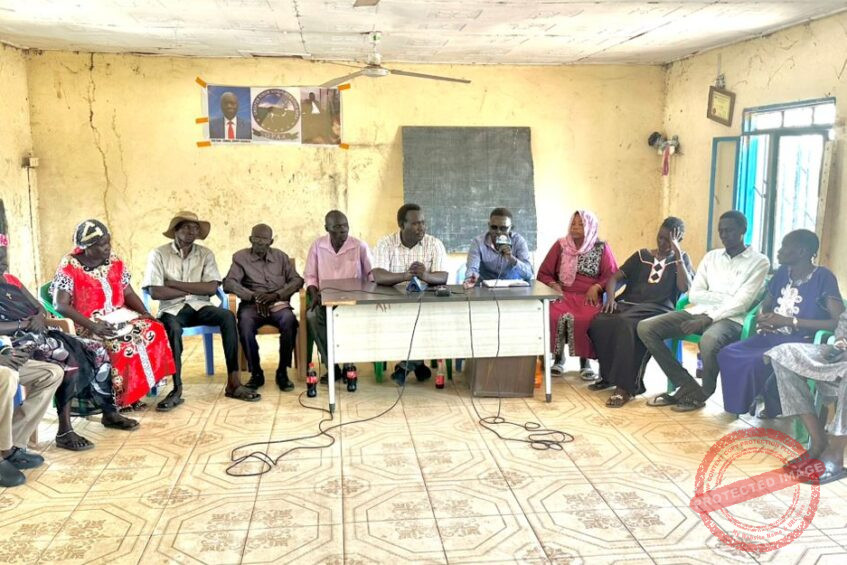
Mahad squatters speak with Michael Daniel on their plight|By Michael Daniel
Once a temporary shelter for families fleeing South Sudan’s civil war in 2013, Mahad School in Juba has become a place of suffering, where more than 8,800 internally displaced people (IDPs)—mostly women, children, and the elderly—are enduring a worsening food and health crisis.
Since the suspension of humanitarian aid in 2022, the residents of Mahad Camp say they have been left to fend for themselves in desperate conditions.
Hunger, untreated illnesses, and lack of clean water have become the new normal.
“Food shortages, lack of clean drinking water, poor sanitation, and insecurity are the biggest challenges we face,” said Peter Kaka, the camp director.
A Forgotten Population Struggling to Survive
The camp, located in the heart of the capital, once relied heavily on support from international NGOs and aid agencies. That aid included food, medical care, and basic sanitation services. But since it stopped, survival has become a daily battle.
“Since humanitarian organizations stopped supporting us, we’ve faced a number of challenges, including health, food, and water,” said Lula Summy Thaoth, a mother living in the camp.
“There are more than 8,000 of us here, but not a single clinic. Even essential hygiene items for women and girls are missing.”
Children, many of them orphaned, now roam the nearby streets of Juba, begging for food or picking through trash near the markets. Some are reportedly being exposed to exploitation and abuse.
“Children have become homeless in the streets. We are the product of two things: food and medicine, and we have neither,” added Rebecca Ireer, another resident.
“Many elderly people are now confined to rooms made of tarpaulin and can’t move due to hunger and illness.”
No Hope, No Help, No Way Out
During a visit to the camp by Eye Radio reporters, the hopelessness was palpable. Young men sat idle in groups, stripped of opportunity and a future. In one heartbreaking case, a man died in the camp, and the family could not afford to transport his body to the morgue.
“When someone dies, the body sometimes stays here for days,” said David Baba, a high school graduate from 2019.
“We used to study and had hope. Now we just sit. The children have become beggars.”
The camp offers no schooling, no health services, and no safe water source. Residents fetch water from the Nile, walking several kilometers with jerrycans. Mothers like Rose Gola have resorted to collecting waste meat scraps from butchers to feed their children.
“I clean and cook what others throw away, just to survive,” Gola said. “Sometimes when I come back, I find my children have gone to beg in the market. If you want to help, bring food and education, so these children do not become homeless.”
She added, “Even now, during the rainy season, rainwater mixed with sewage seeps into our shelters. The stench, the sickness—it’s unbearable.”
More than a decade after it was formed, Mahud Camp is no longer just a temporary settlement. It has become a symbol of South Sudan’s forgotten humanitarian crisis—one that unfolds within view of the capital city, yet receives little attention.
“If urgent action is not taken, this camp could collapse into a full-scale humanitarian disaster—one that is hidden in plain sight,” warned Peter Kaka, the camp director.
The demands of the displaced are simple but urgent. These are emergency food supplies, access to safe drinking water, a functional clinic for basic medical care, educational support for children and humane living conditions
As the international spotlight dims on South Sudan, the residents of Mahud Camp continue to wait—in hunger, in illness, and in silence—for help that may never come.
Currently on air
09:00:00 - 12:55:00
 1
1Published August 23, 2026
 2
2Published August 23, 2026
 3
3Published August 19, 2026
 4
4Published August 24, 2026
 5
5Published August 19, 2026
 6
6Published August 20, 2026
 7
7Published August 24, 2026
 8
8Published August 21, 2026
Published 8 minutes ago
Published 14 hours ago
Published 14 hours ago
Published 14 hours ago
Published 16 hours ago
Support Eye Radio, the first independent radio broadcaster of news, information & entertainment in South Sudan.
Make a monthly or a one off contribution.
Copyright 2026. All rights reserved. Eye Radio is a product of Eye Media Limited.