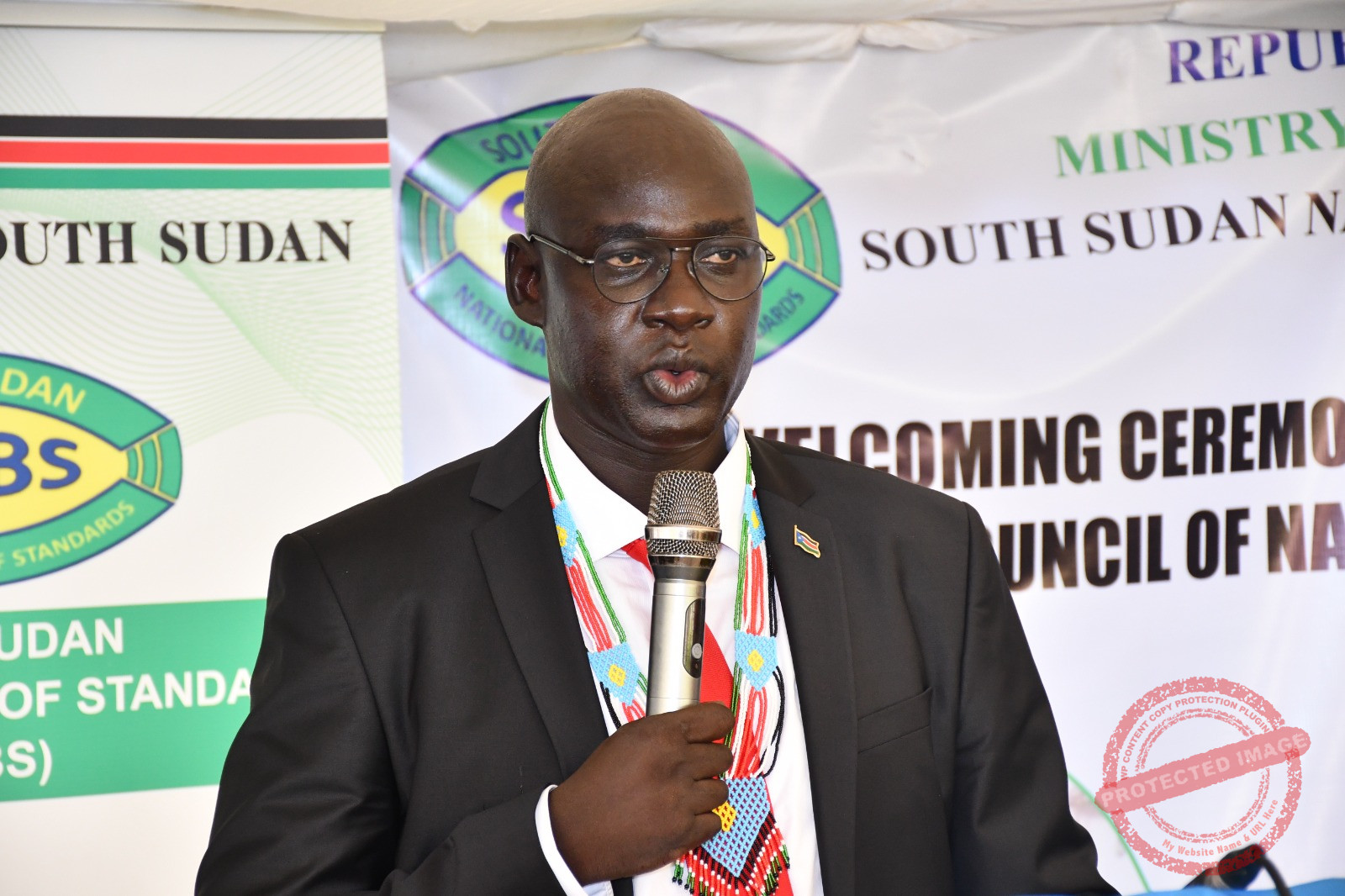
Lisok James Moses, a concerned citizen and writer debunks myths related to domestic violence against children in the communities and how it negatively impacts their school life and performance.
What is Domestic Violence?
Domestic Violence also known as Family abuse or Family violence is an act of violence or abuse against a person living in one’s household, especially a member of one’s immediate family. This also can be the inflicting of physical injury by one family or household member on another; a repeated or habitual pattern of such behavior. Domestic violence is as old as humanity.
Domestic violence is an inhuman act and the victims of this inhuman act are globally overwhelmingly children and their mothers without any doubt and the perpetrators are largely men (fathers). The victims do experience severe and numerous forms of violence, especially in war-torn countries of which South Sudan isn’t any different. During the war, the relevant authorities don’t have the time to protect, prevent, and educate the community about domestic violence (DV) or violence against children and its negative effects on school-going children as they’re busy in wars. But since domestic violence is often and likelier to be committed by a family member against the other, this sums up the complexity of the act of DV against school-going children against their abusers.
Why Children?
Children who are exposed to violence at home are also victims of physical abuse. Children who also witness domestic violence at home or around are victims of abuse themselves and are at serious risk for long-term physical and mental health problems. Children from a home with domestic or a home busy with domestic violence between parents or guardians are at greater risk of being violent at home or school and any environment they find themselves in as all they see is violence and violence as the best way of solving any differences that arise between them and their siblings or colleagues. Parents who are experiencing abuse or a family that is busy with domestic violence have no chance of protecting their children from violence and violent influence.
Context
A child from a family busy with domestic violence suffers emotional and psychological trauma from the impact of living in a household that is dominated by tension and fear. The children will see always their mother threatened, demeaned, or physically or sexually assaulted. They will overhear conflict and violence and see the aftermath of such violence their mother’s injuries, emotional breakdown, and her traumatic response to the violence. The children also may be used and manipulated by the abuser to hurt their mother.
In a family where violence is the norm, children are at high risk of being caught in the middle of an assault by accident or because the abuser directly intends it; infants can be injured if being held by their mothers when the abuser strikes out. Children may get hurt if struck by a weapon thrown object (s) and older children are frequently assaulted when they intervene to defend or protect their mothers. Children from such a family may be neglected by their parents or guardians who are busy with domestic violence. The neglected children are at high risk of gang and drug use as their welfare and attention are being neglected.
When Does Domestic Violence Against Children Occur?
Generally, domestic violence often occurs when the abuser believes that abuse is an entitlement, acceptable, justified, or unlikely to be reported and punished by law or laws that address domestic violence are not in place. It may produce an intergenerational cycle of abuse in children and other family members, who may feel that such violence is acceptable or condoned. Many people do not recognize themselves as abusers or victims because they may consider their experiences as family conflicts that get out of control. Domestic violence often happens in the context of forced or child marriage.
Here, tensions and the cycle of an act may rise and domestic violence is committed. This may be followed by a period of reconciliation and calm. Victims of domestic violence may be trapped in domestic violent situations through isolation, power and control, traumatic bonding to the abuser, cultural acceptance, lack of financial resources, fear, shame, or to protect children. As a result of abuse, victims may experience physical disabilities, deregulated aggression, chronic health problems, mental illness, limited finances, and poor ability to create healthy relationships. Children from a household with violence often show psychological problems from an early age, such as avoidance, hypervigilance to threats, and deregulated aggression which may contribute to vicarious traumatization.
Effect of Domestic Violence Against Children
Domestic violence may trigger poor concentration at school of a child/ren from families with family abuse. A child from a family from a family with family violence (DV) is likely to be disobedient either at home or at school and such is the pattern of such acts. A child from a family with DV is likely to come to school late and leave school earlier than other children and may lack school essential items like books, pens/pencils, and uniforms. The child is likely to go to school without eating breakfast and on return home finds no food. His/her tuition is either paid, untimely paid, completely not, or partially paid and this may trigger the school administration to send them home. This may lead to school dropout and early child marriage. The child may also lack personal hygiene with his clothes dirty including his/her school uniform, fingernails not streamed, and that exposes the child to cholera. A family busy in DV has no time to teach their children the simple act and significance of personal hygiene. Children from a DV family lack almost everything as their parents or guardians are busy in their violent acts and Children from a DV family are likely to grow up with their uncles.
Parents experiencing abuse in their relationships/family(ies) have no time to supervise their children whether they go to school early or late – return home early. They also have less or no time to check their children’s books to see whether their children are taking notes in class, doing exercise, or doing none of the above when at school. A family with DV is likely to have one meal a day as the father is busy drinking alcohol or spending time and money on odds and endings and yes, alcohol, drug addiction, and abuse is the primary cause of DV.
Financial dependency and gap between the husband and the wife especially when the male is the daily breadwinner at home is likely to trigger the victim(s) to keep staying with their abusers and even not reporting the act to any relevant legal authorities.
However, regardless of the sex of the abusers, it’s evident that abusive partners also batter their children. In a situation where the mother is assaulted by the father, daughters are exposed to a high risk of sexual abuse. A male/father’s violent act against a child is more severe especially physically inflicted injuries and most of the fatalities against a child at home are normally attributed to fathers.
A child from a family with domestic violence may suffer aggression, hyperactivity, neglect, nightmares, withdrawal, low self-esteem, showing no emotion (spaced out), always on edge, wary, fantasies about normal home life, pessimism about the future and physical symptoms, depression, anxiety, abuse of parents trying to protect their mother, poorly developed communication skills, parent-child conflict, child marriage or a relationship early to escape the abuse at home, embarrassed about family, shame, eating disorders, low academic achievement, dropping out from school, early pregnancy as for girls, staying away from home, leaving home early, running away from home, feeling isolated from others, violent outbursts, alcohol and substance abuse, difficulty communicating feelings, physical injuries when they try to intervene to protect mother, suicide and we can see that the list is on and on.
Testimonies
As an innocent child and a victim of DV recalls little Edisson Wani. I grew up in this kind of family. The Trauma, hopelessness, and the nightmares caused by the violence’s culture still haunt me to date narrates the 27-year-old as he recalls. We mostly go to school hungry. In case of any fight that erupts between our father against our mother, we flee home with my siblings as we’re not any different from our father’s eyes. Any day they start fighting we sleep in the bush because if we happen to take shelter in the neighborhood our father goes there and fights the neighbor who sheltered us and accuses them of harboring rebels. So, to avoid implicating our neighbors in any form of violence, we run to the bush and sleep there. Sometimes it rains heavily and becomes cold in the bush. In the morning we creep home put on our dirty Uniforms and go to school just like that. Sometimes I sleep in class while the teacher is teaching because we only never had a sleep at night. Sometimes we arrive earlier than our mother from the bush where we sleep since everyone finds his/her safe way out when the fights erupt. The fight often happens in the evening or at night when the father is usually drunk after drinking alcohol. While in class when a teacher is teaching, sometimes I find my mind drawn to some of the DV incidents that occurred sometime back at home, then the anger that runs in my veins, the hate ha! Seeing your dad beating or assaulting your mother before you and you can’t help because you’re small & powerless. There’s a lot to tell you my dear friend Edisson Wani recalls. Thank you!
Call for an End to Violence Against Children
We children from abusive families generally become violent whether at home or school and we don’t blame ourselves as the saying goes ‘’CHARITY BEGINS AT HOME’’ and indeed for me, violence started at home. Since then, I don’t have the right word(s) to describe the damages caused by domestic violence to an innocent child(ren) from a domestic violent home however as a victim, if there’s is anything that I know about DV it breeds ‘’LIFETIME HOPELESSNESS & TRAUMA’’. We children (ren) from such families (ies) are not any different from another child (ren) but we lack encouragement and love and perhaps most of you understand the impact of love and encouragement on the little ones. Phrases like,’’ YES U CAN’’ from parents or guardians mean a lot to the child(ren)’s upbringing and healthy mental health growth because these phrases reduce their negative attitudes toward facing & approaching life. But Parents from such families involved in domestic violence have no time to encourage their child(ren) since they’re busy with violence at Home. It doesn’t matter what wrong their mother has done but no child stands the cry of his/her around them.
Lisok James Moses is a resident of Juba, South Sudan, and can be reached by Tell: +211 926 069 577/ E-mail: jamesdy.yoo@gmail.com