
31st August 2026

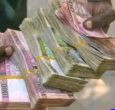
FILE PHOTO: Banknotes of the South Sudanese Pound (SSP).
Civil society activist Edmond Yakani has challenged the High-Level Economic Reform Committee to account for non-oil revenues, questioning why civil servants remain unable to access cash at commercial banks weeks after the South Sudan Revenue Authority reported a major surge in collections.
Yakani, Executive Director of the Community Empowerment for Progress Organization (CEPO), called on President Salva Kiir, the Ministry of Finance and Planning, and the Bank of South Sudan to urgently address the severe shortage of South Sudanese Pound (SSP) liquidity in commercial banks.
He noted that the crisis persists despite reported improvements in non-oil revenue collection and recent government assurances that these funds would be used to clear long-overdue salary arrears for civil servants and organized forces.
While the government announced plans through the High-Level Economic Reform Committee to pay public sector salaries for August 2026, many workers who received bank credits remain unable to withdraw physical cash.
“The High-Level Economic Reform Committee conveyed very encouraging messages to citizens and civil servants, saying they registered improvement in non-oil revenue collection and directed the Ministry of Finance to clear salary arrears,” Yakani said.
“If revenue collection using SSP has improved, where has the liquid cash disappeared to? How come we can see SSP being traded as a commodity on the streets, but not in commercial banks for South Sudanese who deserve to access their money? The leadership of the country needs to stand up and answer this question.”
Security Risks and Proposed Currency Reforms
Yakani described the practice of hoarding massive amounts of cash outside the formal banking system as a serious economic and security concern, warning that it undermines national financial stability and the government’s control over the local currency.
To resolve the liquidity bottleneck, the CEPO chief urged financial authorities to implement immediate measures to draw cash back into commercial banks. He suggested that the government consider introducing higher-denomination SSP banknotes or demonetizing existing notes to force hoarded cash back into the banking system.
The High-Level Economic Reform Committee continues to oversee state measures aimed at strengthening the economy, boosting revenue collection, and stabilizing wage payments for public sector employees. However, civil society leaders stress that without physical liquidity in banks, salary announcements offer little real relief to struggling workers.

Currently on air
19:00:00 - 19:30:00
 1
1Published August 29, 2026
 2
2Published August 25, 2026
 3
3Published August 30, 2026
 4
4Published August 28, 2026
 5
5Published August 25, 2026
 6
6 7
7Published August 28, 2026
 8
8Published August 26, 2026
Published 12 minutes ago
Published 32 minutes ago

Published 2 hours ago

Published 2 hours ago
Support Eye Radio, the first independent radio broadcaster of news, information & entertainment in South Sudan.
Make a monthly or a one off contribution.
Copyright 2026. All rights reserved. Eye Radio is a product of Eye Media Limited.
