
28th August 2026
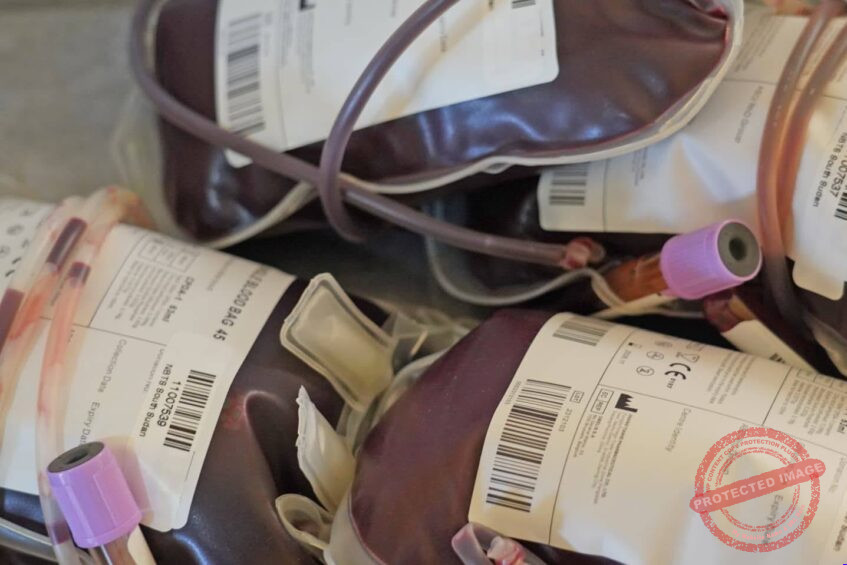
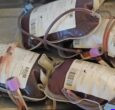
Behind every blood bag is a generous donor and a life transformed. Proof of human kindness in action—blood donation saves lives every single day. Keep giving, keep saving. 🩸 (File Photo)
The National Blood Transfusion Service (NBTS) has commended South Sudan’s Muslim community for driving voluntary blood donations in the capital, while warning that national collection levels remain dangerously below WHO-recommended standards.
Speaking to Eye Radio in an exclusive interview on the sidelines of the World Health Organization (WHO) Media Meet and Greet event in Juba on Friday, August 28, 2026, Dr. Angelo Aruop Akeen, Director of the NBTS, revealed that mosques remain the most reliable source for restocking the national blood bank.
“I must attest to this that much of the blood that we collect comes from the Muslim communities,” Dr. Aruop said. “On a weekly basis, we must go out at least two times to the mosques in order to collect units of blood.”
He highlighted active, ongoing blood drives in Juba’s Gure and Gudele neighborhoods as part of these weekly outreach efforts.
In contrast, Dr. Aruop noted that voluntary collection rates from local church outreach remain significantly lower, pointing to widespread public misconceptions about the process.
“We have similarly done this to the churches, though it cannot be compared to the number of units we collect from the Muslim communities. It’s extremely low in most cases,” he explained. “I believe this is a matter of awareness, perception, and the myths that surround voluntary blood donation.”
The Director emphasized that South Sudan needs at least 1% of its population to donate annually to satisfy basic medical demand—a benchmark the country is currently failing to reach.
“The National Blood Transfusion Service is expected to harvest at least 160,000 units per year in order to meet the blood needs of South Sudan,” Dr. Aruop stated. “Currently, we are way below that standard. We roughly are contributing about 34 percent of voluntary blood donation that is expected.”
He warned that the severe deficit is having tragic consequences in hospitals across the country.
“Lives have been lost simply because we are unable to meet the required blood supply,” he added. “The demand for blood is higher than the supply. The few that are donating is just a drop in an ocean. For us to be able to prevent death related to severe anemia, we need to have at least 160,000 units per year donated by 160,000 South Sudanese.”
Health officials continue to urge all faith groups, civil society organizations, and citizens to participate in regular voluntary blood drives to close the gap and save lives.

Currently on air
18:00:00 - 18:55:00
 1
1Published August 23, 2026
 2
2Published August 23, 2026
 3
3Published August 24, 2026
 4
4Published August 24, 2026
 5
5Published August 25, 2026
 6
6Published August 25, 2026
 7
7 8
8Published August 21, 2026
Published 18 minutes ago
Published 36 minutes ago
Published 44 minutes ago
Published 2 hours ago


Published 3 hours ago
Support Eye Radio, the first independent radio broadcaster of news, information & entertainment in South Sudan.
Make a monthly or a one off contribution.
Copyright 2026. All rights reserved. Eye Radio is a product of Eye Media Limited.