
“Not all migrants are criminals,” IGAD urges media to avoid sensational reporting
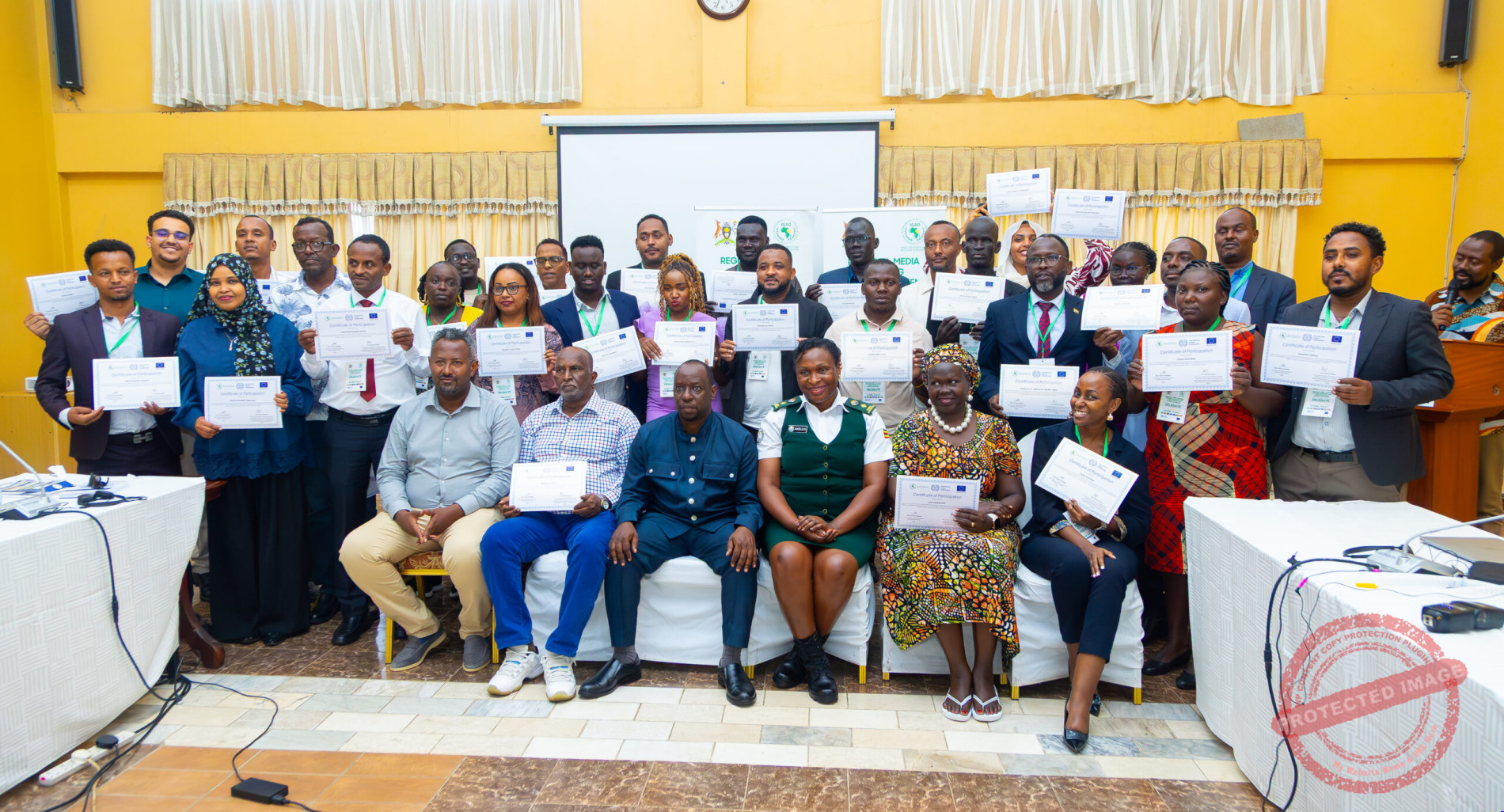
The Intergovernmental Authority on Development, IGAD, has called on journalists across the region to promote responsible reporting on migration and free movement of people as member states work towards ratifying a regional protocol designed to ease cross-border movement.
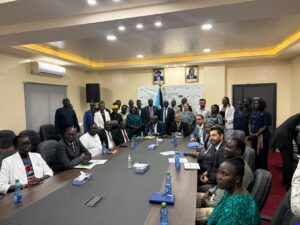
The call was made during a three-day regional media training on reporting and communicating Free Movement of Persons and Labour Migration, held in Entebbe, Uganda, from June 24 to 26.
The training brought together journalists and government communication officers from all seven IGAD member states – South Sudan, Uganda, Kenya, Ethiopia, Somalia, Sudan and Djibouti.
Lucy Daxbacher, Senior Programme Coordinator at the IGAD Secretariat, said media professionals have a critical role in shaping public understanding of the protocol and countering misinformation and stereotypes surrounding migration.
She urged journalists to avoid sensational reporting that portrays migrants as security threats, saying accurate reporting can help build public trust in regional integration.
“Movement of persons across our borders is disproportionately overshadowed by security fears, xenophobic rhetoric and misinformation,” Daxbacher said.
She said the media should help bridge the gap between regional policies and the daily experiences of citizens by reporting migration issues accurately and with dignity.
Daxbacher said the IGAD Free Movement of Persons Protocol, developed and negotiated by member states, has so far been signed by five of the seven IGAD countries.
Djibouti and Kenya are yet to sign the protocol and are currently engaging with the IGAD Secretariat on the process.
The protocol provides for the progressive realization of the rights to entry, stay and exit, movement of workers, residence and establishment across IGAD member states.
According to Daxbacher, the framework is intended to make movement within the region safer, more regular and orderly while supporting trade, labour mobility and regional integration.
She said the protocol also recognizes the movement of people affected by disasters such as drought, famine and other climate-related emergencies.
South Sudan is among the five countries that have already signed the protocol, having signed it on June 17, 2022.
But signing is only the first step, with member states now expected to move towards national ratification and implementation.
Uganda’s Ministry of Information and Communication also called on government communicators and journalists to use the knowledge gained from the training to address misconceptions surrounding free movement and labour migration.
Pearl Natalia, a Senior Communication Officer at the ministry, said the protocol is not only a policy matter but also a communication issue.
She said citizens need clear information about the opportunities, rights and responsibilities associated with free movement.
Natalia warned that misinformation can spread rapidly through social media when accurate information is not communicated in time.
She encouraged communicators to develop clear messages that can help citizens understand the protocol and its potential impact on their lives.
Meanwhile, Solomon Kasasera, First Director at Uganda’s Ministry of Foreign Affairs, said free movement could contribute to regional trade, economic development and peaceful coexistence among IGAD countries.
He said the region’s population of more than 300 million people, combined with high youth unemployment and growing climate pressures, makes regional cooperation on mobility increasingly important.
Kasasera said the media has a responsibility to help governments and citizens understand the opportunities and responsibilities created by the Free Movement Protocol.
He said Uganda, together with IGAD, will continue using media and other communication platforms to address challenges associated with migration and regional integration.
The International Labour Organization, ILO, also urged journalists to put people and their experiences at the centre of reporting on migration.
Ephrem Getnet, Chief Technical Advisor for the ILO’s Free Movement of Persons and Transhumance project in the IGAD region, encouraged journalists to tell stories of people whose lives are shaped by cross-border movement for work, education, trade and other opportunities.
He said such human stories can help audiences understand regional integration beyond policies, statistics and official statements.
Getnet also encouraged journalists from the seven countries to maintain the networks established during the training and collaborate in reporting migration issues across borders.
The training focused on the IGAD Free Movement of Persons Protocol, labour migration, migration governance, regional integration and responsible communication.
It also emphasized the need for journalists to use accurate terminology when reporting migration, including distinguishing between refugees, asylum seekers, undocumented migrants and irregular migrants.
Participants were encouraged to verify information, challenge stereotypes and avoid language that criminalizes migrants or fuels discrimination.
The training comes as IGAD member states seek to progressively implement frameworks aimed at making movement of people, workers, traders and pastoralists across the region safer and more orderly.
For South Sudan, which shares borders with several IGAD member states and has large populations moving across the region for work, trade, education and refuge, effective implementation of the protocol could have significant implications.
The discussions in Entebbe therefore placed the media at the center of efforts to ensure that regional integration is understood not only as a government policy, but as an issue that directly affects the lives and livelihoods of ordinary people.