
19th February 2026
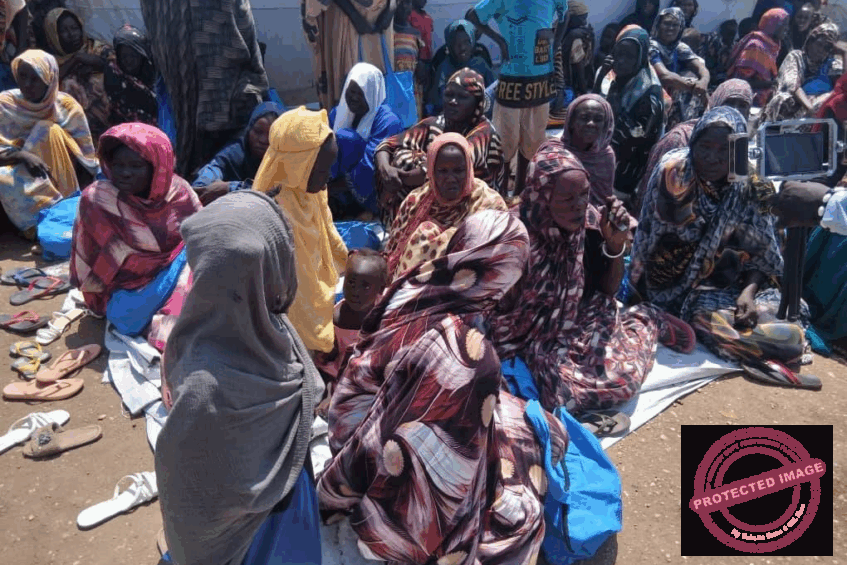
Some of the South Sudanese mothers forcibly deported from Sudan are reunited with their children in Renk County, Upper Nile State, today (Tuesday). The children were separated from their families last week during the deportation. (Courtesy Photo)
JODA, Upper Nile (Eye Radio) — More than 100 South Sudanese women say they were forcibly deported from Sudan — without their children — under unclear circumstances.
The women were reportedly arrested in Sudanese cities, put on buses, and sent south, only to be separated from their infants and young children in a traumatic act that local authorities are calling a violation of human rights.
Renk Commissioner Diing Deng Lueth took immediate action, halting the buses at the border to prevent further incidents of mothers being separated from their children.
More than a hundred South Sudanese mothers have been forcibly deported from Sudan to the southern border, leaving their children behind under distressing and “unclear circumstances,” according to complaints lodged with local authorities this week.
A total of 111 South Sudanese citizens were confirmed deported, including 55 women in the first group who all arrived having been separated from their children.
The mothers were arrested in various Sudanese cities—including Khartoum and Omdurman—and transported to the border near Joda, South Sudan, by Sudanese police.
Traumatic Arrests and Heartbreaking Separation
In Joda, several affected women recounted traumatic, sudden arrests by Sudanese authorities.
Nyakuj Akol tearfully narrated the moment police arrived at her home: “When the Sudanese police came to my house, they knocked and opened the door by force. They said they were here to search and took me to the police station. I left behind my two children, aged one and nine years.”
Akol, who had already lost three other children, begged to take her belongings but was refused.
“They did not let me take anything from the house except this dress that I was wearing.” She was initially told they were going to Omdurman to renew a “foreigners’ card,” only to find herself put under guard and then transported south.
When she and other women asked about their children, the response was cold: “They told us that we have nothing to do with them.”
Lucia Kor was arrested on the street and shared a similar, desperate experience.
“I cried for them and told them I have nine children and no one is with them. I cried, and they told me we have nothing to do with the children.” She questioned the police, stating she was brought for registration, not deportation.
Rose Alier, a resident of Khartoum Bahri, was arrested while returning from the market, leaving her children at home. When she showed her foreigners’ registration card, she was told it was “invalid.”
“I told him, ‘How can I ride in the car while my children are at home?’” she recalled telling the arresting soldier. “He told me, ‘We have instructions that we are implementing.’”
She was then transferred with other women and later found herself at the border.
Renk Authorities Intervene
Renk County Commissioner Diing Deng Lueth confirmed the incident, stating the total number of deportees received in the area is approximately 111, arriving in two groups.
“We have about 55 women who arrived in five buses in the first group, and all of these 55 women have children who remained in Sudan,” Commissioner Lueth said. “In the second group, there are 61.”
Citing previous cases where deported mothers could not find their children upon return, the Commissioner took immediate action: he decided to stop the buses that transported the citizens from Sudan to prevent further incidents of separation.
“We are now working to arrange transport for the mothers to return to Sudan temporarily so they can reunite with their children and return safely,” Lueth confirmed, noting that vehicles would be rented to facilitate the mothers’ journey back to Sudan before they return to South Sudan.
Sudanese Official Cites “Joint Campaign”
Lieutenant Ali Saleh Bilal, head of the Sudanese delegation that transported the deportees, explained that he was acting on direct orders.
“According to the instructions of the Director of the Foreigners Department in Sudan, I was tasked with transporting these citizens to the southern Joda area,” Bilal said. He explained that the action was the result of a “joint campaign against foreigners in the country.”
Bilal confirmed that he had handed over a list of names to the South Sudanese side, noting that some women were with their children while “others were without their children.”
He is now under an obligation by the authorities to return the women to Sudan to retrieve their children before bringing them back to the border.

Currently on air
00:00:00 - 06:00:00
 1
1Published February 16, 2026
 2
2Published February 14, 2026
 3
3Published February 13, 2026
 4
4Published February 15, 2026
 5
5Published February 16, 2026
Published 7 hours ago
Published 8 hours ago
Published 9 hours ago

Published 9 hours ago
Published 9 hours ago
Published 10 hours ago
Support Eye Radio, the first independent radio broadcaster of news, information & entertainment in South Sudan.
Make a monthly or a one off contribution.
Copyright 2026. All rights reserved. Eye Radio is a product of Eye Media Limited.