
18th August 2026
You are here: Home | Crime and law | Governance | Jonglei State | News | Bor County imposes “no-blood compensation” for gang members killed in crime
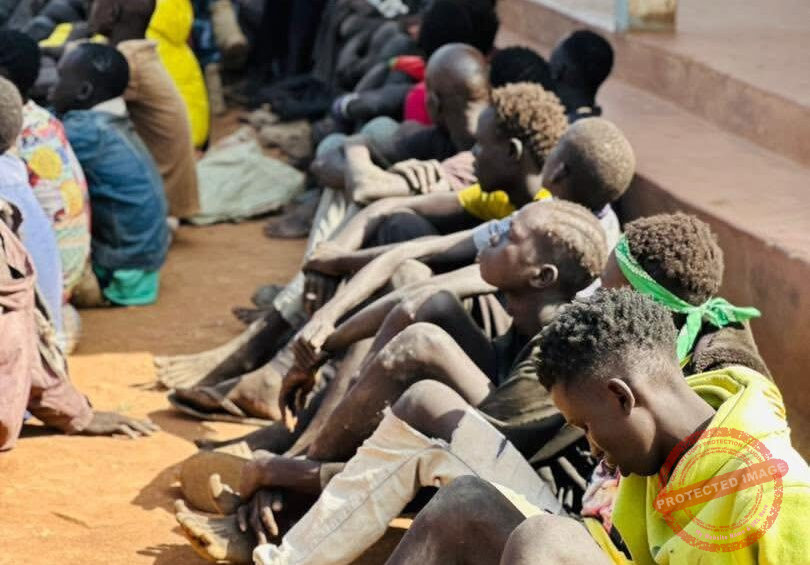
Suspected members of teenage gang groups rounded up during a security crackdown in Kuajok - courtesy photo.
The commissioner of Bor County, Samuel Ateny Pech, says traditional leaders have agreed on tough measures to address gang violence, including a nine-year jail term for identified gang members and a ban on blood compensation for those killed during criminal acts.
The resolutions were made during a three-day conference held in Bor town from May 7 to 9, 2026. The meeting brought together chiefs, county officials, payam administrators, and members of parliament.
Commissioner Pech said the measures come as local authorities respond to rising gang violence in the town, which has affected peace and order.
“The resolution is that we customarily discussed blood compensation. If someone is killed while trying to attack another person that person is not supposed to be compensated. Bor county has refused the compensation of someone killed while trying to killed another person. Because here in Bor we have number of people killed by crew [gang],” he said.
He said attacks by gangs have killed more than 39 people in the past five months.
He said leaders have agreed that there will be no blood compensation for any gang member killed while committing an offence.
It was also resolved that any gang member or group identified as having committed crimes will be arrested and sentenced to nine years in prison.
“Who is a crew? Crew is the criminal who is trying to kill a person. Crew is an enemy trying to kill. The one carrying pangas, the one carrying sharp objects cutting people in pieces. If they attack you and you manage to kill one of them, they will not be compensated,” he asserted.
The conference also banned the sale and brewing of alcohol locally known as siko, saying the rise of cheap alcohol is fuelling gang violence in the county.
The commissioner advised businesswomen affected by the ban to venture into other businesses such as vegetable, fruit, fish, and charcoal selling.
“Alcohol is totally banned in Bor County but we are not talking about the ones in hotels we mean this Aragi. Our problem is this alcohol made by women, the one drank by poor people, it is the one afforded by vulnerable people.
“Beer and wine cannot be afforded by people here in Bor County, we have no problem with them. Our problem is with Aragi. The women making Aragi can go and sell other things and do other businesses like selling vegetables, fruits, fish and charcoal there many businesses here.
“How can you commit yourself to this business of Aragi that you are making to destroy other people’s sons and husbands, yet you can’t allow your own husband to take it? So, we have banned it go and do other business we have many businesses in Bor,” he explained.
Commissioner Pech said the measures are part of efforts to restore peace, strengthen law and order, and address rising insecurity linked to youth gangs in the county.
The meeting also called for stronger community cooperation to support peace efforts and reduce violence in the area.
Currently on air
09:00:00 - 12:55:00
 1
1Published August 16, 2026
 2
2Published August 16, 2026
 3
3Published August 11, 2026
 4
4Published August 12, 2026
 5
5Published 15 hours ago
 6
6Published August 11, 2026
 7
7 8
8Published 20 hours ago
Published 14 hours ago
Published 15 hours ago

Published 15 hours ago

Published 16 hours ago

Published 19 hours ago
Support Eye Radio, the first independent radio broadcaster of news, information & entertainment in South Sudan.
Make a monthly or a one off contribution.
Copyright 2026. All rights reserved. Eye Radio is a product of Eye Media Limited.