
31st May 2026
You are here: Home | National News | News | Politics | Back in the story again: The second coming of Dr. Igga
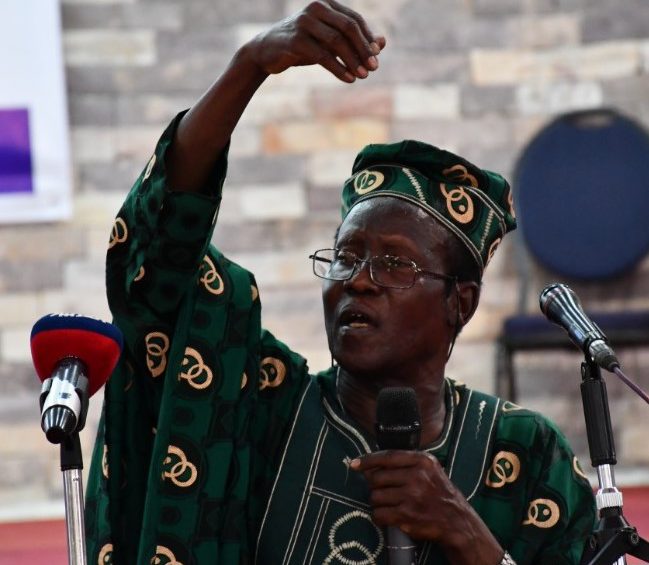
Vice President Dr James Wani Igga, Chairperson for Economic Cluster - Date: January 2021 - Courtesy
On the evening of November 17, 2025, President Salva Kiir Mayardit brought James Wani Igga back to center stage, reappointing him as Vice President for the economic cluster in a dramatic return to his old seat. In another decree, he also named him First Deputy Chairman of the SPLM.
For many, it felt like the return of a man whose long public life seemed to be winding down—a veteran of the liberation struggle and one of Kiir’s oldest political allies.

Roots in the liberation struggle
Born in 1949 in Kirillo, Juba County, Igga joined the SPLM/SPLA in 1985, during the height of the Second Sudanese Civil War. He took on several responsibilities as he moved up the ranks. By the late 1980s and early 1990s, he was serving as Zonal Commander for Central and Western Equatoria, and later as Chief of Operations.
His rise continued at the 1994 SPLM/A National Convention in Chukudum, where he was elected Secretary-General, a role that placed him at the center of the movement’s early governance and financial structures.

A long-standing alliance with Kiir
Igga’s relationship with Salva Kiir stretches back to the difficult years of the liberation war. As both advanced in the SPLM/SPLA, their working relationship deepened. Kiir valued Igga’s loyalty and steady approach, and over time Igga became one of the most trusted figures around him.
From liberation to legislature
After the Comprehensive Peace Agreement in 2005, Igga shifted from the battlefield to politics. He became Speaker of the Southern Legislative Assembly, a position he held through the independence period.
When South Sudan became independent in July 2011, Igga read out the proclamation of independence—one of the defining moments of his public career.
In August 2013, Kiir appointed him Second Vice President, placing him at the center of the new nation’s politics during a tense and uncertain time. Igga stayed in senior leadership throughout the post-war years and later became Vice President for the economic cluster under the 2018 Revitalised Peace Agreement.
Military recognition and institutional leadership
Although he was now focused on governance, Igga’s military service remained formally recognized. In 2019, he was promoted to full General in the SSPDF, reflecting his long years in the liberation struggle.
In government, he became known for his calm style. He guided debates as Speaker, shaped several legislative priorities, and handled sensitive duties in the economic cluster.
The fall: sudden ouster
Everything changed on February 10, 2025. Kiir issued a decree removing Igga as Vice President and replacing him with Benjamin Bol Mel. No explanation was given, leaving many observers puzzled.
At the same time, Igga was appointed Secretary-General of the SPLM, replacing Peter Lam Both. But the move raised questions. Was it a soft landing, a political reshuffle, or a sidelining strategy?
Igga pushed back against the idea that he had been downgraded. He publicly insisted that he remained First Deputy Chairman of the SPLM, a title he argued held real weight.
The comeback: resurrection by decree
Then came November 17, 2025. With another sudden decree, President Kiir returned Igga to his former role as Vice President for the economic cluster and elevated him to First Deputy Chairman of the SPLM.
For some, it was a reminder of the trust Kiir has placed in Igga over the years. For others, it signalled Kiir’s attempt to balance competing political groups by bringing back a familiar and respected figure.
What this rise signifies
Igga’s reinstatement carries several meanings for the country:
Legacy in the making
James Wani Igga’s journey mirrors South Sudan’s own path—war, peace, political shifts, and unexpected turns. From rebel commander to Speaker, from Vice President to sudden removal, and now to a dramatic return, he has remained a central figure in the country’s story.
But his comeback comes with heavy responsibility. Can he help stabilize an economy under strain? Can he bring unity to a party facing internal competition? And in a nation where political fortunes change quickly, how long will this new chapter last?
Only time will tell. But on November 17, 2025, one thing was clear: in South Sudanese politics, a fall is not always the end—and sometimes the return is even more dramatic than the departure.

Currently on air
00:00:00 - 06:00:00
 1
1Published May 24, 2026
 2
2Published May 25, 2026
 3
3Published May 28, 2026
 4
4Published 17 hours ago
 5
5Published May 29, 2026
 6
6Published May 26, 2026
 7
7Published May 29, 2026
 8
8Published May 25, 2026
Published 12 hours ago
Published 15 hours ago
Published 15 hours ago
Published 17 hours ago
Published 20 hours ago
Published 20 hours ago
Support Eye Radio, the first independent radio broadcaster of news, information & entertainment in South Sudan.
Make a monthly or a one off contribution.
Copyright 2026. All rights reserved. Eye Radio is a product of Eye Media Limited.