22nd May 2026

South Sudan seeks Abyei security solutions at UN Council

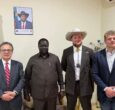
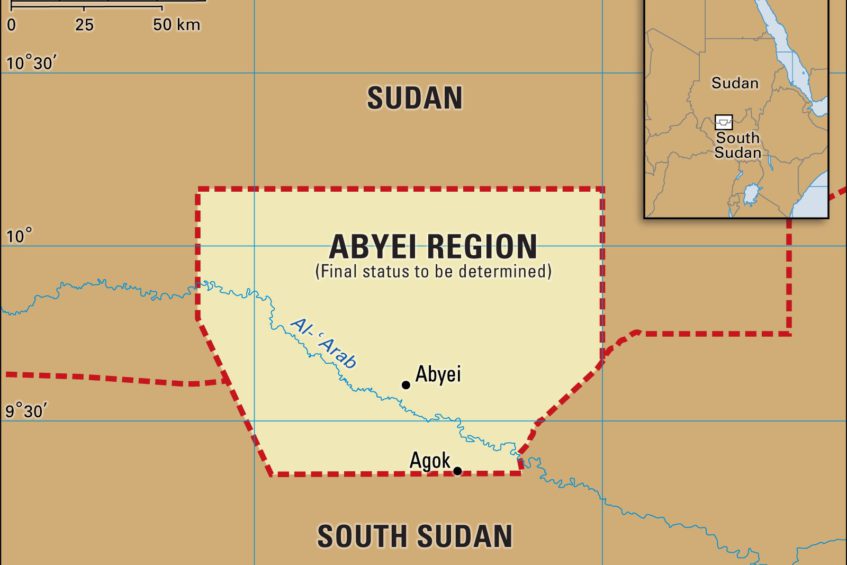
South Sudan diplomat Cecilia Adut Manyok has appealed to the United Nations Security Council for long-term security solutions in Abyei, saying lasting stability in the disputed region requires shared responsibility among all stakeholders.

Speaking during a Security Council meeting on the situation in Abyei, Manyok said the government of South Sudan remains committed to maintaining peace and security in the area to support sustainable development.

“We must remain informed by realities on the ground and by the shared responsibility to preserve stability and protect civilian lives,” Manyok told the Council.

She said South Sudan would continue collaborating with the United Nations Mission in South Sudan and regional partners to help finalize the status of Abyei.

The envoy cited recent intercommunal violence in Aba, which reportedly resulted in deaths and displacement, saying the government responded by deploying troops along South Sudan’s southern border areas to stabilize the situation and prevent further unrest.

“South Sudan government took the opportunity to deploy troops in the southern border areas of South Sudan to stabilize the situation and prevent further unrest,” she said.

“What remains important is that we do not jeopardize the gains that we have made to create conditions that may risk renewed instability.”

Manyok said the deployment reflected deliberate efforts and difficult decisions taken in the interest of stability.

On local security institutions, she emphasized the need to strengthen sustainable and locally anchored structures capable of supporting long-term peace in Abyei.

“South Sudan underscores the importance of building sustainable and locally anchored institutions capable of supporting long-term peace and security,” she said.

She also called for increased support to the Abyei Special Administrative Area and the establishment of a professional police service to effectively respond to the needs of local residents.

Addressing concerns over visas and freedom of movement, Manyok reiterated South Sudan’s commitment to the Status of Forces Agreement and rejected allegations of non-compliance.

“Since 2012, South Sudan has consistently facilitated the works of UNISFA personnel in accordance with the agreed arrangements,” she said, referring to the United Nations Interim Security Force for Abyei.

Continue reading “South Sudan seeks Abyei security solutions at UN Council”

ICT ministry honors journalists for media excellence

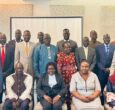
The Ministry of Information, Communication, Telecommunications and Postal Services on Saturday honored journalists from various media organizations in recognition of their contribution to informing the public and promoting responsible journalism.

The awards were presented during an event hosted by Minister Ateny Wek Ateny in Juba, where media professionals were recognized in seven categories for their work in journalism and public service.

Among the recipients was Eye Radio’s Michael Daniel, who won the Best Gender and Inclusive Reporter of the Year award.

Jenifer Nyling James of The Dawn Newspaper was named Best Print Journalist, while Radio Miraya’s Sebit William Ker received the Innovative Journalist of the Year award.

Other honorees included Rejoice Teo Samson, popularly known as Madam Decrees, who was recognized as the longest-serving news anchor, and Fozia Zachiaah, who received the Lifetime Achievement Award.

Marcelo Kenyi was awarded Best Radio and TV Engineer, while Mario Saileman was recognized as a Multi-tasking Journalist. Both are from the South Sudan Broadcasting Corporation.

Veteran cartoonist Adija Ali Acuil was named Best Cartoonist, while Olela Leilah John of Radio Maria received the Youth Media Leadership Award.

Speaking during the closing ceremony of the “Dinner with the Media Fraternity,” Minister Ateny said the awards were intended to recognize the important role the media plays in shaping public discourse, informing citizens, and supporting decision-making.

He also pledged continued support for media freedom and the protection of journalists’ rights.

The event, described as the first of its kind, brought together government officials, members of the diplomatic corps, media managers, editors, and journalists from across Juba. Continue reading “ICT ministry honors journalists for media excellence”

Gov’t, truck drivers strike deal sink deal to end Juba–Nimule highway strike

A government delegation and regional long-distance truck drivers have signed an agreement aimed at ending a two-week strike that disrupted cargo transportation along the Juba–Nimule Highway.

In a statement published by the South Sudan Revenue Authority, the delegation led by Deputy Commissioner General Solomon Ariik Manyok said the deal was reached after three days of negotiations with truck drivers in Nimule, Eastern Equatoria State.

The strike involved drivers mainly from Kenya, Uganda, and Somalia, who suspended cargo transportation into South Sudan over insecurity and alleged attacks on drivers along the highway.

The drivers had demanded improved security, removal of illegal roadblocks, lifting of weighbridge charges, and rehabilitation of the highway.

According to the agreement, authorities committed to removing unnecessary checkpoints and illegal charges imposed on transporters along the Juba–Nimule route.

The government also pledged to deploy additional security personnel to improve safety for drivers, passengers, and local communities.

The parties further agreed that only legally recognized taxes, duties, and levies would be collected, while unlawful charges allegedly imposed by some security personnel and agencies along the route, including at Juba Bridge, would be abolished immediately.

Among the fees to be cancelled are alleged illegal immigration charges, unlawful CID fees, unauthorized checkpoint collections at Nimule, Jebel, Aru Junction, Nesitu, and Juba Bridge, as well as SSP 90,000 stamp duty charges imposed at exit gates.

The agreement also directed the immediate cessation of what the parties described as extortion, harassment, intimidation, robbery, and assault against truck drivers operating along the highway.

In addition, the government pledged to engage relevant ministries on the renovation of the Juba–Nimule Highway and the removal of unnecessary checkpoints within Juba City, Bor, and Bahr el Ghazal roads, which drivers allege are used to extort money from transporters.

An ad hoc joint task force committee will oversee implementation of the resolutions and monitor compliance by all parties.

The agreement was signed by Solomon Ariik Manyok and Major General Akuei Ajou Akuei on behalf of the government, alongside representatives of regional transport associations.

Speaking after the signing ceremony, Long Distance Drivers Union chairperson Sudi Kauli Mwatela said truck operations would resume once the union finalizes movement plans.

“What we want to see is implementation and protection of our drivers because security is in the hands of the South Sudan authorities,” Mwatela said.

Mwatela added that the union expects authorities to fully implement the resolutions agreed upon during the negotiations.

In his remarks, Solomon Ariik Manyok said the government remains committed to implementing all aspects of the agreement.

“On our side, we are committed to implementing everything that we have signed today,” he said.

He added that the government would work with relevant institutions to ensure smooth cargo movement and improve security along the highway corridor.

Continue reading “Gov’t, truck drivers strike deal sink deal to end Juba–Nimule highway strike”

ICRC honors fallen aid workers, calls for civilians and humanitarians protection

The International Committee of the Red Cross (ICRC) in South Sudan has honored aid workers who have lost their lives in the line of duty and called for the protection of civilians and humanitarian personnel amid escalating violence across the country.

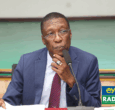
Speaking during the World Red Cross and Red Crescent Day commemoration on Friday, the Head of ICRC Delegation in South Sudan, Daniel Bunnskog, said the worsening conflict has continued to cause deaths, displacement, and increased humanitarian needs.

“We are very saddened by this. It has caused loss of life, displacement, adding to all the humanitarian challenges that the people of South Sudan are facing,” he said.

Bunnskog paid tribute to humanitarian workers and volunteers who have died while delivering assistance, including members of the South Sudan Red Cross.

“We honour those who have unfortunately lost their lives, not only in the world but also in South Sudan, as we have seen from our colleagues on the South Sudan Red Cross where they lost a few volunteers last year,” he said.

He said humanitarian staff continue to operate under difficult and dangerous conditions while supporting vulnerable communities across the country.

“We value and treasure the dedication of all the staff and volunteers who sometimes pay a heavy price,” he added.

Bunnskog called for the protection of civilians, civilian infrastructure, and humanitarian workers in line with international humanitarian law.

“It is a moment to remind a very key principle and key rule of international humanitarian law, which is that civilians, civilian infrastructure and humanitarian workers, including all Red Cross and Red Crescent staff and volunteers, must be protected by those carrying weapons,” he said.

He said the Red Cross and Red Crescent Movement in South Sudan, including the South Sudan Red Cross, ICRC, IFRC, and partner national societies, continues to work together to support affected communities despite ongoing insecurity.

Bunnskog reaffirmed the ICRC’s commitment to working with national authorities and humanitarian partners to address rising needs across South Sudan. Continue reading “ICRC honors fallen aid workers, calls for civilians and humanitarians protection”

Activist Godi welcomes ceasefire declaration, links new CDF’s past peace role

A youth representative to the peace monitoring body (RJMEC), has welcomed the recent declaration of cessation of hostilities issued under the directive of President Salva Kiir by newly appointed Chief of Defence Forces General Santino Deng Wol, describing it as a step that should be given room to prove itself in the field.

Patrick Godi linked Santino’s role in the current directive to his earlier involvement in the implementation of the Revitalized Peace Agreement, noting that he previously served in key security coordination structures that brought together rival forces.

He said Santino was part of the Joint Defence Board and contributed to decisions on cantonment, training, and the integration of forces under the transitional security arrangements, work that later fed into the broader unification of armed groups.

“In the implementation of the agreement, right from the beginning, he was among the key actors on the government side, working with counterparts from the opposition on issues of force unification,” Godi said.

He added that the current directive on cessation of hostilities reflects continuity in efforts aimed at reducing armed confrontation between government and opposition forces.

“Now that over a year later, at least one of the major parties has decided to call for a cessation, I think we should give it the benefit of the doubt,” he said.

Godi said that such developments often form gradual steps in conflict resolution processes and should be assessed in practice rather than dismissed early.

“In any conflict, there are always baby steps that have to be taken, and this declaration falls under those steps that can build stronger commitment from other parties,” he said.

He said the move could open space for political dialogue, arguing that negotiations and mediation become difficult while fighting continues on the ground.

“You cannot engage in any political process, be it negotiations or mediation, while in the field you are still actively fighting against each other,” he said.

However, Godi said concerns raised by opposition groups regarding trust and implementation should not be ignored.

“Due consideration needs to be given to the concerns of the opposition towards the move,” he said.

He added that addressing those concerns would be necessary for building confidence in any ceasefire arrangement and for supporting broader political engagement.

Godi also said that regional and international actors, including the African Union and IGAD, alongside civil society groups, have repeatedly called for a return to a cessation of hostilities agreement as a foundation for sustained peace efforts in South Sudan.

UN welcomes government commitment on humanitarian access in Akobo

The acting United Nations Humanitarian Coordinator in South Sudan, Marie-Helene Verney Karamagi, has welcomed commitments made by transitional government parties to facilitate humanitarian access to Akobo County in Jonglei State amid worsening humanitarian conditions.

In a statement issued in Juba on May 8, Karamagi said discussions with government parties resulted in assurances aimed at enabling humanitarian workers to safely reach affected communities in Akobo County.

“Karamagi welcomes the open discussions with, and commitments made by the transitional Government parties to facilitate humanitarian access to Akobo, Jonglei State, and the assurances provided by all to ensure the safety and security of humanitarian personnel and assets,” the statement said.

According to the UN Office for the Coordination of Humanitarian Affairs (OCHA), humanitarian partners are prepared to rapidly scale up emergency food assistance, protection, nutrition, and health services in Akobo and surrounding areas.

“Humanitarian partners stand ready, with teams and supplies pre-positioned, to rapidly scale up emergency food assistance, protection, nutrition and health services in Akobo County and its surrounding areas,” the statement added.

The UN warned that a narrow window exists to reach vulnerable communities before the onset of the rainy season, which is expected to make access more difficult and deepen humanitarian needs.

The statement follows the latest Integrated Food Security Phase Classification (IPC) analysis, which identified Akobo as one of the counties projected to face catastrophic levels of hunger and malnutrition between April and July 2026.

“This is critical following the latest Integrated Food Security Phase Classification (IPC) analysis, which identified Akobo as one of the counties in Jonglei State projected to face catastrophic levels of hunger and malnutrition,” the statement noted.

The humanitarian situation has worsened following violence in March and April, which led to widespread displacement across the area.

The UN estimates that about 200,000 people have been displaced, including more than 100,000 who reportedly crossed into Ethiopia through Tergol.

“In Jonglei State, civilian infrastructures, including Akobo hospital, have been looted and damaged, disrupting health services,” the statement said.

Karamagi also expressed appreciation to the United Nations Mission in South Sudan for supporting a secure environment for humanitarian operations in Akobo.

“Full, safe and sustained humanitarian access at this time is essential to enable urgent life-saving assistance to reach affected communities and help avert a further deterioration of this worrisome humanitarian crisis we see unfolding,” Karamagi said.

“I serve the country, not individuals”: Petroleum undersecretary warns cartels

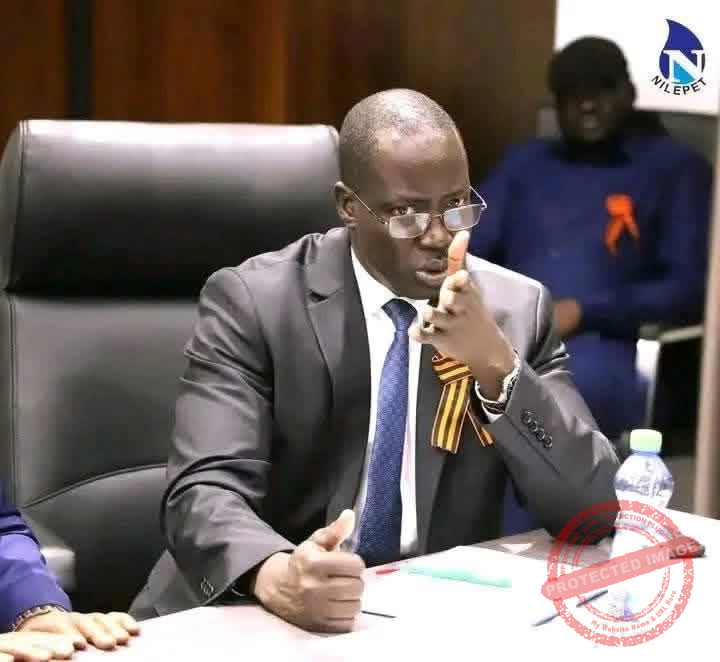
The Undersecretary in the Ministry of Petroleum, Santino Ayuel Longar, has publicly spoken out against political interference and pressure in the awarding of contracts, warning that favoritism threatens the growth of national institutions in South Sudan.

Speaking during a public event in Juba, Santino Ayuel Longar said one of the biggest challenges facing public officials is pressure from powerful individuals seeking government contracts through what he described as “briefcase companies.”

“The most important challenge is political. Who do I serve: an individual or the country?” Longar questioned during his remarks in a video posted by Citizens Voice Media.

He cited a hypothetical example involving a 15-million-dollar contract, saying officials are often pressured to award deals to politically connected companies instead of established national institutions.

“If I don’t give it to Nilepet Insurance, then a powerful individual with a briefcase company is on my neck,” he said.

The senior petroleum official stressed that his decisions are guided by patriotism and the sacrifices made by millions of South Sudanese during the liberation struggle.

Longar said he could not choose personal interests over national institutions while remembering those who lost their lives for the country.

“Compared to many millions of people who have died for this country, my blood doesn’t come close to that,” he stated.

He further said threats and intimidation would not influence his decisions, emphasizing that public institutions must be protected and strengthened.

“No amount of threat or psychological intimidation will make me decide in favor of a particular individual,” he added.

Longar also acknowledged the suffering endured by liberation veterans, saying some continue to live with physical and psychological wounds sustained during the struggle for independence.

He noted that while he welcomes advice from colleagues and stakeholders, decisions must be based on practicality, validity, and national interest rather than political pressure.

The remarks come amid continued public concerns over transparency, accountability, and alleged favoritism in the awarding of government contracts in South Sudan. Continue reading ““I serve the country, not individuals”: Petroleum undersecretary warns cartels”

“Problems will come walking and dancing,” Ex-finance minister warns successor

The former Minister of Finance and Planning, Salvadore Garang, has warned his successor about the challenges facing the ministry, saying he was handing over not only the office but also its problems. Continue reading ““Problems will come walking and dancing,” Ex-finance minister warns successor”

Support Eye Radio, the first independent radio broadcaster of news, information & entertainment in South Sudan.

Make a monthly or a one off contribution.