
9th August 2026
You are here: Home | Governance | Humanitarian | Opinion | Opinion: Beyond safety, refugees need the chance to rebuild

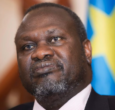
Kwami Makumator - File photo
Every day in South Sudan, families arrive at border crossings, transit centers, and displacement sites seeking safety from conflict, violence, climate shocks, and instability, underscoring displacement as a daily reality for many across the country, according to Kwami Makumator, the Country Director of ForAfrika South Sudan
In South Sudan, displacement is the daily reality of families affected by conflict, insecurity, climate shocks, and economic collapse. For every person forced to flee, safety is the first and most urgent need. It is the difference between life and danger. But once safety is secured, our responsibility cannot end there.
Food, shelter, healthcare, clean water, and protection save lives in moments of crisis, and they must remain at the centre of any humanitarian response. Yet in South Sudan, where displacement is often prolonged and communities face repeated shocks, survival must be connected to recovery. Too often, the refugee and displacement story is framed only around emergency assistance, while the longer journey toward livelihoods, stability, and self-reliance receives far less attention.
Despite facing significant humanitarian challenges of its own, South Sudan continues to provide refuge to people fleeing conflict and instability in neighboring countries. The country currently hosts more than 600,000 refugees and asylum-seekers while also supporting approximately 2.6 million internally displaced people. The ongoing conflict in Sudan has further increased pressure on communities and services, with hundreds of thousands of South Sudanese returnees and refugees crossing into the country in search of safety.
Many of these families are trying to rebuild their lives while facing hunger, floods, poverty, fragile food systems, overstretched schools, and limited water and sanitation services. At the same time, host communities are sharing land, markets, and basic services under immense pressure, stretching already limited local resources even further.
This is why this year’s World Refugee Day focus on the right to seek safety is so important. Safety is fundamental and non-negotiable. But it should also be the foundation on which recovery is built. Displaced communities, returnees, and internally displaced families need investments that link emergency response to education, food security, nutrition, clean water, sanitation, and sustainable livelihoods. Safety must remain the starting point, but recovery and resilience should be the path forward.
This shift requires policy and funding to change. Governments and partners must connect humanitarian response to national systems and long-term recovery. Donors must move beyond siloed, short-term funding and invest in integrated approaches that reflect how people actually live. Flexible, integrated investments produce stronger and more sustainable returns because they address the real chain of vulnerability: hunger, illness, poor learning, lack of income, and weak local systems.
For humanitarian and development actors, the humanitarian-development-peace nexus moves from theory to practice only when programmes help families survive emergencies while strengthening their capacity to recover tomorrow. That is where integrated models like those implemented by ForAfrika South Sudan offer valuable lessons.
World Refugee Day should be a moment of honesty. If we feed people but ignore water, nutrition will fail. If we support schools but ignore hunger, children will not learn. If we provide aid but ignore livelihoods, recovery will stall. And if we help refugees but neglect host communities, cohesion will fracture.
The question is no longer whether displaced people deserve safety. The question is whether we are willing to invest in what comes after safety: education, livelihoods, dignity, and opportunity. Without these, displacement becomes a cycle. With them, it can become the beginning of recovery.
Refugees need safety, but they also need a chance to rebuild their lives, support their families, and contribute to the communities that host them. If South Sudan is to move from repeated crisis to lasting recovery, the path forward must be integrated, practical, and community rooted.
 1
1Published August 2, 2026
 2
2Published August 2, 2026
 3
3Published August 4, 2026
 4
4Published August 4, 2026
 5
5Published 16 hours ago
 6
6Published August 4, 2026
 7
7Published August 4, 2026
 8
8Published August 5, 2026
Published 8 hours ago

Published 15 hours ago
Published 16 hours ago

Published 17 hours ago

Published 18 hours ago
Published 19 hours ago
Support Eye Radio, the first independent radio broadcaster of news, information & entertainment in South Sudan.
Make a monthly or a one off contribution.
Copyright 2026. All rights reserved. Eye Radio is a product of Eye Media Limited.