
12th August 2026
You are here: Home | Culture | National News | News | Nuer launch customary law reform at Juba conference
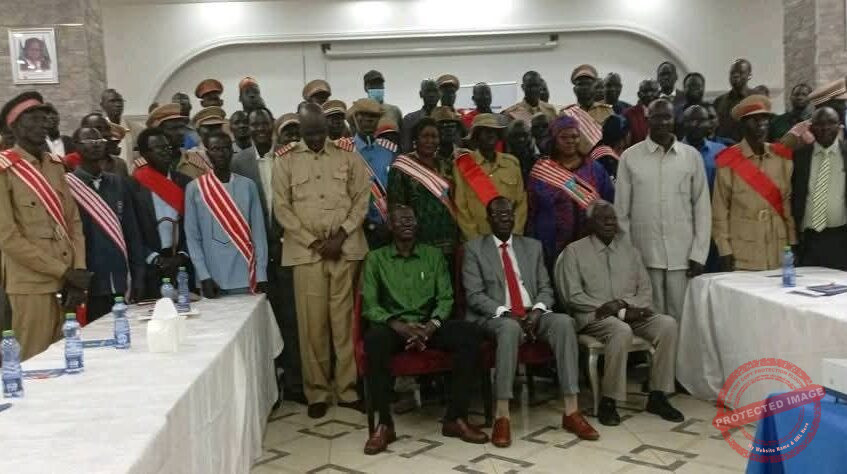
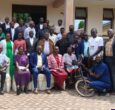
Key participants—including Naath Chiefs, community leaders, academics, religious figures, women, and youth—gathered in Juba for the Inception Workshop organized by the Naath Institute (NI). This workshop launched the critical effort to harmonize the Nuer Customary Law. | Courtesy
The Nuer community has resolved to harmonize its customary laws following a major conference held over the weekend in Juba, addressing long-standing differences related to marriage, dowry, and compensation.
The Naath Institute (NI), in partnership with the United Nations Mission in South Sudan (UNMISS) and supported by the Reconciliation, Stabilization and Resilience Trust Fund (RSRTF), organized a one-day Inception Workshop in Juba.
Titled “The Nuer Customary Law Review, Harmonisation, and Proclamation,” the event successfully gathered over 100 key Nuer personalities to launch this critical legal effort.
Attendees included 50 Chiefs, 50 Naath community leaders, members of academia, as well as religious leaders, women, and youth.
The workshop was a major step in The Naath Institute’s effort to review, harmonize, and formally proclaim the Nuer Customary Law across the sixteen Nuer Counties in Jonglei, Upper Nile, and Unity State.
Speaking at the conclusion of the event, James Hoth Mai, Chairman of the Nuer Community in Juba, said the review was long overdue, noting that inconsistent practices had created confusion and inequality.
“We have had disunity between eastern and western sections of the Nuer,” he said. “Practices around marriage, dowry, and compensation vary widely, which has caused confusion and unfairness. This conference was about creating one common law to govern us all.”
A key focus of the discussion was the rising cost of dowries, which has created barriers for many young men seeking to marry.
Traditionally, dowries ranged between 25 and 35 cows, but in recent years, expectations have surged to as high as 120 to 200 cows, with some communities placing a cash value of up to $300 per cow.
Mai described the trend as unsustainable and unfair, particularly for young men who cannot afford such amounts.
“This is affecting our youth,” he said. “If someone is asked to pay 120 cows at $200 each, that’s nearly $25,000. Where will a young man find that kind of money?”
He said many young people are now resorting to informal unions or unrecognized marriages, which risks further social problems.
According to Mai, to address the issue, the conference resolved to set a standard value of $200 per cow and encourage reasonable dowry expectations across all Nuer sections.
Another area of debate was whether parents should demand higher dowries based on the amount they invested in raising or educating their daughters.
Mai stated this idea was opposed, arguing that child-rearing is a parental responsibility and should not be commercialized through dowry negotiations.
“We don’t consider how much someone spent raising their daughter,” he said. “That is your duty as a parent. It should not be used as a reason to demand more cows or money.”
According to Mai, the initiative to harmonize the Nuer customary law will not stop in Juba. Organizers say the resolutions from the conference are just the beginning of a nationwide consultation process that will involve local leaders and community members from across Nuer territories in South Sudan and the diaspora.
Mai said the community is drawing from a range of historical legal texts, including the original Nuer customary code drafted in 1942, as well as updated versions developed during the liberation struggle.
“We want to consolidate everything — historical documents, community views, and expert input — into one final legal framework that reflects the values and realities of today,” he said.
Diaspora communities will also be consulted through The Naath Institute, a cultural and research organization that is facilitating participation from Nuer professionals abroad.
A living document for future generations
Mai emphasized that the revised customary law will be a living document, open to amendments and improvements as society evolves.
“Laws are not stagnant. They must be reviewed and updated over time,” he said. “This process is about building something that belongs to all of us — a law that reflects who we are, where we come from, and where we are going.”
He called on all Nuer communities, both at home and abroad, to support the initiative and contribute positively to the ongoing consultations.
The final draft of the harmonized customary law is expected to be compiled, validated, and ratified through wider community engagement in the coming months.

Currently on air
00:00:00 - 06:00:00
 1
1Published August 9, 2026
 2
2Published August 8, 2026
 3
3Published August 9, 2026
 4
4Published August 10, 2026
 5
5Published August 10, 2026
 6
6Published August 11, 2026
 7
7Published 13 hours ago
 8
8Published August 8, 2026

Published 6 hours ago

Published 7 hours ago

Published 7 hours ago
Published 7 hours ago
Published 7 hours ago

Published 10 hours ago
Support Eye Radio, the first independent radio broadcaster of news, information & entertainment in South Sudan.
Make a monthly or a one off contribution.
Copyright 2026. All rights reserved. Eye Radio is a product of Eye Media Limited.