
26th July 2026

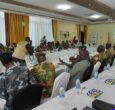
DISASTER PREPAREDNESS PARTNERSHIP: Participants, facilitators, and representatives from the Ministry of Humanitarian Affairs, South Sudan Red Cross, IFRC, Netherlands Red Cross, and other partner organizations pose for a group photo following the conclusion of the two-day national media training on early warning systems and disaster risk communication in Juba on Tuesday, June 8, 2026. Photo: South Sudan Red Cross
The South Sudan Red Cross (SSRC), in collaboration with government and humanitarian partners, has concluded a two-day national media training in Juba aimed at equipping journalists to communicate life-saving early warning alerts as floods, droughts, and disease outbreaks continue to affect communities across South Sudan.
The training, held from June 8 to 9, brought together journalists from Juba, Bor, and Kapoeta to enhance their understanding of disaster preparedness, risk communication, and early warning systems.
The event was hosted by the Ministry of Humanitarian Affairs and Disaster Management in partnership with the South Sudan Red Cross.
Speaking during the training, Lucy Amude, Climate and Resilience Officer with the International Federation of Red Cross and Red Crescent Societies (IFRC) Juba Cluster, said the initiative highlights the important role of the media in disaster preparedness and response.
She explained that journalists were equipped with the knowledge and skills needed to communicate timely, accurate, and inclusive early warning information to communities at risk.
Amude noted that South Sudan continues to face growing climate-induced hazards including floods, droughts, disease outbreaks, and heatwaves—challenges made worse by fragile infrastructure and limited access to timely information.
According to her, these risks continue to expose vulnerable communities to loss of life, displacement, and destruction of property, making effective early warning systems critical in reducing the impact of disasters.
She said the training focused on risk-informed journalism, community engagement, multi-stakeholder collaboration, and the use of the Common Alerting Protocol to improve public communication during emergencies.
“The objective of this training is to strengthen the ability of the media professionals to interpret alerts into clear, simple, and actionable messages that communities can easily understand and respond to, and also promote ethical and culturally appropriate reporting during emergencies, and also ensure the messages do not create fear, stigma, or misinformation,” Amude stated.
“Another objective was to improve coordination and information flow between media houses, the South Sudan Red Cross, the South Sudan Meteorological Services, disaster management authorities, and the National Early Warning Technical Working Group.”
She added that the training sought to strengthen the ability of media professionals to interpret alerts into clear, simple, and actionable messages that communities can easily understand and respond to. The sessions also emphasized ethical and culturally appropriate reporting during emergencies to avoid fear, stigma, and misinformation.
Organizers stated that the training aimed to improve coordination and information sharing between media houses, the South Sudan Red Cross, the South Sudan Meteorological Services, disaster management authorities, and the National Early Warning Technical Working Group.
Another key focus was enhancing the media’s capacity to manage misinformation, rumors, and disinformation during crisis situations through responsible communication practices.
Amude said the expected outcome of the training is a network of media professionals capable of accurately interpreting, reporting, and disseminating early warning messages through various media platforms across the country.
The training was conducted under the “Water at the Heart of Climate Action” initiative implemented by the IFRC, the Netherlands Red Cross, the World Meteorological Organization (WMO), the United Nations Office for Disaster Risk Reduction (UNDRR), the South Sudan Red Cross, the South Sudan Meteorological Services, and relevant government ministries.
Representatives from several partner organizations—including the UNDRR, the International Telecommunication Union (ITU), the National Communication Authority (NCA), and the International Committee of the Red Cross (ICRC)—also participated in the sessions and presentations during the training.
 1
1 2
2Published July 20, 2026
 3
3Published July 20, 2026
 4
4Published July 20, 2026
 5
5Published July 21, 2026
 6
6Published July 23, 2026
 7
7Published July 23, 2026
 8
8Published July 21, 2026

Published 1 hour ago

Published 2 hours ago
Published 3 hours ago

Published 3 hours ago

Published 5 hours ago

Published 5 hours ago
Support Eye Radio, the first independent radio broadcaster of news, information & entertainment in South Sudan.
Make a monthly or a one off contribution.
Copyright 2026. All rights reserved. Eye Radio is a product of Eye Media Limited.