
25th June 2026
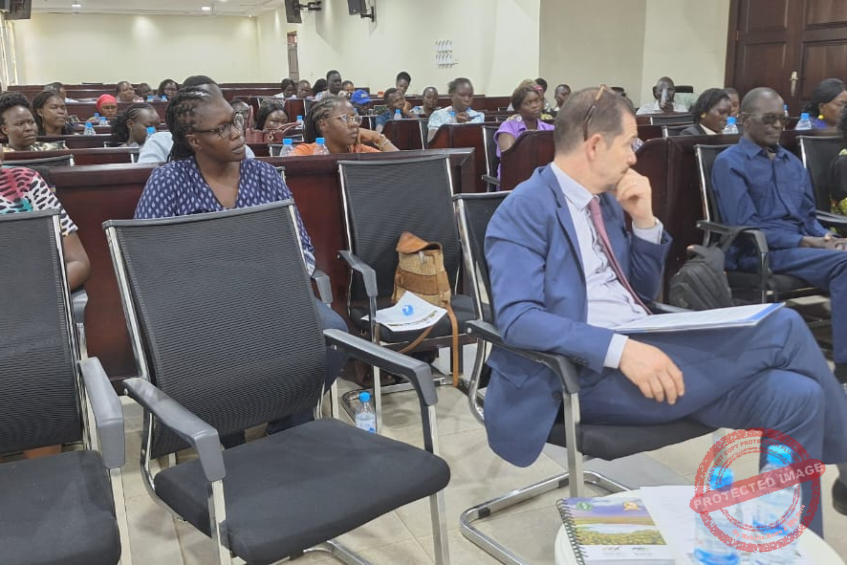
Participants attend the "Invisible Wounds" panel discussion at the University of Juba on Thursday, March 12, 2026. Organized under the RESPECT Project and supported by the EU and Germany, the forum called for urgent action to strengthen mental health services and protection systems for South Sudan’s most vulnerable women and girls. Credit: GIZ/Ayen Deng
JUBA, South Sudan (Eye Radio) – In South Sudan, a name is often a living map of history. For a generation born during the liberation struggle, names like “Tong” in Dinka or “Mut” in Nuer—both meaning “spear”—serve as permanent reminders of a conflict-ridden era.
“Most children born during the war were given these names to remind them of those difficult times,” shared Elisabeth Atong, Project Coordinator for GIZ, during a high-level panel discussion recently held at the University of Juba.
“I don’t want to associate it only with war; I believe the spear is also a tool for protection.”
This reflection on identity—symbols of both pain and protection—set the stage for a critical dialogue titled “Invisible Wounds.”
Organized under the RESPECT Project (implemented by GIZ and funded by Germany and the EU), the event commemorated International Women’s Day 2026 under the global theme: “Rights. Justice. Action. For ALL Women and Girls.”
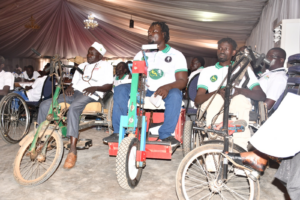
The context for the discussion is stark. South Sudan continues to grapple with the overlapping crises of conflict, displacement, and a near absence of specialized public services.
These factors have created a culture of widespread trauma, where wounds are often psychological rather than physical.
German Ambassador Gregory Bledjian noted that the theme “Invisible Wounds” is a necessary call to action.
“Invisible because trauma and exclusion are often unseen, and wounds because violence and stigma leave deep scars on bodies, minds, and futures,” he stated.
The Ambassador highlighted that women and girls with disabilities face multiple risks.
They are more likely to experience sexual and gender-based violence (GBV) but face the greatest obstacles in reporting abuse or accessing care.
“Mental health and psychosocial support are not optional; they are central to healing, dignity, and participation in society,” he added.
The symbolism of identity continued with EU Ambassador Pelle Ianarsson, who shared that his name translates to “son of a bold soldier.”
“Let me be a soldier for women’s rights,” Ianarsson declared. He provided a sobering update on the scale of the challenge: while the 2008 census estimated 420,000 people living with disabilities in South Sudan, current estimates suggest that number has soared to over 1.1 million people, or roughly 16% of the population.
Ambassador Ianarsson emphasized that mental health must become a national development priority.
“When mental well-being is compromised by conflict or social stigma, an individual’s ability to learn, work, and participate in civic life becomes severely limited,” he said.
“No society can achieve true equality while women and girls with disabilities remain invisible or unprotected.”
Currently on air
09:00:00 - 12:55:00
 1
1Published June 21, 2026
 2
2Published June 19, 2026
 3
3Published June 19, 2026
 4
4Published June 19, 2026
 5
5Published June 18, 2026
 6
6 7
7Published June 22, 2026
 8
8Published June 23, 2026

Published 57 minutes ago
Published 2 hours ago
Published 2 hours ago

Published 17 hours ago

Published 17 hours ago

Published 18 hours ago
Support Eye Radio, the first independent radio broadcaster of news, information & entertainment in South Sudan.
Make a monthly or a one off contribution.
Copyright 2026. All rights reserved. Eye Radio is a product of Eye Media Limited.