
4th September 2026
You are here: Home | Business & Economy | National News | News | Fuel prices soar as pound plunges, South Sudanese feel economic pressure
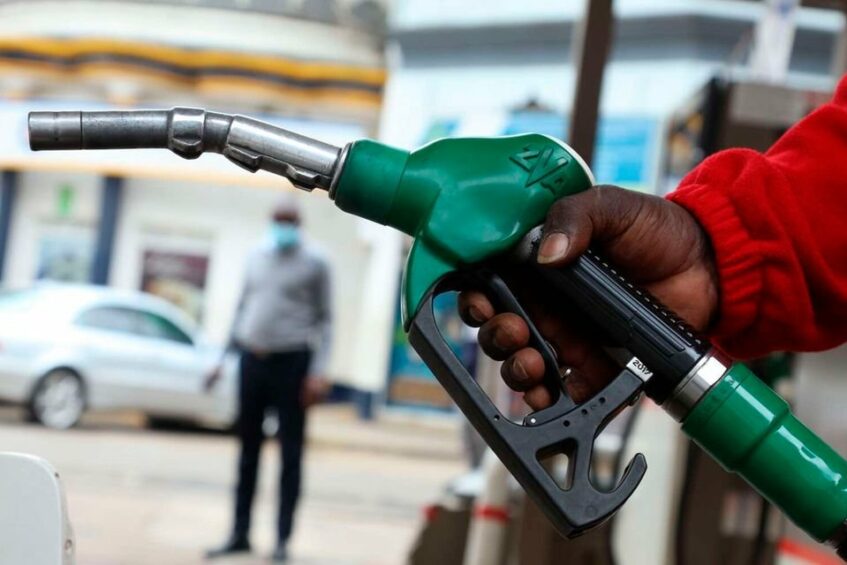
A Fuel attendant holding a fuel pump at the filling station along Kimathi Street in Kenya. (Photo: NMG).
South Sudanese residents have expressed concern over rising fuel prices and the continued depreciation of the South Sudanese pound, saying the increasing cost of living is putting pressure on households and businesses.
Speaking during Eye Radio’s Dawn Show on Wednesday, callers from Juba, Wau, and other parts of the country said the exchange rate on the parallel market has risen above SSP 750,000 to one U.S. dollar in Juba, with higher rates reported in some states.
Residents also said the price of diesel has increased sharply from around SSP 14,500 to SSP 18,500 per litre within 24 hours, forcing some commuters to walk because they can no longer afford transport costs.
Sultan Joseph from Suk Sita said the depreciation of the pound has made life increasingly difficult for ordinary citizens.
“The dollar is going for more than SSP 700,000 and even higher. There are no salaries, no money, and everyone is quiet as if no one is around. Our leaders, where are we heading with this? Elections are coming, but who will be there for you if there are no health services and no money?” he said.
Batista Armano from Guri said the exchange rate on the black market had reached between SSP 760,000 and SSP 765,000 per U.S. dollar, warning that the situation was becoming serious.
“Yesterday, the dollar in the black market was SSP 760,000 and some people said SSP 765,000, which means it is almost SSP 800,000. This is something serious and dangerous. Two days ago, I bought diesel at SSP 14,500, but this morning, shockingly, it went up to SSP 18,500,” he said.
In Wau, residents said fuel shortages and rising prices have disrupted transport services and daily business activities. Some callers claimed fuel stations had remained closed, forcing motorists to buy fuel in bottles at much higher prices.
Abu Lulu from Wau said the increase has left many people unable to afford transport.
“From yesterday until today, places are closed. A small bottle of fuel costs SSP 30,000 and a big one costs SSP 50,000. Things are becoming harder here in Wau, and some people are now walking because of the high cost of fuel,” he said.
Another caller, Abu Kurfu from Aru Junction, questioned why fuel prices continue to rise in an oil-producing country.
“I don’t know whether people in power and those with authority know what is happening on the ground or whether they only take care of themselves. It beats my understanding why an oil-producing country is complaining about high oil prices,” he said.
The latest price increases come as the South Sudanese pound continues to lose value against the U.S. dollar on the parallel market.
The weakening currency has contributed to rising fuel and transport costs, pushing up prices of food and other essential commodities. Economists have repeatedly warned that exchange rate instability and inflation continue to reduce the purchasing power of households across the country.

Currently on air
09:00:00 - 12:55:00
 1
1Published August 29, 2026
 2
2Published September 1, 2026
 3
3Published August 30, 2026
 4
4Published August 28, 2026
 5
5Published August 31, 2026
 6
6Published August 31, 2026
 7
7Published September 1, 2026
 8
8Published August 31, 2026

Published 14 hours ago

Published 14 hours ago
Published 15 hours ago

Published 17 hours ago

Published 17 hours ago

Published 18 hours ago
Support Eye Radio, the first independent radio broadcaster of news, information & entertainment in South Sudan.
Make a monthly or a one off contribution.
Copyright 2026. All rights reserved. Eye Radio is a product of Eye Media Limited.