27th June 2026

Kenya pushes one-pub-per-town order to fight alcoholism

Kenya’s deputy president has ordered government administrators in the country’s central region to enforce a one-pub-per-town directive that was issued last week.

Rigathi Gachagua also wants entertainment joints in the region to only operate between 17:00 to 23:00 in new measures meant to deal with alcoholism.

There are fears the directives could see many resort to homemade alcohol – often laced with industrial chemicals. Deaths from illicit brews have previously been reported.

But Mr Gachagua on Thursday insisted that alcoholism in the region was dire and told officials not to renew pub licences once they expire.

“Let us deal with these issues, let us save the next generation, otherwise we have a problem as society,” he said.

Woman told to pay ex-fiancé for breaking his heart

A Ugandan woman who broke up with her fiancé has been ordered to pay him financial damages for psychological anguish.

The court in Kanungu said Richard Tumwine paid 9.4m shillings ($2,550; £2,060) for Fortunate Kyarikunda’s law studies, which she must now repay plus his legal fees.

By calling off their engagement after four years, Magistrate Asanasio Mukobi ruled that Ms. Kyarikunda had broken a promise to the detriment of Mr. Tumwine.

The court said it was “unreasonable, a misrepresentation and a fraud” for the defendant to argue that her parents told her not to marry an older man, saying she “had all the opportunity to reject the plaintiff’s love requests at the earliest point possible and avoid interfering with his financial obligations”.

It is not known if Ms. Kyarikunda will appeal against the judgment. Critics tell the Monitor newspaper that the verdict is flawed because an engagement, unlike a marriage, is not legally binding.

Meanwhile, Sheila Kawamara, of the women’s advocacy group ED EASSI, warns there are sometimes exploitative circumstances whereby a man gives money to a woman on the condition that she will marry him.

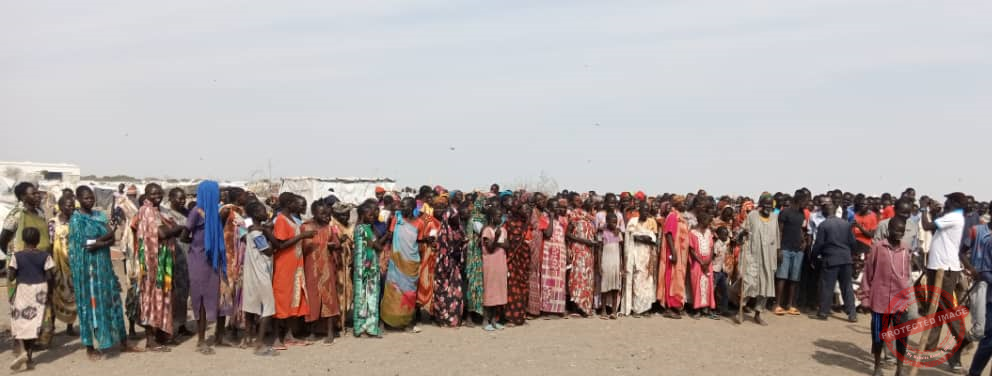
Two dead in Juba PoC revenge attack

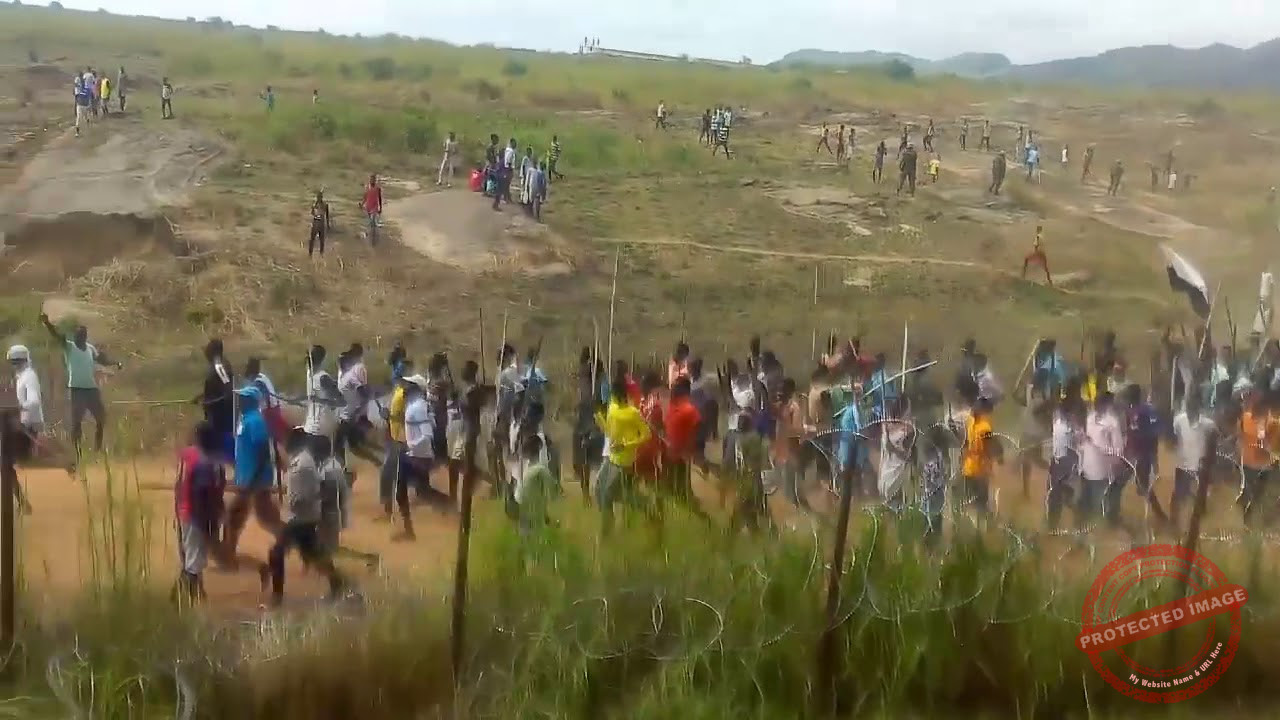
At least two people were killed in a two-day communal fight at the Protection of Civilians Site in Juba, according to the camp chairman, Lam Jok Kumbang.

Jok said two youth groups fought each other on Wednesday and Thursday resulting in the death of the young men.

Jok identified the deceased as  Duer Machieng Machar and Madiet Youai Gatkouth. Both were in their late twenties.

However, Jok said, the security situation is now relatively calm after the police forces intervened yesterday.

Lam Jok Kumbang spoke to Eye Radio this morning from PoC in Juba – Yei road.

“Two days ago, fighting erupted at the PoC here between two groups [Guit and Rubkona], and it lead to the stabbing of one of the young men in his stomach and he was taken to hospital for surgical operations,

“On the second day, the family of the person who was stabbed also attacked the other group, and the two groups fought again,

“And this led to the death of two people, one from each side”, Jok confirmed.

Thousands of people have been sheltering in the PoC site in Juba since the conflict erupted in the area in December 2013.

As of January 2022, approximately 33,000 displaced persons reside in Juba IDP sites compared to the 31,000 people reported in January 2021.

While the number of people has not grown exponentially, some people who were originally displaced, then moved out of the Juba sites.

Investigations into latest Juba plane crash underway -Official

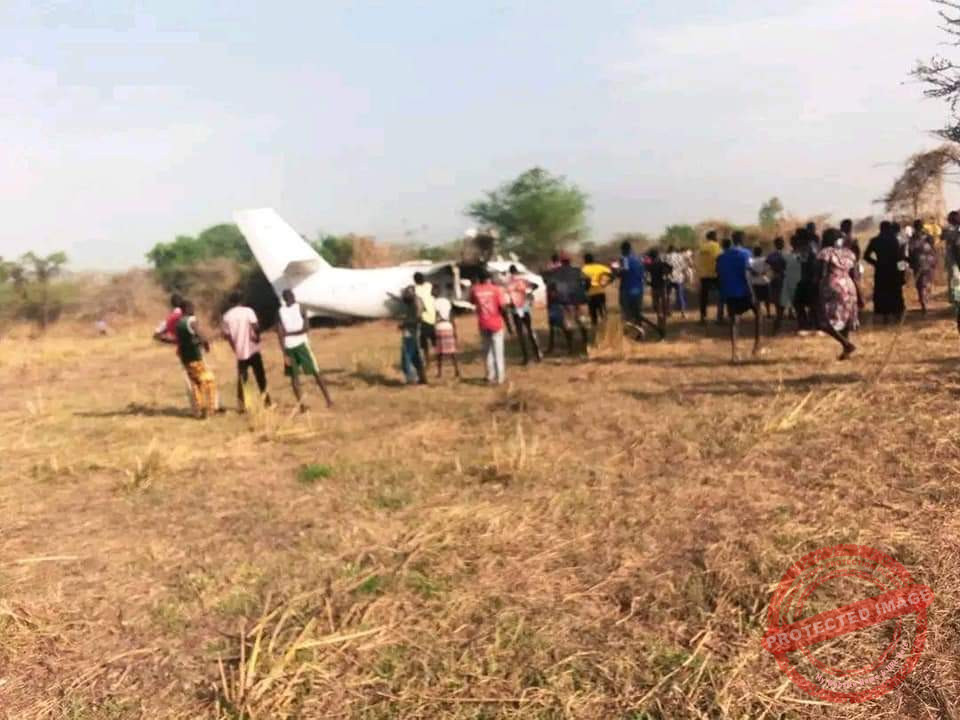
An official at Juba International Airport has said investigations to establish the cause of a cargo plane crash in the city Friday morning are underway.

Three passengers and two crew members have survived the crash west of Juba International Airport.

The Fly Air Africa cargo plane took off from the city airport when it shortly came down and crashed in an unoccupied area near Referendum residential area.

“The crush is true, the plane belongs to a company called Fly Air Africa. It took off from Juba International Airport and was heading to Lankien, Kur Kuol”, the Director of the Airport confirmed.

According to Kur Kuol, the Director of the Airport, the plane was heading to Lankien in Akobo County of Jonglei state.

The five people aboard are unhurt, but the plane suffered some damage to the cabin.

The cause of the crash is unknown.

However, Kuol said an investigation team will be formed to establish the cause of the crash.

“The three passengers and two crew are safe, but the plane has some damage. I cannot tell what was caused until investigations are done, he added.

Airplane crashes are often reported in South Sudan, a situation attributed to the use of outdated aircraft as well as overloading airplanes.

In July 2022, a plane crashed to a standstill while attempting to take off at Juba International Airport.

While in November 2021, a cargo plane crashed in the capital Juba killing all five crew members on board.

This followed another deadly crash that killed 10 people in Jonglei State in March of the same year.

In 2020, the Civil Aviation Authority withdrew the license of several Antonov planes and ordered their owners to fly them out of South Sudan.

The Aviation Authority also warned two AN-26 planes owned by the South Sudan Air force flying with foreign civil registration to change to the military or else face a ban by the aviation authority.

The Russian Antonov AN-26s, which were manufactured in 1969 – have been blacklisted by the Flights Safety foundation in 2006.

Juba law-firm pulls robe with lawmakers over Hai Barlaman ownership as officer guards father’s legacy

A law firm has accused the national parliament of intending to forcefully evict occupants of a church premise in Juba despite a lawsuit at a regional court.

The Juba-based M/S Pan African Law Chambers, LLP, had in July 2022 filed a case against the government for claiming ownership of a piece of land hosting the Christ Church, Nakasongola.

The law firm identified the complainants as Bishop Jambo Mulla, Geoffry Lowila, and Emmanuel James Bona.

Others were Emmy Chaka and David Mulla.

According to the complainants, the land strategically behind the national parliament belonged to the Nakasongola Church which has been owning it for over 40 years.

However, a notification obtained by Eye Radio dated, 20th of July 2022, addressed to the Attorney General of the Republic of South Sudan, the regional court demanded the national Justice Minister file a defense against the lawsuit within 45 days.

The court’s letter did not indicate which church land had been grabbed.

But this comes after in May 2022, the Ministry of Justice and Constitutional Affairs served the Nakasongola Church with an eviction letter asking them to vacate the place.

However, in a document dated October 20, 2022, Speaker Jemma Numu Kumba notified the National Security Minister, Obote Mamur that the Assembly had in 2005 notified some displaced persons to leave the area.

She said the Nakasogola premises or otherwise dubbed as Hai Barlaman was allotted to the assembly since the 1970s by the regional government.

The Ministers of Interior and Justice as well as the Director General of the Internal Security Bureau, the Chief of Staff of the SSPDF, and the church were copied in the letter.

Kumba said the August house had tried all dispute resolution mechanisms, but the son of a late pastor refused to leave the premises.

According to her, the unnamed man is a national security officer who often storms the church compounds with other officers including military intelligence to threaten the assembly.

It’s not clear what the officials’ responses were. But it emerged in January 2023, a letter by the Inspector of police to the Interior Minister, indicating the speaker requested for the eviction of what she called occupants of the Hai Barlaman.

General Majak Akech Malok appeared to have forwarded the matter to Minister Mohammud Solomon to prevail over the matter

In a response letter dated January 17, 2023, addressed to the Inspector of Police, Chief of Defense Forces, and the Director of the National Security Internal Bureau, Interior Minister Solomon advised that they ought to initiate an amicable and peaceful approach to the matter.

Citing the reported behavior of the individuals, the Minister directed the formation of a joint committee comprising the security organs to address the dispute.

In a response to the eviction threats of which the occupants were notified,  the law firm urged the security organs to refrain from executing the eviction plans.

“We are kindly urging your esteemed office and the security institution that your office is mobilizing to execute the illegal orders to refrain and the Ministry of Justice to abide by rule of law as it is enshrined in the Transitional Constitution of the Republic of South Sudan, and in Article 6(d) &7(d) of The East African Treaty as well as in the African Charter on Human and People’s Rights.”

According to him, there is no legal order warranting the eviction of the occupants.

” There was no court order warranting eviction of the occupant of the said premises from the Judiciary of South Sudan.”

Yet, he argued that the South Sudan Justice Ministry has undefended the case pending at the East African Court of Justice.

The law firm went on to question the Speaker over her claim the land belongs to the parliament.

“The documents your office is relying on from the land registry and the Ministry of Housing are all forged documents and amounting to forgery,

“The Hai Barlaman your office is relying on was among the documents canceled in 2001 when James Loro was the Governor. This forged document is meant to defeat the end of justice,” it said.

The notice further stated that mobilizing security institutions against the Church without due process of the law amounts to infringement of the freedom of Religion & rights to own properties.

The M/S Pan African Law Firm, LLP, called upon the Secretary-General to bring this matter to the attention of the Chairperson /Head of the summit of the EAC, Evariste Nyaite Ndayishimiye, and the President of the Republic of South Sudan

When contacted, the parliamentary spokesperson, Honorable John Agany says that the area belongs to the parliament since the then regional government following the 1972 Addis Ababa agreement.

Agany criticized the lawyer for rushing the matter to the East African court when there is a court of Justice in the country.

“This thing has not been addressed by our court in South Sudan. When they opted to go to East Africa, this means they do not know the process. They should open a case in Juba against the government, it must be addressed here,

“If they fail, then they can repeal in the court. The fact they went to East Africa is a waste of time because the land belongs to South Sudan and not to East Africa”, he said.


 

Pope’s visit shows world’s desire for peace in S.Sudan – R-JMEC Chairperson

The Interim Chairperson of the Reconstituted Joint Monitoring and Evaluation Commission has described the coming of the Pope to Juba as an indicator of the world’s desire for lasting peace in South Sudan.

“The imminent Ecumenical Peace Pilgrimage to Juba of the three religious’ leaders, led by His Holiness, Pope Francis, is an indicator of the world’s desire for lasting peace in South Sudan”,  Charles Tai Githuai said.

He called on South Sudanese to use the opportunity to renew their confidence in the peace process.

Tai also urged the unity government and citizens to rebuild trust and demonstrate genuine political will as the country forges ahead towards the end of the Transition Period as stipulated in the Roadmap.

” I urge the leadership of the R-TGoNU, the Parties, and the people of South Sudan to renew their confidence in the peace process, rebuild trust and demonstrate genuine political will and unity of purpose, with the spirit of forgiveness and magnanimity.”

Tai described this peace implementation as critical and recommended steps the peace parties needed to take for a peaceful political transition.

“One, reconstitute the Political Parties Council as part of the operationalisation of the recently enacted laws, which helps to protect political space, thereby allowing for the registration of political parties,

” Two. harmonize the ranks of the unified forces, and provide for their welfare so that they can be deployed to provide security and protection of civilians caught up in sub-national violence,

” Three, initiate dialogue between the communities and parties to address sub-national violence in the country, particularly in the hotshots of Upper Nile, Jonglei, the Equatoria, and Greater Pibor Administrative Area.

And lastly, “commence Phase II of the unification of forces without further delay, and provide adequate resources to the security mechanisms, the cantonment sites, and training centers.”

According to the Vatican, Pope Francis will land in Kinshasa, the capital of DR Congo on January 31, where he will spend two days.

He will make the African trip alongside the Archbishop of Canterbury and the Moderator of the General Assembly of the Church of Scotland.

He will then board a flight to Juba on February 3, where he is expected to hold prayers and meet the authorities, religious leaders, and internally displaced persons.

The long-awaited visit of the Pontiff was canceled in July last year due to health problems.

The historic papal trip will mark the first time a Pope has visited South Sudan, and only the second time a Pope has visited the DRC, which is home to Africa’s largest Catholic population.


Upper Nile governor Budhok, several SPLM-IO state officials relieved

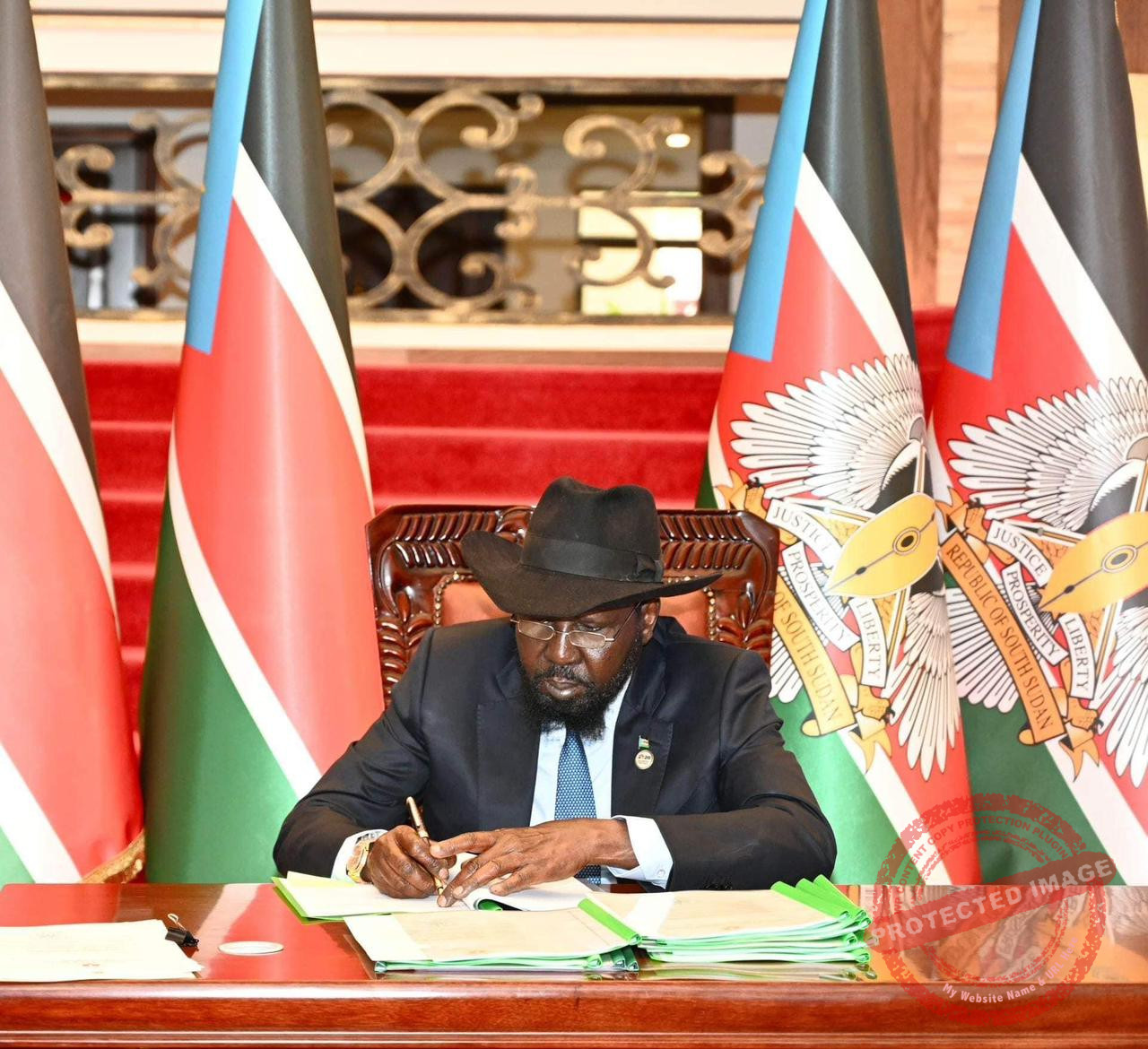
President Salva Kiir has relieved the governor of Upper Nile State and some senior members of SPLM-IO in several states in a series of Presidential decrees Thursday evening.

In the first decree read on the state-own TV,  SSBC ,  Kiir removed governor Budhok Ayang Kur and appointed James Odhok as the new governor of Upper Nile state.

Budhok was appointed in January about this time in 2021.

His appointment then had brought an end to a long deadlock between President Kiir and his first deputy Dr. Riek Machar over a nominee for the gubernatorial post.

Following his installation, President Salva Kiir tasked him to restore security and peace in the oil-rich, but war-ravaged state.

But the restive region continued to be the most volatile in the country mired in inter-communal violence in recent months.

Budhok’s successor was the Chairperson of SPLM-IO National Committee for Culture, Youth and Sports in the Upper Nile State.

In another decree, Kiir relieved Yoane  Jek Guop, Unity State Advisor on Gender, Child, and Social Welfare, but without a replacement.

In the same state, Kiir relieved James Tunguar, the Minister of Animal Resources, Fisheries, and Tourism; James Gatluak Wichar Nyak who was Ruknona County Commissioner and Charles Wal, Unity State Anti-Corruption Commissioner.

President Kiir then appointed Lony Majier as Unity State Minister of Animal Resources, Fisheries, and Tourism.

He also replaced Gatluak Wichar Nyak with Dhol Khoriom Liling as the new Rukona County Commissioner, and Kuo Majok in the place of Charles  Wal, Unity State Anti-Corruption Commissioner.

Kiir went on to appoint Bol Akot Agok in the place of Andrew Achieng who had resigned as the Commissioner of Yirol County in Lakes States.

Still, in Lakes, Kiir relieved Majur Deng, the state Employee Justice  Chamber Chairperson and replaced him with Lino Kum Ngor.

Two members of SPLM-IO, Jesus Deng Atem and Jok Alor  Assembly who represented Jonglei State and Abyei Administrative Area in the  Revitalized Transitional National Legislative respectively had their seats revoked.

They have been replaced by Angok Bol Deng and Amin Kiir Del accordingly.

The Thursday evening decree also saw two Eastern Equatoria State SPLM-IO MPs, Karlo Peter Lolip and John Lokale Lomodo lose their seats. They were replaced by Barnabas Loleng Lotumo and Joel Nanok Nanakuru respectively.

Meanwhile, two other officials, Hilary Claudio Musa, Western Bahr el Ghazal State’s Peace, and Security Advisor, and MP Marko Peter at the state assembly have also been affected.

Eye Radio is yet to confirm their replacements.

Why some 210 IDPs will be ferried to meet Pope Francis

The General Secretary of the South Sudan Council of Churches says more than 200 IDPs from Malakal, Bentiu and Wau will be transported to Juba to meet with Pope Francis next week.

“Since the Pope due to medical advice from his doctors saying he should not go on a lot of bumpy roads, then we opted to get the IDPs from behind Jebel there to come to the freedom hall”, Clergy James Oyet said.

“After some connections and consolation with our partners from United Nations Mission in South Sudan. They have accepted to bring for us 50 IDPs from Malakal, and  56 IDPs from Benti,” he said.

Their travel by road and air to Juba will be facilitated by the church and the UN mission in the country.

He also said some IDPs from Bor will be transported to Juba by bus.

“For IDPs in Bor, we have to arrange the transport for them because from Juba to Bor the road is all tarmacked.”

According to Oyet, the displaced persons will join 1,200 others from the IDPs camp in Juba.

He told Eye Radio that the pontiff will also listen to the testimonies of three children from Malakal, Bentiu, and Juba camps.

Pope Francis and other faith leaders will arrive in Juba on February 3rd to fulfill his postponed Apostolic Journey to the country.

He will be accompanied by the Archbishop of Canterbury and the Moderator of the General Assembly of the Church of Scotland.

According to his previous schedule, the Pope was supposed to visit the displacement camp in Juba, commonly known as PoC3.

It was announced in May 2022, that the Pope would drive to the Internally Displaced Persons of Juba on the second day of his visit, before holding a Prayer at the John Garang Mausoleum.

However, there was a change of plan in the second schedule of his South Sudan trip.

According to Fr. James Oyet, Pope will not be able to visit the internally displaced person’s camp due to his health condition.

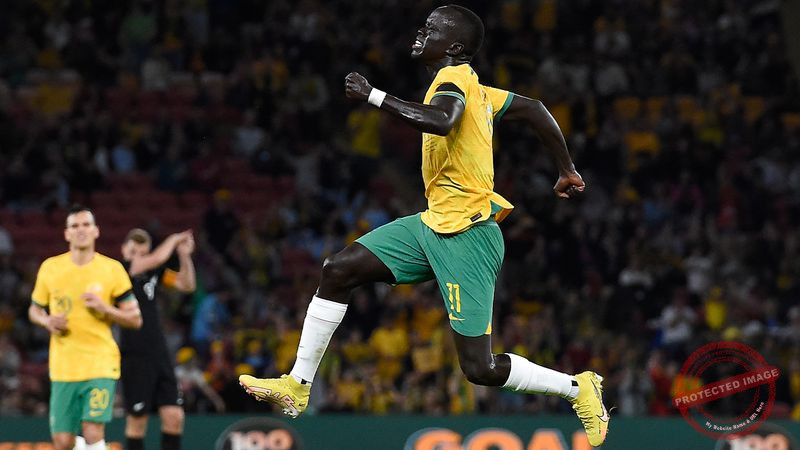
Awer Mabil, named the Young Australian of the year.

Months after inserting a decisive penalty in a kick out to relief Australia qualify, Socceroo’s star and a former refugee Awer Mabil who recently played in the FIFA World Cup in Qatar, has been named the Young Australian of the Year.

Mabil, 27, was born in a Kenyan refugee camp to South Sudanese parents before moving to Australia as a five-year-old due civil war.

The family survived on one meal a day, and he used to pay $1 a time to watch football on TV.

He moved to Australia as part of a humanitarian program in 2006 and quickly excelled at football, signing for Adelaide United at 16

A crucial penalty he notched against Peru helped get Australia to the FIFA World Cup 2022.

Today, the soccer star has become one of the nations’ top footballers.

But it was his work in helping “enlighten” the lives of other refugees that won him the title.

He set up his own non-profit organization, ‘Barefoot to Boots’, to help other refugees in camps like the one he grew up in to get into the sport.

He has personally delivered jerseys and other sports gear to the kids.

Football Australia CEO James Johnson called Mabil a “role model”.

“On behalf of Football Australia and the Australian football family, I want to congratulate Awer on being named the 2023 Young Australian of the Year,” he said.

“Awer’s contribution to Australian football as an immensely talented and popular member of the Subway Socceroo, and to society at large through his charity work, is a testament to the person and role model that he is.”

His mother, collected the award on his behalf as he now plays in Europe, for Sparta Prague in the Czech Republic.


US Embassy condemns recent attacks on aid workers

The U.S. Embassy in Juba has condemned the recent targeted attacks on humanitarian workers in some parts of the country.

According to the UN Office for Coordination of Humanitarian Affairs, three aid workers were killed in the Abyei Administrative Area and in Jonglei State early this month.

OCHA said on January 2nd  this year, armed men attacked Rumameer village in which two aid workers and several civilians were killed, with many others injured during the attack.

The aid workers were shot and killed while on duty at a humanitarian facility in Rumameer village.

The second incident was on January 7, when an aid worker was killed by unknown individuals while he guarded humanitarian commodities in Duk County, Jonglei State.

In a statement seen by Eye Radio’s news desk this morning, the US embassy in Juba condemned the attacks and urged the unity government to end the subnational violence in the country and bring to book those responsible.

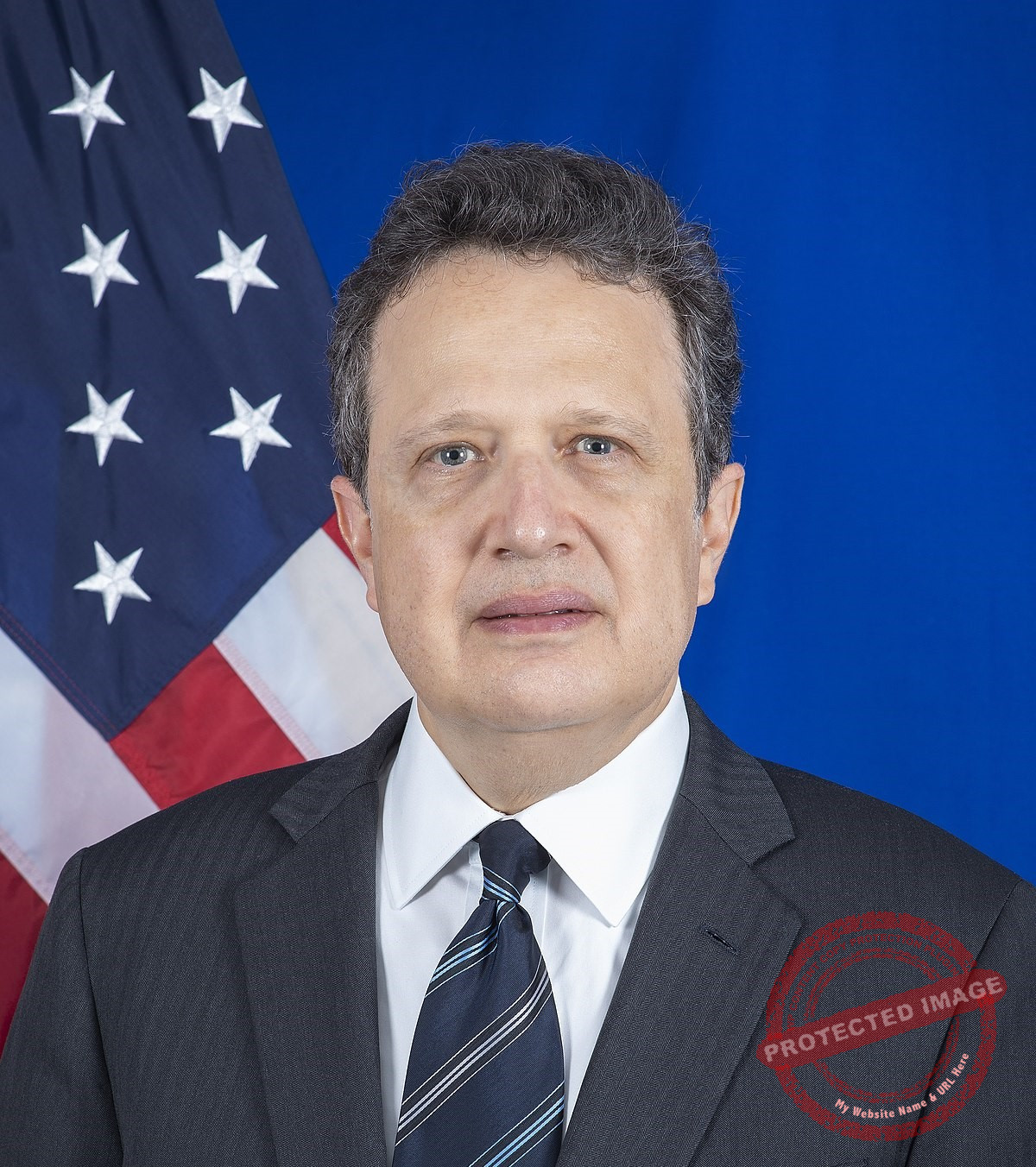
“The U.S. Embassy condemns in the strongest terms the recent targeted attacks on humanitarian workers and their compounds in South Sudan, including those that have led to the deaths of three South Sudanese humanitarian workers and injury to others”, Michael J. Adler, US ambassador to South Sudan said.

He called on the leaders to address the human rights violations and abductions in the country.

And ‘to hold accountable those responsible for attacks targeting civilians and humanitarian organizations, as well as for abductions and other human rights violations.”

According to a leading relief agency, Care International, at least 11 aid workers have been killed in South Sudan last year alone, making the country the deadliest place in the world to be a humanitarian worker.

It said the humanitarian aid workers work in challenging circumstances to provide critical support to the most vulnerable and hard-to-reach communities in the country.


Support Eye Radio, the first independent radio broadcaster of news, information & entertainment in South Sudan.

Make a monthly or a one off contribution.