27th July 2026

Eco Bus says driver injured, passengers safe after Juba–Bor highway attack

JUBA, July 22, 2026 — Contrary to earlier remarks by a Central Equatoria State official that the driver of a passenger bus had died after an ambush along the Juba–Bor Highway, Eco Bus Company says the driver sustained gunshot injuries and was receiving medical treatment.

In a statement issued on Wednesday, Eco Bus said one of its buses was attacked near Mongiri along the Juba–Bor Highway, but all passengers were safe.

The company said three passengers sustained minor injuries caused by shattered window glass during the attack and received medical assistance.

“During the incident, our driver sustained a gunshot injury and is receiving medical attention currently. We are grateful to report that all passengers are safe,” the statement said.

The company added that the attackers took passengers’ cash, mobile phones and other personal belongings before fleeing the scene.

Earlier, Central Equatoria State Minister of Information Patrick Nyarsuk told Eye Radio that the bus was attacked in Bilinyang Boma of Juba County at about 10:30 a.m., and that the driver had died after being shot.

Nyarsuk said authorities were working to identify those behind the attack. Eco Bus said it was working with security authorities and providing support to the driver and affected passengers. Continue reading “Eco Bus says driver injured, passengers safe after Juba–Bor highway attack”

SSRA directs importers, exporters to use licensed clearing agents

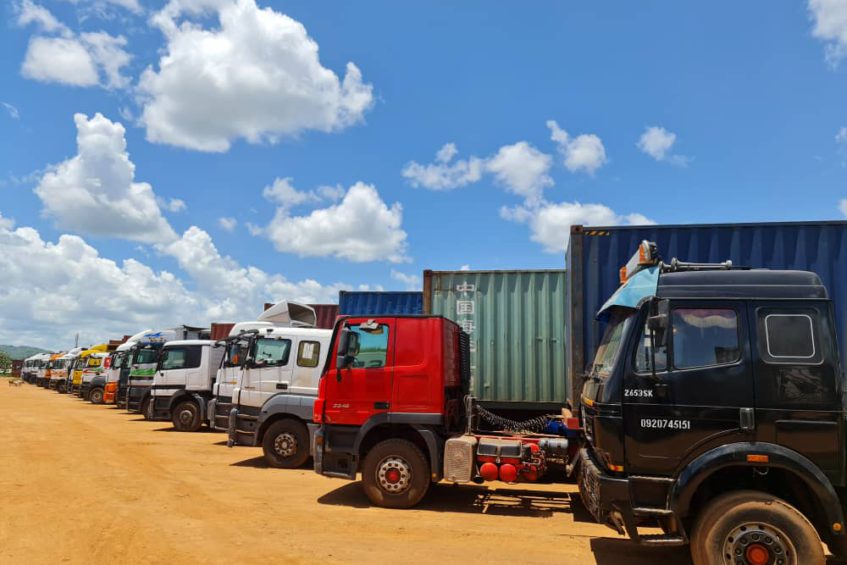
The South Sudan Revenue Authority (SSRA) has directed all importers and exporters to appoint licensed customs clearing and forwarding agents directly, a move welcomed by clearing agents at Nimule border.

The directive, contained in a circular issued by the Commissioner General, requires every customs declaration to be supported by a digitally registered Power of Attorney from the importer or exporter.

The SSRA said the measure is intended to strengthen accountability in customs representation, prevent fraudulent intermediary practices, and protect government revenue by ensuring transactions are conducted through authorized channels.

The circular cites provisions of the Customs Service Act, 2013, including Section 180, which requires customs clearing agents to present validated authorization from the principal.

The directive also requires importers and exporters to make customs duties, taxes, and other statutory payments directly through their accounts or through their authorized licensed customs clearing agents.

It prohibits the handling or payment of customs duties by unlicensed intermediaries or unauthorized third parties.

The SSRA further directed licensed clearing agents not to share their electronic customs system credentials, saying access will be restricted to individual accounts and monitored through system audit logs.

The circular states that customs clearing agents and importers or exporters will share responsibility for fraudulent documentation, and warns that failure to comply may lead to administrative fines, suspension from the electronic customs system, licence revocation, or criminal prosecution.

The directive also allows importers to revoke the authority of a customs clearing agent by submitting written notice to the relevant customs authorities.

Silas Majok, chairperson of clearing agents at Nimule border, welcomed the directive, saying it would address challenges that have affected customs clearance procedures for years.

“For over 10 years, clearing agents in Nimule have faced a lot of issues in the clearing procedure which have affected the customs clearing procedures,” Majok told Eye Radio.

He said some individuals who are not licensed clearing agents have been operating as intermediaries in customs procedures.

“Those people have been engaged in issues of smuggling and forgery of documents (receipts), and this has been affecting the government in collections of revenues,” he said.

Majok said implementing the circular would help streamline customs operations and improve revenue collection at border points.

The SSRA has provided a 30-day transition period for importers and exporters to regularize their representation arrangements before full enforcement of the directive. Continue reading “SSRA directs importers, exporters to use licensed clearing agents”

Nasir trial: Fourth accused denies SPLA-IO role in clashes

JUBA, July 22, 2026 — The fourth accused in the Nasir incident trial on Wednesday denied allegations that the SPLA-IO was involved in the clashes between local youth and government forces in Nasir County.

Lt. Gen. Duop Lam, the Acting Chief of General Staff of the SPLA-IO, made the remarks while continuing his defence before the Special Court during its 99th session in Juba.

Duop told the court the clashes were driven by socio-economic factors and relations between civilians and the military, and were not politically motivated.

He said no SPLA-IO commander at the strategic, operational or tactical level ordered or planned military operations in Nasir.

Duop also described the arrest of SPLM/A-IO leaders by government security agencies as a “coup” against the 2018 Revitalized Peace Agreement.

He told the court the SPLA-IO leadership returned to Juba without personal protection as a demonstration of its commitment to the peace agreement.

During his testimony, Duop said the government had not applied accountability consistently in other deadly incidents, citing violence in Leer County in Unity State and the Rual Bet incident in Tonj North County, Warrap State.

He also told the court that the SPLA-IO had participated in efforts to de-escalate tensions in Nasir following clashes in 2024 by deploying a 750-member force to separate local youth and SSPDF troops.

According to his testimony, the deployment was coordinated with SSPDF headquarters, the Nasir garrison commander and the county commissioner, and the force later withdrew after the security situation improved.

Duop further alleged that former SSPDF Chief of Defence Forces Gen. Paul Nang failed to support decisions by the Joint Defence Board to deploy the Necessary Unified Forces to Nasir and rejected proposals to replace long-serving SSPDF troops in the area.

He also alleged that Gen. Nang later ordered a battalion of the Necessary Unified Forces to move to Malakal as part of preparations for a military movement toward Nasir.

The presiding judge later interrupted the defence statement and adjourned the trial until Friday, July 24. Continue reading “Nasir trial: Fourth accused denies SPLA-IO role in clashes”

IFAD, South Sudan launch US$41.8 million project to strengthen food security

JUBA, July 21, 2026 — The International Fund for Agricultural Development (IFAD) and the Government of South Sudan have launched a US$41.8 million project aimed at improving food security, strengthening climate resilience and supporting rural livelihoods across the country.

The Sustainable Agriculture Development Project (SADEP) is expected to benefit more than 110,000 people by increasing agricultural productivity, strengthening resilience to climate shocks and improving access to markets and agricultural services.

Speaking at the launch on Wednesday, IFAD Country Director in South Sudan Caroline Mwongera said the project is intended to support climate-resilient food systems and rural livelihoods in a country affected by conflict and climate-related challenges.

“SADEP advances climate-resilient food systems, strengthens livelihoods in fragile settings, and places rural communities at the centre. In a context like South Sudan, sustained and predictable financing is essential to translate these gains into long-term stability and food security,” Mwongera said.

According to IFAD, the project will focus on developing sustainable sorghum and fisheries value chains, reducing post-harvest losses and expanding access to finance, markets and agricultural extension services.

The initiative will also support the rehabilitation of fisheries infrastructure, including ice plants, landing sites and storage facilities, as South Sudan works toward increasing fish production.

The project will target areas with high levels of poverty and vulnerability, with women, young people and other vulnerable groups identified as priority beneficiaries through a community-driven approach.

IFAD said about 18,700 households will receive support to improve nutrition through the distribution of nutrient-rich crops and activities aimed at strengthening natural resource management.

The project will also support technical training in seed production and fish handling, strengthen national and local institutions, and contribute to the development of policies intended to improve climate resilience and agricultural productivity.

Minister of Livestock and Fisheries Onyoti Adigo Nyikwec said the initiative supports the government’s efforts to strengthen food production and reduce reliance on humanitarian assistance.

“This project advances our national priorities to transition from humanitarian dependence to resilient and productive food systems. In partnership with IFAD, SADEP will empower farmers, fishers, women, and youth to strengthen livelihoods, with a clear commitment to scale results nationwide,” Nyikwec said.

The project is co-financed by the Global Environment Facility with US$8.9 million through the Strengthening Adaptation through Institutional Building and Resilient Livelihoods in South Sudanese Agro-pastoral Landscapes (SABRELA) project.

It will be implemented jointly by the Ministry of Agriculture and Food Security, the International Fertilizer Development Center and Welthungerhilfe. Continue reading “IFAD, South Sudan launch US$41.8 million project to strengthen food security”


Bus ambush on Juba–Bor highway, fate of passengers unclear

Authorities in Central Equatoria State said a passenger bus came under attack along the Juba–Bor highway on Wednesday morning, leaving the fate of passengers unclear.

The Central Equatoria State Minister of Information, Patrick Nyarsuk, said the Eco Bus, registration number SSD 552A, was ambushed at about 10:30 a.m. in Bilinyang Boma of Juba County.

“There were some criminals that attacked the bus, which led to the death of the driver who was shot,” Nyarsuk told Eye Radio.

He said local authorities and security personnel responded to the incident and evacuated the injured driver to Juba, where he later died.

“After efforts by the Payam authorities and the security personnel, the driver was brought to Juba. But it is very unfortunate that after efforts of rescuing him, the driver died,” he said.

Nyarsuk said authorities had not yet established how many passengers were on board the bus or whether any of them were injured during the attack.

He said officials from Juba County and Bilinyang Boma had secured the area and were working to identify those responsible.

“As we speak for now, the authority of Juba County and the authority at the level of Boma is working very closely to identify who are these individuals behind the attack that occurred this morning,” he said. Continue reading “Bus ambush on Juba–Bor highway, fate of passengers unclear”

Governor Adil heads to Kajo-Keji for cross-border security talks with Uganda

JUBA, July 22, 2026 — Central Equatoria State Governor Emmanuel Adil Anthony has travelled to Kajo-Keji County for a two-day cross-border peace and security meeting with authorities from Uganda’s West Nile Region.

The visit follows a recent clash involving the Uganda People’s Defence Forces (UPDF) and the South Sudan People’s Defence Forces (SSPDF), which led to the displacement of civilians in Kajo-Keji.

According to a statement posted on the governor’s official Facebook page, Adil is expected to hold meetings with Ugandan authorities in border districts, including Arua, Moyo, Yumbe, Adjumani, and Koboko.

The statement said the discussions will focus on strengthening coordination between local authorities on both sides of the border, protecting civilians, and promoting trade and peaceful relations among border communities.

During the visit, Governor Adil is also expected to meet displaced people in Kajo-Keji to assess their situation and discuss humanitarian support.

The visit comes after a joint humanitarian assessment was conducted in Liwolo Payam of Kajo-Keji County following the reported attack along the South Sudan-Uganda border.

The Episcopal Diocese of Kajo-Keji said many displaced residents fled with only the clothes they were wearing and are currently sheltering under trees, while others have sought refuge in abandoned school buildings. Continue reading “Governor Adil heads to Kajo-Keji for cross-border security talks with Uganda”

Severe drought devastates farms in Lafon & Imehejek, families flee amid food shortages

A farmer in Eastern Equatoria State has appealed for government intervention after a prolonged drought destroyed crops and left communities in parts of Lafon and Imehejek area facing food shortages.

Efuk Barsabas, a farmer and agriculturalist from Lafon County, told Eye Radio that the dry spell, which lasted from May to mid-July, destroyed crops that were nearing harvest, including sorghum, finger millet, maize and sweet potatoes.

He said the drought affected Oming, Olongo, Ohutok, Greater Omiaha, Imehejek, villages in Northern Lopit including Arihilo, Lomiorok and Haba, as well as the Western Lopit villages of Longiro, Idali and Yeyahi, and other mountainous areas of Lopit.

“The entire farms have collapsed. Most of the farms were almost at the harvesting stage, but they were completely destroyed,” Barsabas said.

Barsabas said the situation across Lopit was dire, with many residents relying on wild fruits for survival.

According to Barsabas, nearly 1,000 people have left for neighbouring Uganda and Kenya, while others have moved to Torit and Juba in search of food and better living conditions.

He said those who remain are largely people who cannot afford transport to leave the area.

Barsabas appealed to the government to provide subsidized food commodities through cooperatives in Oming, Olongo, Ohutok, Greater Omiaha, Imehejek, Arihilo, Lomiorok, Haba, Longiro, Idali and Yeyahi.

He also called on the government to visit the affected communities and provide assistance to the most vulnerable residents.

“People are surviving on wild fruits, and even those are becoming difficult to find. Many families have migrated to Torit, Uganda and Kenya. If urgent food assistance does not come, we will see more deaths and more displacement,” he said.

Barsabas said farmers also need seeds and financial support to resume cultivation following recent rainfall after the drought destroyed their crops.

He said his own 32-acre farm was among those affected.

Ebola outbreak highlights need for increased public health funding in South Sudan, foreign embassies say

A group of foreign embassies has called for increased public funding for South Sudan’s health sector, citing the Ebola outbreak in the region and the need to ensure the availability of health workers involved in monitoring, detection, and response activities.

In a joint statement on Wednesday, the embassies of Canada, Germany, Japan, the Netherlands, Norway, the United Kingdom, and the United States said the outbreak had highlighted the need for timely and regular government funding for public health services.

The statement said this includes the payment of salaries for public health workers, including those supporting Ebola preparedness and response efforts.

“The current outbreak of Ebola in the region highlights the urgent need for South Sudanese public funding of the health sector,” the embassies said, adding that regular payment of health workers remains important for health monitoring and emergency response.

In late June, South Sudan and the United States signed a $146 million health cost-sharing agreement aimed at supporting the delivery of health services in the country.

Under the arrangement, the two sides agreed on a framework for sharing responsibilities and costs related to health programmes. The agreement followed discussions on strengthening health service delivery and improving coordination between government institutions and development partners.

The latest statement from the embassies did not refer directly to the cost-sharing agreement but comes amid continued discussions on the role of domestic financing in sustaining South Sudan’s health sector.

Health partners have repeatedly called for stronger government investment in public health systems, including the regular payment of health workers and support for disease surveillance and emergency preparedness.

The embassies said continued attention to public health financing is important as countries in the region respond to emerging health threats, including Ebola. Continue reading “Ebola outbreak highlights need for increased public health funding in South Sudan, foreign embassies say”

Capital Pay to continue digital revenue collection under new cash payment directive

The national government has said Capital Pay will continue operating in the country’s digital revenue collection system as authorities introduce a cash-based payment arrangement aimed at addressing a shortage of physical currency.

The announcement followed a meeting of the Ministerial High-Level Committee for Economic Reforms with representatives from the Bank of South Sudan, the South Sudan Revenue Authority (SSRA), and 13 commercial banks involved in collecting government revenue.

Speaking after the meeting, Minister of Public Service and Human Resource Development Ezekiel Lol Gatkuoth, who is also acting rapporteur of the committee, said businesses conducting transactions in South Sudan would be required to pay taxes in cash, including at border points where goods are cleared.

He said commercial banks collecting revenue on behalf of the SSRA would also be required to remit funds in cash to the Ministry of Finance and Planning.

Despite the shift toward cash payments, Gatkuoth said Capital Pay would continue supporting digital revenue collection by recording transactions through its system.

“Capital Pay will continue to be collecting, but they will be paying cash and they will actually enter this into the system,” Gatkuoth said.

The minister praised Capital Pay’s contribution to digital transformation, saying the move to digital revenue collection had contributed to increased revenue collection.

“Since we have started collecting digitally, the increase of revenue has gone up,” he said.

The government said the new cash-payment directive is intended to increase the availability of physical cash in circulation as authorities work to address a liquidity crisis and ensure the payment of public servants’ salaries.

Under the new directive, all 13 commercial banks collecting revenue for the SSRA are expected to comply with the requirement to collect and remit funds in cash. Gatkuoth warned that action would be taken against institutions that fail to implement the decision.

The government said the measures are part of wider economic reforms aimed at improving revenue management and addressing challenges affecting the country’s financial system. Continue reading “Capital Pay to continue digital revenue collection under new cash payment directive”

WBGs police urge residents to collect 10,000 unclaimed nationality certificates

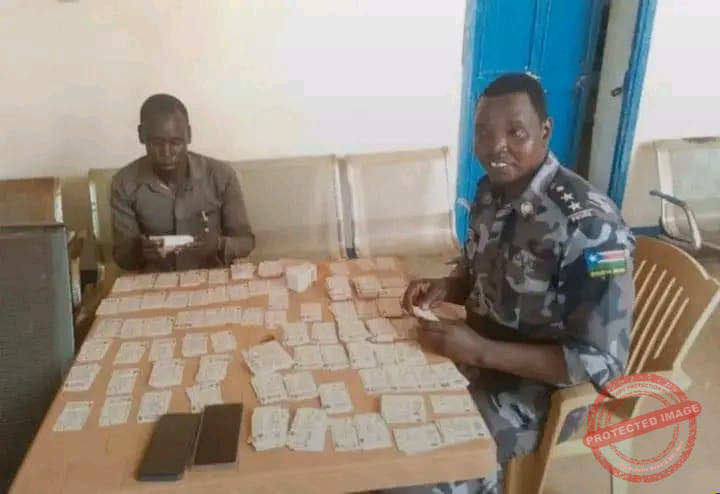
Police in Western Bahr el Ghazal State have urged residents to collect their processed Nationality Certificates, warning that thousands of documents remain unclaimed.

The Directorate of Civil Registry, Nationality, Passports and Immigration (DCRNPI) said it has received 7,372 newly processed Nationality Certificates for distribution.

Speaking to the local media on Tuesday, the State Director of DCRNPI, Brigadier General Achien Yor Jok, called on residents of Wau, Jur River and Raja counties to visit the directorate and collect their certificates.

Brig. Gen. Achien said the office is facing a growing backlog because many applicants have failed to claim their documents.

He disclosed that more than 10,000 Nationality Certificates issued since 2013 remain uncollected and appealed to citizens to collect their documents as soon as possible to ease the backlog. Continue reading “WBGs police urge residents to collect 10,000 unclaimed nationality certificates”

Support Eye Radio, the first independent radio broadcaster of news, information & entertainment in South Sudan.

Make a monthly or a one off contribution.