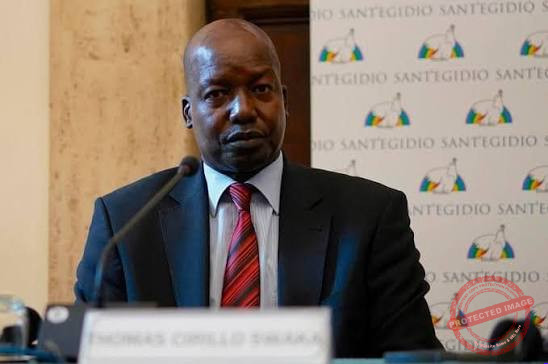
National Salvation Front (NAS) leader General Thomas Cirillo outlined his movement’s proposals for South Sudan’s political transition during an online policy discussion hosted by Professor Amir Idris of Fordham University and moderated by retired Kenyan General Lazaro Sumbeiyo, Continue reading “NAS leader Gen. Cirillo outlines transition proposals during forum moderated by Gen. Sumbeiyo”
Author: Memoscar Lasuba
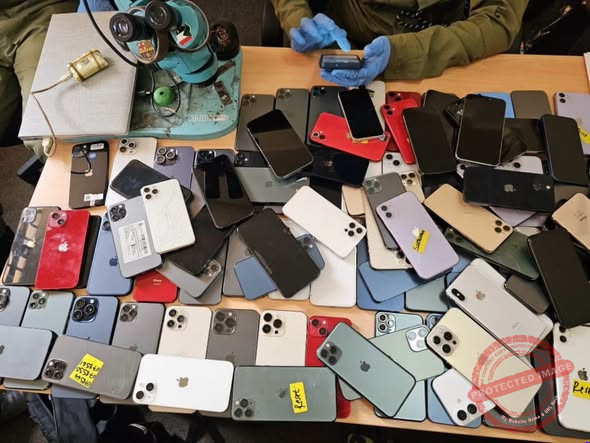
Uganda police urge iPhone theft victims to claim recovered devices
Youth forum calls for inclusive elections, economic reforms ahead of December polls
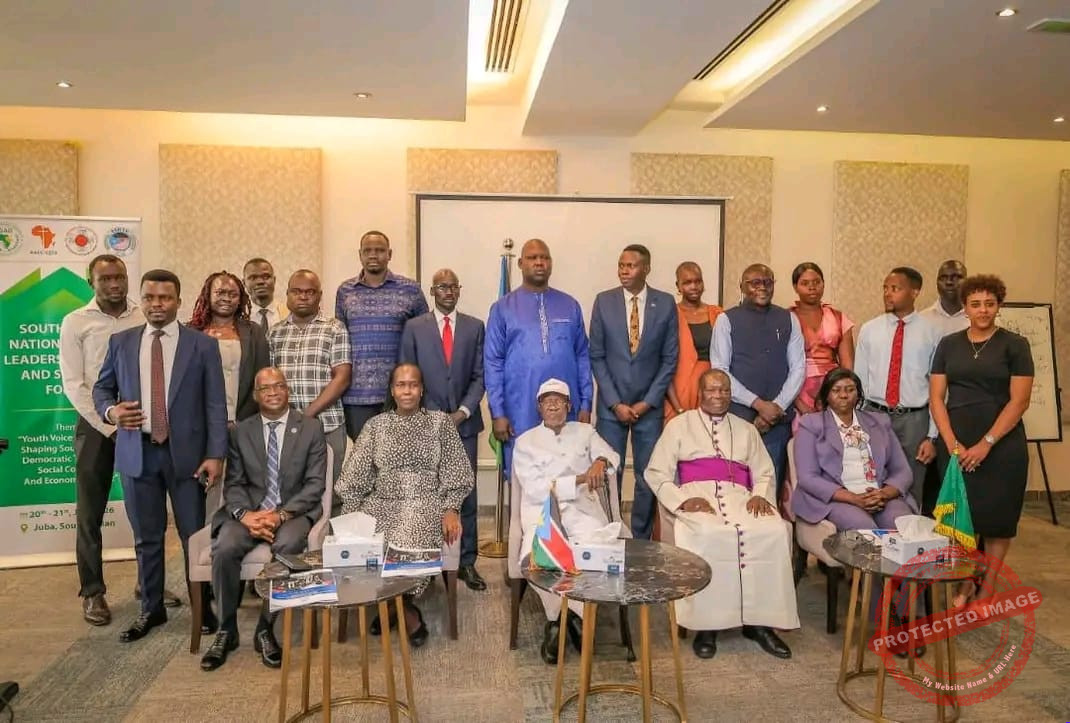
Youth leaders from across South Sudan have called for the full implementation of the 2018 Revitalized Peace Agreement, greater youth representation in governance and expanded economic opportunities ahead of the country’s planned general elections in December.
The resolutions were adopted during the South Sudan National Youth Leadership, Peace and Security Forum, held in Juba from July 20 to 21 under the theme “Youth Voices for Peace: Shaping South Sudan’s Democratic Transition, Social Cohesion and Economic Future.”
The forum brought together the South Sudan National Youth Union, state youth leaders, civil society organizations, members of parliament, government representatives and development partners.
In a communiqué issued at the end of the forum, participants urged the parties to the Revitalized Agreement on the Resolution of the Conflict in South Sudan (R-ARCSS) to “embark on inclusive dialogue and full implementation of the agreement.”
They also called on the government and political parties to implement existing commitments on youth representation, including affirmative action provisions contained in the peace agreement.
The forum further urged Parliament to enact pending youth-related legislation, including the Youth Enterprise Development Fund Bill and the Youth Council Bill, and called for the establishment of the Youth Enterprise Development Fund to support young entrepreneurs.
On governance, participants called for the creation of elected youth representative seats in every constituency, saying this would “institutionalize meaningful youth participation in governance, strengthen democratic representation, and ensure that the interests, rights, and aspirations of young people are effectively reflected in the legislative process.”
The communiqué also called for expanded civic education on the peace agreement, the National Elections Act and the electoral process across all states and administrative areas, while urging the government to guarantee youth freedom of movement and safe civic space during the electoral period.
On economic empowerment, participants appealed to the government, financial institutions and development partners to improve young people’s access to finance and credit through “structured, transparent lending mechanisms tailored to youth-led enterprises.”
The forum also called for continued investment in technical and vocational education, entrepreneurship and digital skills, including artificial intelligence, and urged authorities to reform policies that lead to the closure of youth-run businesses.
Addressing social cohesion, the participants called for accelerated implementation of transitional justice mechanisms, counselling and psychosocial support services, and reconciliation initiatives led by faith and traditional leaders.
The communiqué also highlighted the need to combat hate speech and misinformation by developing community-based fact-checking mechanisms and strengthening collaboration between the media, civil society and technology platforms. Participants further called for “the development of an early warning and monitoring system for hate speech and misinformation.”
On climate change, the forum urged the government to recognize climate change as “a peace and governance imperative” and to integrate climate risk into national peacebuilding and governance frameworks. It also called for greater youth participation in climate policy and increased investment in digital technologies to support climate-smart agriculture.
In their closing declaration, the participants pledged to promote peaceful democratic processes, stating: “We commit to championing peace, dialogue, and democratic process—not violence—as the only legitimate path toward a stable, cohesive, and prosperous South Sudan.”
They also called on the Revitalized Transitional Government of National Unity, political parties, IGAD, faith leaders and development partners to work with young people “as genuine partners, not passive beneficiaries, in building South Sudan’s future.” Continue reading “Youth forum calls for inclusive elections, economic reforms ahead of December polls”
Kiir signals possible reduction in government size after elections
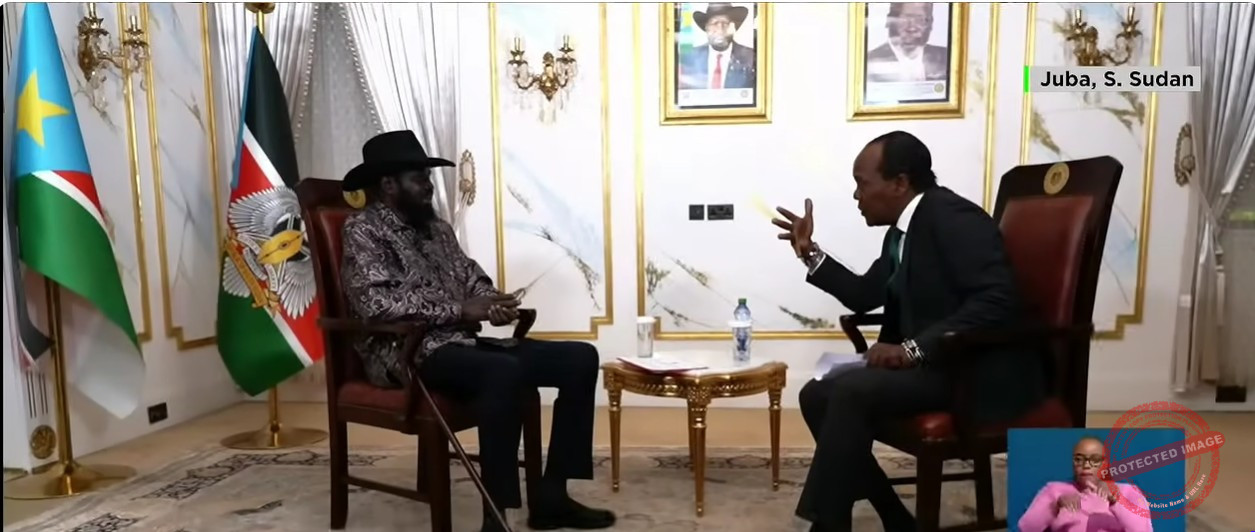
President Kiir says South Sudan ready for December elections
Central Equatoria Governor holds cross-border security talks with Ugandan officials
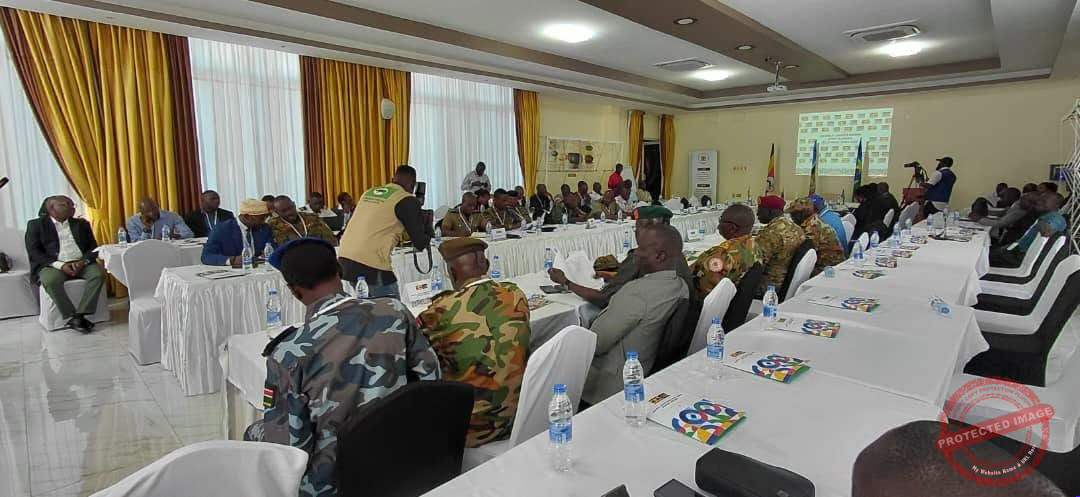
Central Equatoria State Governor Emmanuel Adil Anthony is holding cross-border talks with Ugandan authorities in Arua following recent clashes along the South Sudan-Uganda border in Kajo-Keji County.
Governor Adil traveled to Arua after visiting Kajo-Keji, where tensions escalated following a confrontation between the South Sudan People’s Defense Forces (SSPDF) and the Uganda People’s Defence Force (UPDF).
According to a post published on Arua One FM’s Facebook page, the meeting has brought together senior government and security officials from South Sudan and Uganda to discuss cross-border cooperation and address shared security concerns.
Participants are expected to include South Sudan’s Ambassador to Uganda, Uganda’s Minister for Security, heads of security agencies from both countries, Resident District Commissioners (RDCs), and other senior government officials.
The meeting follows recent border clashes that reportedly displaced civilians in Kajo-Keji County.
Earlier this week, a joint humanitarian assessment was conducted in Liwolo Payam to evaluate the impact of the violence. The Episcopal Diocese of Kajo-Keji said many displaced residents fled with only the clothes they were wearing and are now sheltering under trees, while others have taken refuge in abandoned school buildings.
The outcome of the bilateral talks has not yet been made public.
South Sudan Journalists question Presidency’s preference for foreign media after Kiir’s Citizen TV interview
South Sudanese journalists have renewed calls for access to President Salva Kiir Mayardit following his interview with Kenya’s Citizen TV, arguing that local media should also be given opportunities to interview the country’s leader.
The debate began before the interview aired after the President of the Union of Journalists of South Sudan (UJOSS), Oyet Patrick, wrote on social media that the president’s views on “leadership, peace, security and the nation’s future” would first be heard by a Kenyan audience before South Sudanese.
The post attracted reactions from journalists and media practitioners, many questioning why South Sudanese journalists have struggled to secure one-on-one interviews with the president.
Former VOA reporter Shila Modi said her concern was not about who conducted the interview, but “the motive, and whether any interview is necessary with our current situation.”
Former VOA journalist Logonyi Denis Muye revealed that while working for VOA, he personally delivered a formal request for an interview with President Kiir but never received a response. He, however, noted that not all journalists formally request interviews with the Presidency.
Journalist Ayuel Ring Arop remarked that “the fear in us as home-based journalists is why we have never been granted a one-on-one interview with H.E. President Salva Kiir Mayardit,” while Alison Wande Jr. questioned why it remains difficult for South Sudan-based journalists to interview the president but easier for foreign reporters.
Commenting on the issue, Jacob Onuha Nelson asked why South Sudan’s state broadcaster, SSBC, had not been given the opportunity to conduct such an interview, describing it as a significant national story that local media should cover.
The discussion follows an engagement meeting held early June between the Presidency and journalists in Juba aimed at improving relations with the media. During that meeting, the Presidential Press Secretary acknowledged concerns over journalists’ limited access to President Kiir and said the Presidency would have to build trust with local media.
While some commentators defended the decision to grant the interview to an international broadcaster, others said the Citizen TV interview has revived broader questions about media access, government openness and the role of South Sudanese journalists in covering national leadership.
The Presidency has not publicly commented on the reactions following the Citizen TV interview. Continue reading “South Sudan Journalists question Presidency’s preference for foreign media after Kiir’s Citizen TV interview”
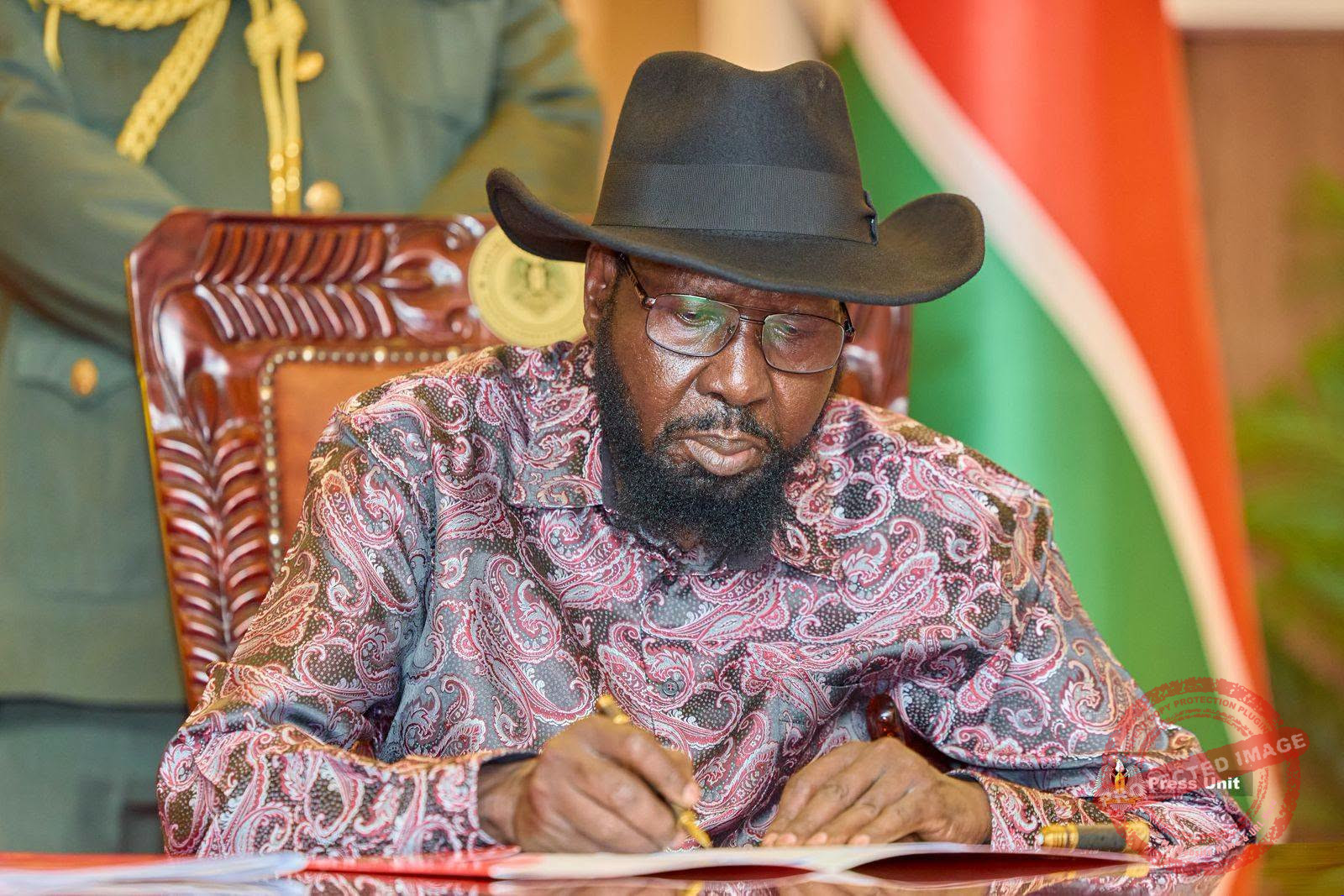
President Kiir signs peace agreement amendment clearing legal path for December polls
The presidential assent, announced by the Office of the President on Wednesday, formally brings the amendment into force and provides the legal framework for the country’s planned national elections in December 2026.
The government says the amendment will allow electoral preparations to proceed under the Transitional Constitution and existing electoral laws while other transitional processes continue.
The newly enacted changes remove previous provisions that tied the conduct of elections to the completion of the permanent constitution process and the carrying out of a national population census. The government argues that separating these processes clears the way for elections to be held within the agreed timeframe.
The amendment was passed earlier by South Sudan’s Transitional National Legislature through Resolution Number 05 of 2026, before being submitted to the president for assent. The parliamentary approval forms the legislative background to the president’s decision to sign the amendment into law.
Following the signing, the government says the next step will be to harmonize the Transitional Constitution and the National Elections Act with the amended provisions. The Ministries of Presidential Affairs and Justice and Constitutional Affairs are expected to lead the implementation process.
The presidency described the enactment as a significant milestone in the implementation of the Revitalized Peace Agreement, saying it demonstrates the government’s commitment to holding peaceful, credible, and constitutional elections in December 2026.
The amendment comes as South Sudan prepares for its first national elections since independence, after years of delays caused by conflict and challenges in implementing key provisions of the 2018 peace deal.
International partners have been closely monitoring the electoral process and have repeatedly called for any changes to the peace agreement to be carried out through inclusive and transparent procedures involving all parties to the agreement and other stakeholders.
While the government maintains that the amendment removes obstacles to elections, international observers have emphasized that the credibility of the polls will depend on broader preparations, including political participation, security arrangements, electoral reforms, constitutional progress, and respect for civic freedoms.
The signing of the amendment now places responsibility on relevant institutions to translate the new legal framework into practical electoral preparations ahead of the December 2026 vote.
Eco Bus says driver injured, passengers safe after Juba–Bor highway attack
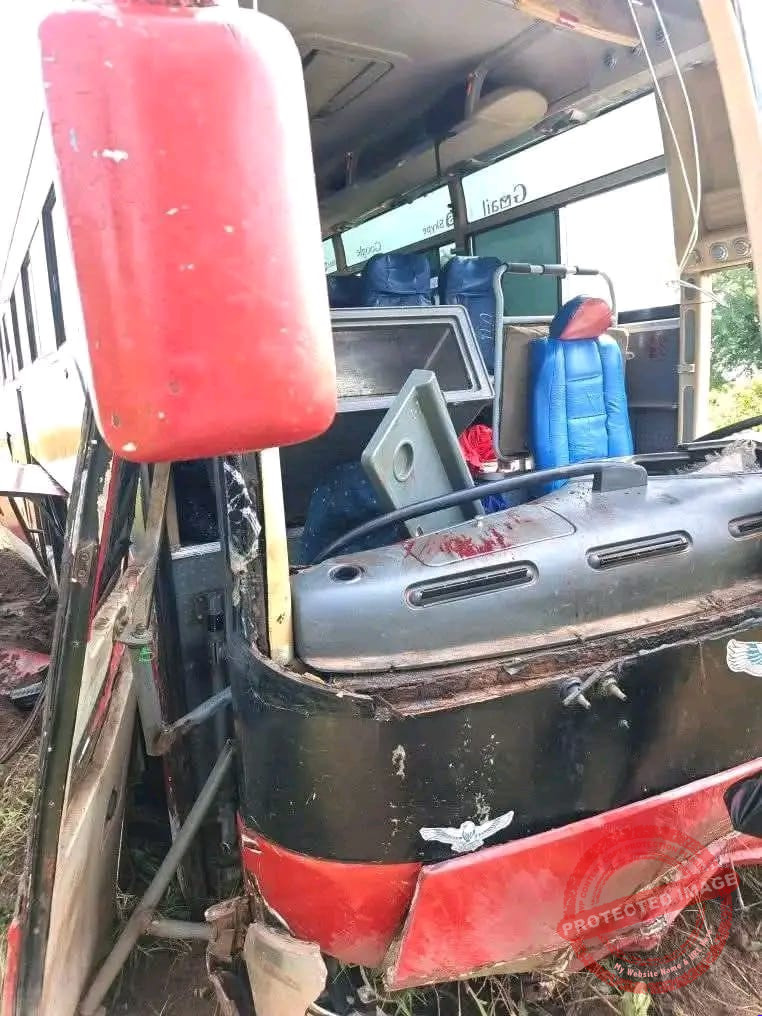
JUBA, July 22, 2026 — Contrary to earlier remarks by a Central Equatoria State official that the driver of a passenger bus had died after an ambush along the Juba–Bor Highway, Eco Bus Company says the driver sustained gunshot injuries and was receiving medical treatment.
In a statement issued on Wednesday, Eco Bus said one of its buses was attacked near Mongiri along the Juba–Bor Highway, but all passengers were safe.
The company said three passengers sustained minor injuries caused by shattered window glass during the attack and received medical assistance.
“During the incident, our driver sustained a gunshot injury and is receiving medical attention currently. We are grateful to report that all passengers are safe,” the statement said.
The company added that the attackers took passengers’ cash, mobile phones and other personal belongings before fleeing the scene.
Earlier, Central Equatoria State Minister of Information Patrick Nyarsuk told Eye Radio that the bus was attacked in Bilinyang Boma of Juba County at about 10:30 a.m., and that the driver had died after being shot.
Nyarsuk said authorities were working to identify those behind the attack. Eco Bus said it was working with security authorities and providing support to the driver and affected passengers. Continue reading “Eco Bus says driver injured, passengers safe after Juba–Bor highway attack”
SSRA directs importers, exporters to use licensed clearing agents
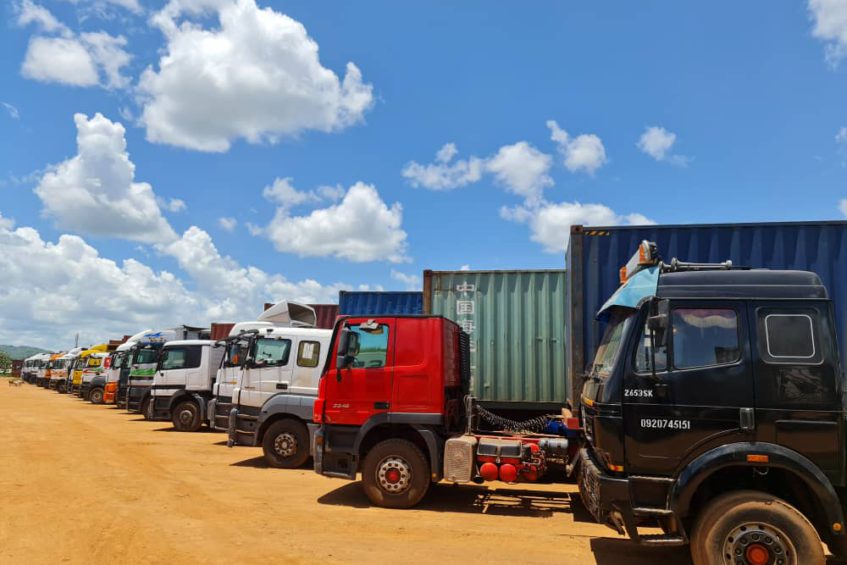
The South Sudan Revenue Authority (SSRA) has directed all importers and exporters to appoint licensed customs clearing and forwarding agents directly, a move welcomed by clearing agents at Nimule border.
The directive, contained in a circular issued by the Commissioner General, requires every customs declaration to be supported by a digitally registered Power of Attorney from the importer or exporter.
The SSRA said the measure is intended to strengthen accountability in customs representation, prevent fraudulent intermediary practices, and protect government revenue by ensuring transactions are conducted through authorized channels.
The circular cites provisions of the Customs Service Act, 2013, including Section 180, which requires customs clearing agents to present validated authorization from the principal.
The directive also requires importers and exporters to make customs duties, taxes, and other statutory payments directly through their accounts or through their authorized licensed customs clearing agents.
It prohibits the handling or payment of customs duties by unlicensed intermediaries or unauthorized third parties.
The SSRA further directed licensed clearing agents not to share their electronic customs system credentials, saying access will be restricted to individual accounts and monitored through system audit logs.
The circular states that customs clearing agents and importers or exporters will share responsibility for fraudulent documentation, and warns that failure to comply may lead to administrative fines, suspension from the electronic customs system, licence revocation, or criminal prosecution.
The directive also allows importers to revoke the authority of a customs clearing agent by submitting written notice to the relevant customs authorities.
Silas Majok, chairperson of clearing agents at Nimule border, welcomed the directive, saying it would address challenges that have affected customs clearance procedures for years.
“For over 10 years, clearing agents in Nimule have faced a lot of issues in the clearing procedure which have affected the customs clearing procedures,” Majok told Eye Radio.
He said some individuals who are not licensed clearing agents have been operating as intermediaries in customs procedures.
“Those people have been engaged in issues of smuggling and forgery of documents (receipts), and this has been affecting the government in collections of revenues,” he said.
Majok said implementing the circular would help streamline customs operations and improve revenue collection at border points.
The SSRA has provided a 30-day transition period for importers and exporters to regularize their representation arrangements before full enforcement of the directive. Continue reading “SSRA directs importers, exporters to use licensed clearing agents”