
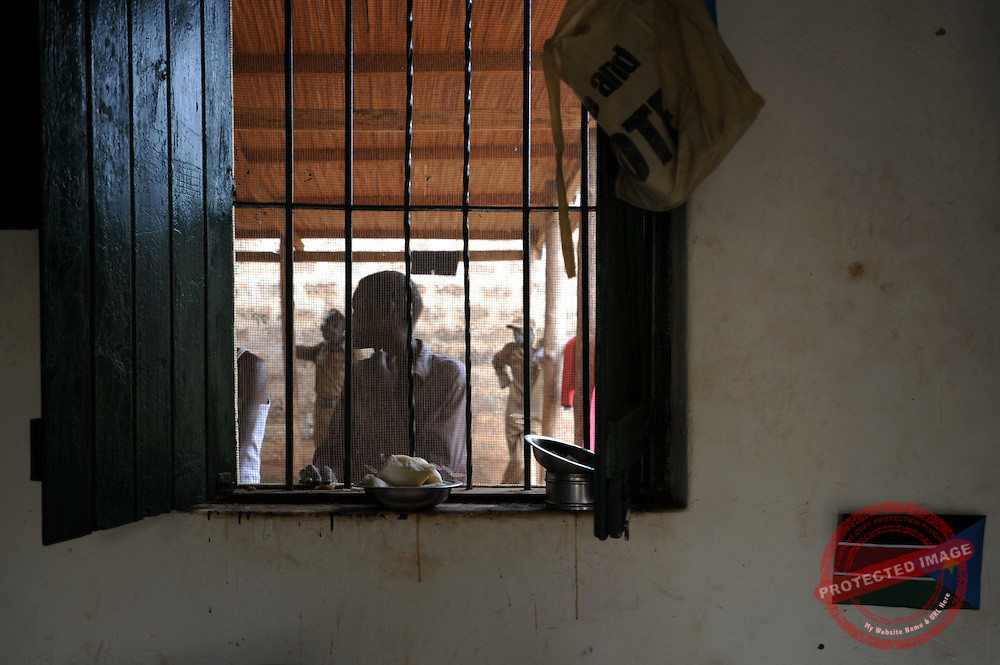
Authorities at Juba Central Prison have warned that correctional facilities are not equipped to handle people with mental health conditions, urging families and health authorities to take greater responsibility for their care and treatment. Continue reading “Juba Central Prison says mentally ill inmates belong in hospitals, not cells”
Year: 2026
Opinion|The glaring injustice of maternal deaths in Africa
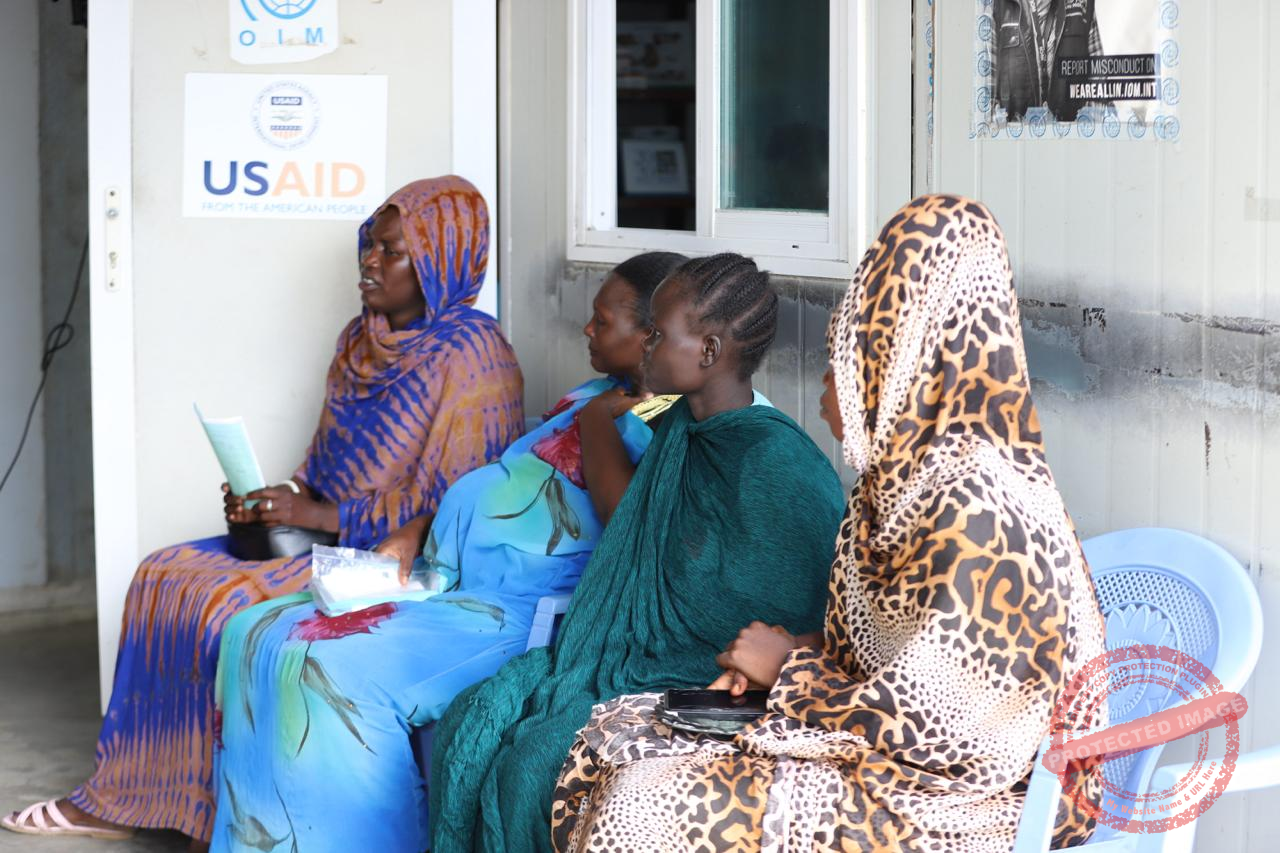
We have the knowledge and resources to end preventable maternal mortality – today. So why are women still dying while giving birth? Because for too many women, a safe birth still depends on a chain of simple, but life-or-death contingencies: whether a family can find transport to skilled care, whether a midwife is on duty, whether the clinic cupboards are stocked. If any links in this chain falter, the consequences can be catastrophic.
A woman named Mercy recently saw this first-hand: She traveled to a clinic in Zambia’s capital, Lusaka. She experienced a routine labour and a safe delivery. She held her baby in her arms. And then, without warning, she began to bleed profusely.
That condition, post-partum haemorrhage, is the world’s most common cause of maternal death, but there are many others, from dangerously high blood pressure to infections. Every day, on average, more than 700 women die from causes linked to pregnancy and childbirth.
And in Africa, these risks are multiplied to a staggering degree. On this continent, a 15-year-old girl has a 1 in 57 chance of dying while pregnant or during childbirth; for a girl in Australia, that risk is 1 in 21,000. Africa accounts for 70 per cent of all maternal deaths globally. That isn’t a health gap, it’s a moral chasm.
Just 7 African countries are on track to meet the global goal on reducing maternal death. This is not a failure of science or clinical know-how. It is a failure of systems, and a failure to sustain high-level commitments.
Beyond aid: A new public health order
The truth is that, with timely access to quality supplies and healthcare, most maternal deaths are avoidable. A woman does not die because we cannot save her; she dies because the ambulance has no fuel. Because the supplier was not paid on time. Because supplies are sitting in a warehouse instead of a clinic. Because the medicines are expired. Because staff training has been delayed.
The links in Mercy’s chain of contingencies were, thankfully, unbroken. Her clinic in Lusaka was part of the UNFPA-supported SafeBirth Africa initiative, where midwives are equipped with the tools and skills to quickly diagnose the severity of post-partum bleeding and initiate life-saving treatment.
Every woman on the continent deserves to benefit from that kind of care. And it is possible with the African Union’s New Public Health Order, which shifts the continent away from donor-led procurement and towards a unified, African-led agenda. That means coordinated disease control led by the Africa Centres for Disease Control and Prevention and regulations harmonized by the Africa Medicines Agency. It means the production of quality-assured medicines by Africa’s own dynamic pharmaceutical manufacturers and a strengthened African health market championed by the African Union Development Agency. It means the creation of robust intra-African supply chains, and partnerships with the UN and others to ensure monitoring and accountability.
The global battle against maternal mortality will be won or lost in Africa. We have the research, the technical expertise and the roadmap. What we need now is to unite behind Africa’s public health leadership.
Africa’s future is the future of the world
This is the world’s youngest region, with nearly one third of the population between the ages of 10 and 24. Their future – and the world’s future – depends on Africa’s ability to address these systemic failures now.
We do that not just by disseminating health commodities and building supply chains but by understanding mothers and their children as the inseparable link from one generation to the next. When a mother is able to give birth safely, her children can thrive – a process that starts even before her child is born, when she is able to access family planning, antenatal care and safe delivery services. It continues into the life of the child, as she is able to access healthcare, education, and an unfolding universe of possibilities.
But those services do not appear by wish alone. Health sovereignty, the genuine ability of a nation to decide and deliver care for its own people, requires financing sovereignty. Maternal mortality is not only a health service delivery issue, but also a matter of budgetary fiscal space and careful public financial management.
As much as this is a moral and social argument, it is also an economic one: When a mother dies, her potential contribution to the economy, her labour, her innovation, her enterprise dies with her. The cost of inaction is staggering and quantifiable: A recent Lancet Commission showed that failure to invest in maternal and child health could lead to productivity losses amounting to $3.8 trillion by 2035. On the other hand, every dollar invested in family planning can yield up to $27 in economic benefits, and broader investments in maternal health deliver substantial returns. We see clearly that the failure to act is the most expensive choice of all.
If we are serious about building healthy generations and a sustainable future for the continent, we must ensure that childbirth is a safe, empowering experience that secures the future for every woman and her family.
Disclaimer: The views and opinions expressed in this commentary are those of H.E. Ambassador Amma Twum Amoah, African Union Commissioner for Health, Humanitarian Affairs and Social Development; H.E. Ms. Nardos Bekele-Thomas, CEO of the African Union Development Agency (AUDA-NEPAD); Mr. Claver Gatete, UN Under-Secretary-General and Executive Secretary of the Economic Commission for Africa; and Ms. Diene Keita, Executive Director of the United Nations Population Fund, and do not necessarily reflect the editorial position of Eye Radio.
Relief Commission delivers second round of food assistance to displaced persons in Juba

The Relief and Rehabilitation Commission (RRC) says it has dispatched a second consignment of food assistance to internally displaced persons (IDPs) camps in Juba. Continue reading “Relief Commission delivers second round of food assistance to displaced persons in Juba”
USAP alleges interference by Political Parties Council

The Interim leadership of the United Sudan African Party (USAP) has issued a formal complaint against the Political Parties Council, alleging that the regulatory body is interfering in administrative matters that fall strictly within the party’s private jurisdiction.
Continue reading “USAP alleges interference by Political Parties Council”
Parliament: MPs’ walkout over peace bill was premature and misguided

The spokesperson of Parliament, Oliver Mori Benjamin, has described the walkout by some MPs during Monday’s sitting as premature, saying it happened before the proper stage for debate on the peace deal amendment bill. Continue reading “Parliament: MPs’ walkout over peace bill was premature and misguided”
Inkomoko ranked 5th fastest-growing company in Africa by the Financial Times

Inkomoko has been named the 5th-fastest-growing private company in Africa, up from 8th last year, according to the Financial Times. The ranking highlights Inkomoko’s growth across the continent and the power of investing in entrepreneurs in displacement-affected communities.
Continue reading “Inkomoko ranked 5th fastest-growing company in Africa by the Financial Times”
Opinion|South Sudan’s digital reckoning: Why eServices are an economic imperative, not a luxury

For years, South Sudan has contended with one of the most consequential structural challenges facing its public institutions: a revenue administration and service delivery architecture built on manual procedures, cash transactions, and paper records.
Long queues, unexplained fees, misplaced documents, and the informal payments that smoothed the machinery of routine government services were not isolated failures of individual conduct. They were the predictable output of systems never designed for transparency — systems that accumulated inefficiency and revenue leakage as structural features rather than exceptional outcomes.
The damage extended beyond any single ministry or transaction. Citizens absorbed the signal that state institutions were not oriented toward their needs. Investors calculated the friction and directed capital elsewhere. Public trust — never robust in the aftermath of conflict — eroded further with each encounter that demanded time, cash, or personal connection to resolve.
It is against this national backdrop that South Sudan’s eServices platform must be understood. Launched in April 2025, and grounded in a 2021 Council of Ministers resolution to modernize public service delivery, it is not a ministerial showcase or a development partner’s demonstration exercise.
It is a structural intervention of national consequence — a deliberate effort to alter the architecture through which the state operates and accounts for itself, rather than simply exhorting those within it to conduct themselves differently.
The Reform and Its Logic
The platform consolidates a broad range of government functions into a unified digital gateway, designed to provide, in official terms, “secure, single-window access to public and private services across South Sudan.” Participating institutions include the South Sudan Revenue Authority, the South Sudan Civil Aviation Authority, the Directorate of Civil Registry, the Ministry of Trade and Industry, and the National Bureau of Standards, among others.
The integrated architecture is not an administrative convenience — it is the structurally critical choice. Digital reform pursued on an agency-by-agency basis, without shared infrastructure or genuine interoperability, tends to reproduce the fragmentation it was intended to correct.
A collection of disconnected portals inconveniences citizens without materially changing the accountability dynamics of service delivery. A genuinely unified system makes transparency structural: an embedded feature of how the platform functions, rather than a contingent outcome dependent on the conduct of any particular official.
There is a school of thought — sincere and not without concern for South Sudan — that views this initiative as well-intentioned but premature: the country, this argument holds, faces more immediate development priorities that should come first. This framing inverts the actual relationship between institutional reform and development progress. The conditions necessary for effective governance do not precede reform and then enable it — they are, in substantial part, produced by reform.
South Sudan cannot afford to wait for infrastructure to improve before modernizing its administrative systems, because unreformed manual systems are themselves among the principal reasons infrastructure investment underperforms.
Why South Sudan Cannot Afford to Wait
The skeptic’s case rests on acknowledged realities: inconsistent electricity supply across much of the country, uneven mobile and broadband connectivity with pronounced disparities between Juba and rural areas, a constrained public budget, and a population in which digital access is not yet universal.These are genuine constraints. Acknowledging them directly is not a rhetorical gesture — it is a condition for any credible analysis of the reform’s demands and prospects.
But the conclusion that these constraints justify postponement misreads the causal logic. South Sudan’s infrastructure deficits are not independent of its administrative systems. They are, in part, a consequence of them. Manual revenue collection has historically functioned as a significant hemorrhage point for public funds. Cash collected outside an electronic record disappears with minimal documentation.
Payments processed through intermediaries accumulate informal deductions at each stage. Oversight that depends on physical presence or personal political access fails the moment either is disrupted. South Sudan’s own experience across multiple public domains reflects these dynamics: weak record-keeping and cash dependency did not merely create opportunities for leakage — they made leakage structurally endemic.
Digital governance does not resolve infrastructure deficits immediately. What it can do — and this is the consequential point — is create the fiscal space and institutional discipline to address them. A government that collects revenue more reliably, more completely, and with cleaner documentation has more to invest and more credible records with which to attract additional support. The reform is not a distraction from South Sudan’s development priorities. It is one of the mechanisms through which those priorities become financially achievable.
This logic moved from principle to binding policy in March 2026, when the Commissioner General of the South Sudan Revenue Authority directed that all government revenues be processed exclusively through the National e-Tax System, simultaneously prohibiting manual collection of public funds. The directive’s stated purpose — “strengthening transparency, reducing revenue leakages and modernising the country’s revenue administration” — is policy language. It is also an institutional acknowledgment that manual systems had become not one problem among many, but the central structural problem requiring elimination.
A further objection deserves direct engagement: that digital platforms do not reduce corruption but merely relocate it — that rent-seeking migrates from the cash window to the login screen. The concern is not without basis. Digital systems can be manipulated, access can be rationed, and approvals can be arbitrarily withheld by those with interests in doing so. But the distinction that matters here is evidentiary. Digital malfeasance generates a record. Audit logs, transaction histories, and timestamped entries create an accountability architecture that no paper-based system can replicate. Misconduct that once left nothing traceable now leaves evidence. That does not eliminate corruption; it substantially raises its cost and increases its detectability. Multiplied across thousands of transactions over time, that shift is precisely how systemic accountability begins to take hold.
Aviation: Institutional Resistance, Directly Confronted
No sector has illustrated the strategic stakes of South Sudan’s digital reform — or the seriousness of the resistance it faces — more clearly than aviation.
Aviation’s significance to South Sudan extends well beyond its share of GDP. It is the operational infrastructure for national security logistics, international commerce, humanitarian supply chains, and diplomatic access. It is also subject to continuous international scrutiny: carriers, oversight bodies, and prospective commercial partners monitor aviation governance closely, and institutional weaknesses are noticed, documented, and factored into decisions about route viability, insurance arrangements, and operational engagement. For years, South Sudan’s aviation revenue systems remained heavily manual, leaving one of the country’s most strategically visible sectors exposed to the same vulnerabilities embedded in other areas of government administration.
Integrating the eServices platform at Juba International Airport was not a smooth administrative transition. It was contested. That contestation should not be minimized, because it reveals something essential about the nature of this reform: where cash changes hands without documentation, a functioning digital system does not merely inconvenience existing arrangements — it threatens them. Unauthorized collection practices reported at the airport were not peripheral irregularities. They were symptoms of the informal revenue networks that manual administration had, over time, made structurally viable. Critics who identify institutional resistance as the primary long-term risk to this reform are not wrong to do so. What the aviation case demonstrates, however, is that this resistance was anticipated, directly confronted, and — in this instance — overcome. By December 2025, the eServices platform had secured formal operational access at Juba International Airport, with digital revenue collection firmly established.
The transactions now processed electronically — landing permits, overflight permits, exit permits, air operator certificates, and electronic flight plans — are precisely those where manual handling had historically created the most fertile conditions for delays, inconsistencies, and unexplained charges. Airlines and operators can now apply remotely, track application status, and make payments through a documented, auditable system. The South Sudan Civil Aviation Authority’s operational documentation confirms that digital flight plan processing and aeronautical support are embedded in its current framework. For the government, this translates to improved oversight, reliable compliance tracking, and a verifiable revenue record for one of the country’s most strategically significant non-oil sectors.
What the Revenue Numbers Establish
The case for digital reform in South Sudan does not rest on theory — and it no longer needs to.
In September 2025, the South Sudan Revenue Authority reported collecting nearly SSP 1 trillion over eight months — the highest total in the institution’s history. By October 2025, monthly collections had reached approximately SSP 130 billion, with officials directly attributing the increase to the expansion of the e-tax system and broader digital public infrastructure. Against a 2025–2026 national budget of SSP 7 trillion — approved by the Council of Ministers against a revenue base still heavily dependent on volatile oil exports — these figures carry material weight. They expand what is fiscally possible for a government operating under genuine resource constraint.
It is reasonable to ask whether these results reflect genuine institutional improvement or a favorable alignment of external factors: oil sector recovery, a period of relative stability, or performance benchmarked against an unusually depressed baseline. That scrutiny is appropriate and should continue. Comparable reform experience in the region provides supplementary evidence that reinforces South Sudan’s own data. Uganda’s Electronic Single Window System and the Uganda Revenue Authority’s digital tax infrastructure have measurably improved compliance and reduced transactional exposure between taxpayers and officials — dynamics directly relevant to containing petty corruption. Kenya’s eCitizen portal and iTax system have integrated business registration, visa processing, permit applications, and tax payment, with documented improvements in revenue yield, processing speed, and private sector confidence. These examples are not models for South Sudan to replicate wholesale. They are evidence that the causal relationship between digital governance and improved revenue performance is consistent across different national contexts. South Sudan’s early results fit that established pattern. The argument that those results are overstated or premature must carry its own evidentiary burden. None has been advanced.
The Harder Questions This Reform Must Answer
Aviation is not the ceiling of this initiative. It is the proof of concept.
Digitalization has extended into civil registration, and work is underway on land and plot management — among the most contested, least-documented, and most easily manipulated governance domains in South Sudan. Digitized land records will not resolve the underlying disputes, which are political and historical in character. But they will substantially reduce the capacity for fraudulent transfer, establish traceable ownership histories, and create the evidentiary foundation that enforceable property rights and coherent urban planning require.
Civil registration digitalization raises a concern that merits honest engagement rather than formulaic reassurance. Digital platforms risk excluding citizens who lack devices, internet connectivity, or the practical ability to navigate online systems. In a country with a large rural population and meaningful gender and generational gaps in technology access, designing platforms around urban, connected users while the majority remains offline would replicate — in a different form — the exclusionary logic of the manual systems being replaced. This is not a theoretical risk. It is a live design choice embedded in every decision about platform interface, channel availability, and access infrastructure.
The answer, however, is not to preserve manual systems. Manual public administration in South Sudan excluded citizens with far greater consistency — not through design choices that could be corrected iteratively, but through structural conditions that paper-based procedures had no mechanism to address. The appropriate response is deliberate, inclusive design: mobile-first interfaces accessible on basic smartphones, USSD-based services for users without internet connectivity, assisted-service desks in underserved communities, and sustained investment in digital literacy. South Sudan’s civil registration initiative incorporates elements of this approach. The genuine test — one that is continuous — is whether these commitments deepen as the platform scales, or whether they remain pro forma additions to a system that, in practice, serves only those already within reach of its benefits.
The stakes of getting this right are significant. Reliable civil identification is not a bureaucratic technicality. It is a prerequisite for effective public service delivery, electoral integrity, economic inclusion, and coherent national planning. Citizens without recognized identity documentation cannot open formal bank accounts, access credit, or participate fully in the regulated economy. A digitization effort that reaches citizens more reliably than paper-based systems ever did represents not an exclusion risk to manage, but the correction of one that has persisted for too long.
What Remains Unresolved — and What This Reform Requires
An honest assessment of this reform requires naming what it has not yet secured.
South Sudan’s infrastructure constraints — inconsistent electricity supply, limited internet penetration, uneven technical capacity across government agencies, nascent cybersecurity frameworks, and widespread digital illiteracy — are substantive challenges, not background conditions to acknowledge once and then set aside. Platforms that cannot be reliably accessed by the citizens and agencies they are designed to serve will not deliver the transparency or revenue outcomes they promise. Political commitment, however genuine, does not substitute for adequate bandwidth, consistent power supply, or trained personnel across participating institutions.
A more structurally sensitive risk also warrants explicit acknowledgment: selective implementation. The history of public sector reform in post-conflict states includes a well-documented pattern in which initiatives are technically launched but politically contained — visible enough to satisfy external audiences while informal arrangements of genuine consequence remain undisturbed. This is not a risk projection particular to South Sudan; it is a precedent drawn from comparable reform contexts. It creates a specific institutional demand: that the eServices initiative be monitored not only by the government agencies executing it, but by credible independent oversight — civil society organizations, investigative media, and international partners with the access and standing to identify selective application when it occurs.
Institutional resistance, meanwhile, will not end with the aviation case. Each extension of the platform into a new domain will encounter comparable friction from those with interests in preserving existing arrangements. Sustaining momentum requires more than a technically sound system. It requires consistent political commitment from the highest levels of government; genuine interagency coordination rather than nominal endorsement; robust public communication to build citizen awareness and confidence in the platform; independent oversight mechanisms with substantive authority rather than advisory status that can be acknowledged and disregarded; and cybersecurity investment commensurate with the sensitivity of data the platform will increasingly hold.
These are not objections to the reform. They are the conditions without which the reform cannot reach the potential its early results suggest.
What This Moment Is Really About
South Sudan’s fundamental choice here is not about software or digital infrastructure. It is about whether the country can construct the institutional credibility that a viable modern state requires — and whether it will pursue that construction through means capable of outlasting any single administration.
To be precise about what this reform is and is not claiming: it is not claiming that digitalization resolves post-conflict governance challenges in their entirety, that infrastructure deficits have been overcome, or that corruption has been eliminated. It claims something more specific and more verifiable — that South Sudan is generating the highest domestic revenue in its tax authority’s history, that aviation governance has been restructured against active institutional resistance, and that citizens are accessing services through channels that did not exist two years ago. That is not a completed transformation. It is a measurable, documented beginning. In institutional terms, beginnings matter because they are where path dependency forms — where the habits, expectations, and incentives of a system begin to take hold.
The deeper question is not whether digital services make government transactions more efficient, though they demonstrably do. It is whether South Sudan can build institutions that treat citizens as rights-holders rather than supplicants, that manage public resources in ways open to independent verification, and that present private investors with a governance environment worth committing to. The eServices initiative represents the most consequential structural attempt South Sudan has made to answer that question — not in rhetorical terms, but in operational ones.
Electronic permits, digital tax collection, aviation automation, and online civil registration are not ends in themselves. They are the infrastructure through which accountability becomes embedded in the operating logic of the state — routine, verifiable, and no longer contingent on the disposition of any individual official.
For a young nation navigating fiscal fragility and the enduring demands of post-conflict reconstruction, the path forward does not run through cash windows and carbon-copy ledgers. It runs through systems that make what the state does visible, and make those who govern it answerable.
That is not a technological ambition. It is the practical meaning of governance — and South Sudan has begun, with genuine consequence, to pursue it.
Dima Dimitri writes on governance, economic development, and public sector reform in South Sudan.
Disclaimer: The views and opinions expressed in this article are those of the author, Dima Dimitri, and do not necessarily reflect the views, editorial position, or policies of Eye Radio.
Bilpam-based SPLA-IO acting chief orders forces under command await integration

Activists hail U.S. measures against S. Sudan peace process spoilers

South Sudanese activists James Boboya Edimond and Edmund Yakani have welcomed the United States government’s decision to impose visa restrictions on unnamed South Sudanese officials and blacklist Crawford-related entities over allegations of undermining the peace process and mismanaging public funds.