
12th March 2026
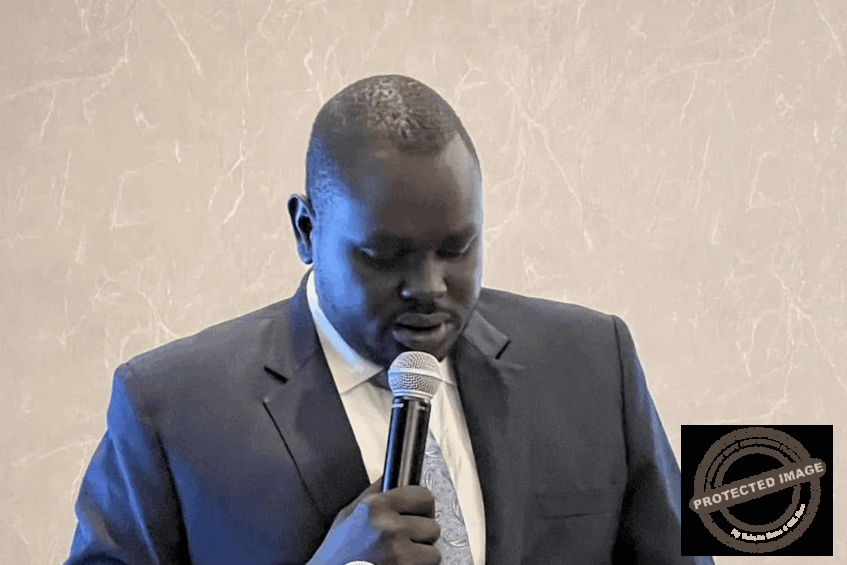
Sudd Institute researcher Bec George Anyak—who served as a former Deputy Minister of Finance—is the author of the policy brief urging immediate reforms to prevent South Sudan's fiscal collapse. (Credit: Courtesy)
JUBA, South Sudan (Eye Radio) — A new report from the Sudd Institute warns that the South Sudanese government’s refusal to implement its own oil revenue laws is pushing the nation toward an “inevitable fiscal collapse.”
Economist Bec George Anyak, a former Deputy Minister of Finance and Planning, warns in a new report that South Sudan’s financial crisis isn’t bad luck—it’s the direct result of the government refusing to implement its own 2013 Petroleum Revenue Management Act (PRMA).
The law requires the government to set up sovereign wealth funds (like a national savings account) to save money when oil prices are high. The Sudd Institute says the government’s failure to create these accounts has created a “fiscal vacuum.”
This void is now being filled with expensive, secretive, oil-backed loans which violate the country’s laws. According to the report, this irresponsible borrowing has led to “a cascade of defaults.”
The report highlights major international lawsuits, including one where the government defaulted on a loan from Afreximbank, leading to a $657 million judgment against South Sudan in a London court.
It states that the government’s preference for spending money “off-budget” proves the national savings accounts were never meant to work. This system is described as a “shadow system” that helps facilitate corruption.
The report argues the crisis was avoidable. The PRMA’s original plans for a Stabilization Account and a Future Generations Fund could have protected the country. By failing to save, the government had no money when shocks hit, forcing it to take out emergency, non-concessional loans.
To stop an “inevitable fiscal collapse,” the Sudd Institute has recommended that the government should stop all new oil-backed borrowing immediately, activate the national savings funds required by the PRMA, and conduct independent audits to restore public trust.
“The institutional blueprint for fiscal stability already exists in South Sudanese law; it simply needs to be implemented,” the report concludes.
Without these changes, the report warns, debt payments will consume more and more of the nation’s oil revenues—which are its main source of income—mortgaging the country’s future.

Currently on air
00:00:00 - 06:00:00
 1
1Published March 6, 2026
 2
2Published March 6, 2026
 3
3Published March 8, 2026
 4
4 5
5Published March 8, 2026

Published 11 hours ago

Published 11 hours ago

Published 13 hours ago

Published 14 hours ago

Published 14 hours ago
Support Eye Radio, the first independent radio broadcaster of news, information & entertainment in South Sudan.
Make a monthly or a one off contribution.
Copyright 2026. All rights reserved. Eye Radio is a product of Eye Media Limited.