
4th July 2026
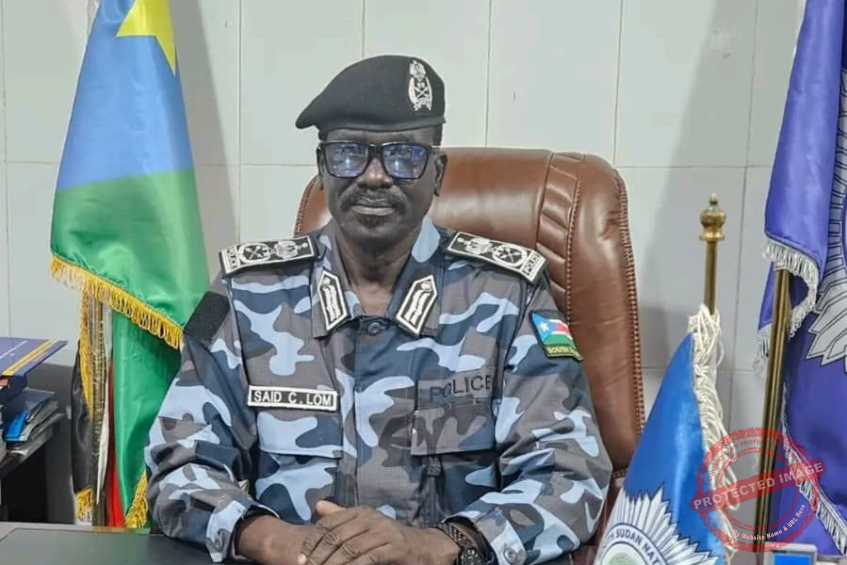
Gen. Said Chawul Lom, the Inspector General of the National Police Service - Courtesy
Police and health authorities have launched an urgent appeal for heightened vigilance along the nation’s borders following growing regional anxiety over the potential spread of Ebola from neighboring countries.
Officials are calling on citizens, border communities, and local authorities to remain alert and fully cooperate with preventative government measures. The strategic push comes amid an ongoing regional outbreak of the fast-spreading Bundibugyo strain of Ebola in eastern Democratic Republic of Congo (DRC) and Uganda.
The World Health Organization (WHO) has declared the situation a Public Health Emergency of International Concern. The Bundibugyo strain has raised severe alarm across East Africa because no licensed vaccine currently exists for it.
Speaking to the South Sudan Broadcasting Corporation (SSBC), the Inspector General of Police for the South Sudan National Police Service, General Said Chawul Lom, ordered all organized forces—particularly personnel within the Passport and Immigration Department—to aggressively strengthen border monitoring and halt all illegal crossings.
“I address my message to the police and other security forces, especially those working in the Passport and Immigration Department, urging them not to be lax in protecting the borders from those crossing,” General Chawul stated. “They must assist in border protection because they themselves are the first line of defense and the first victims.”
General Chawul further appealed to ordinary citizens to report any instances of illegal foreign infiltration to security agencies, especially individuals exhibiting symptoms linked to the virus. He additionally directed city mayors and local administrators to maintain an unyielding watch over cross-border migration corridors.
Concurrently, the Ministry of Health emphasized that while South Sudan remains entirely free of any confirmed Ebola cases, public cooperation is crucial to preserving this status.
Dino Andria, the Director of Safety and Control at the National Ministry of Health, directed a specific warning to high-risk border locations, explicitly naming Yei, Kajo-Keji, Yambio, Kaya, and Nimule. He urged residents in these areas to limit unnecessary cross-border travel and drastically reduce physical contact to minimize transmission risks.
“Citizens are the first line of defense against diseases in the country,” Andria stated. “We should also reduce hunting of forest and wildlife meat, as consuming it can be a source of disease transmission. Furthermore, if we have a family member who has recently returned from Uganda or Congo, they should remain in quarantine for 21 days to ensure they are free of the disease.”
Health officials added a stark warning that if an infection breaches the border, the government will move to minimize public gatherings nationwide to contain the spread.
To prevent an outbreak, the Ministry of Health has proposed a comprehensive 90-day emergency response strategy budgeted at approximately $7.3 million USD. This proposed plan is designed to rapidly reinforce national surveillance infrastructure, establish localized isolation centers, scale up laboratory testing capabilities, and deploy rapid response teams across border states.
State-level training exercises and localized community awareness campaigns are already underway in volatile areas like Morobo County and Western Equatoria. Authorities continue to urge the public to disregard unverified social media rumors and rely strictly on official Ministry of Health updates as border screening measures intensify.

Currently on air
00:00:00 - 06:00:00
 1
1Published June 28, 2026
 2
2Published 17 hours ago
 3
3Published July 1, 2026
 4
4Published 17 hours ago
 5
5Published 14 hours ago
 6
6Published June 30, 2026
 7
7Published July 1, 2026
 8
8Published June 29, 2026

Published 12 hours ago
Published 12 hours ago

Published 13 hours ago

Published 13 hours ago
Published 14 hours ago

Published 14 hours ago
Support Eye Radio, the first independent radio broadcaster of news, information & entertainment in South Sudan.
Make a monthly or a one off contribution.
Copyright 2026. All rights reserved. Eye Radio is a product of Eye Media Limited.