
16th March 2026
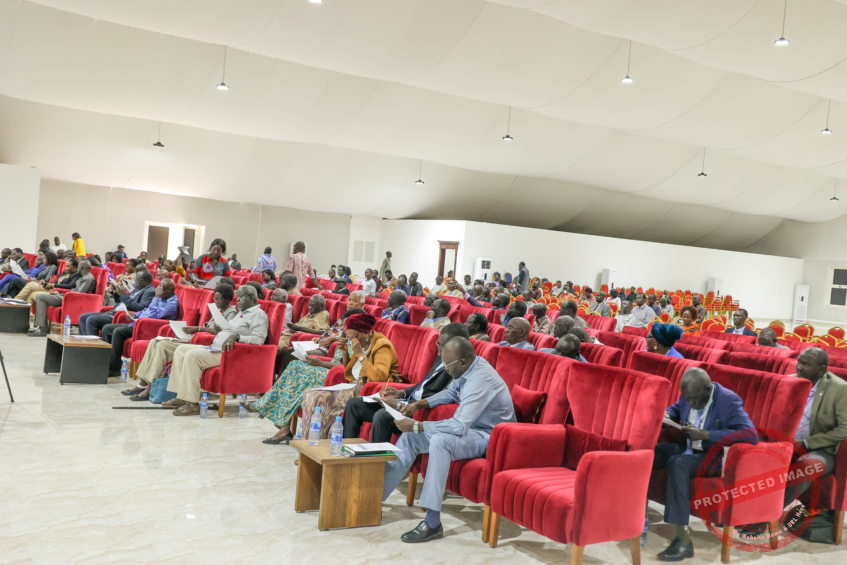
Members of Parliament and the public participate in the public hearing for the 2024/2025 national budget at Parliament on Wednesday, October 30, 2024. — Credit: Eye Radio/Lou Nelson
Members of the public expressed their dissatisfaction with the national budget for the fiscal year 2024/2025 during a public hearing on Wednesday, October 30, questioning the lack of transparency and accountability in previous expenditures.
The public budget hearing held at Parliament on Wednesday, October 30, 2024, was funded by the World Bank as part of the Public Financial Management and Institutional Strengthening Project (PFMIS).
The hearing, attended by citizens, parliament representatives, civil society organizations, and government agencies, highlighted growing concerns about how taxpayer money is managed in South Sudan.
This public hearing follows the recent presentation of a belated draft budget of 4.2 trillion pounds by the National Finance Minister to the national legislature, which is set for deliberation in its second reading in the coming weeks.
The Cabinet approved the budget, along with a resource envelope of 2.228 trillion pounds, in August.
The government projects generating 1.138 trillion pounds from oil revenues and 1.119 trillion pounds from non-oil revenues, which together account for 50% of the total revenue estimate.
Key allocations in the budget include 773.8 billion pounds for wages and salaries, 412 billion pounds for goods and services, and 419.3 billion pounds for states, administrative areas, and organized forces.
Additionally, 15% of the budget is earmarked to settle salary arrears for civil servants and organized forces, with 6%, amounting to 257.5 million pounds, allocated for pre-election activities ahead of the December 2026 elections, and 4.2% for humanitarian and emergency funds.
During the public hearing in Juba, Malual Atem, a social service and policy expert, raised critical questions about taxpayer money.
“South Sudan is blamed for its huge workforce which is not productive. Why is the workforce not productive? Because the government does not prioritize the welfare of its citizens and civil servants,” Atem said.
“If the government aims to fight corruption, it must prioritize the payment of salaries through proper collection of taxes. Where does the government keep the money it collects every year? This is a big issue,” he stated.
Activist Edmund Yakani echoed these concerns, challenging the legislature’s silence regarding the delayed budget.
“We have gained enough income from the revenue, yet civil servants have gone for 11 months without salaries. If you, as our representatives, cannot find answers to these questions, who can we trust to question the executive? Why is this budget late while you sit in parliament? What priorities took precedence over the budget?” Yakani emphasized.
Lily Achan from the Community Empowerment for Women and Youth Initiative highlighted the need for accountability and transparency in the budget’s implementation.
“We lack proper guidelines for implementation. We have entered deep into the year and still have not finalized the budget. Once the budget is passed, who is monitoring its execution?” she urged, stressing the importance of clear guidelines and accountability measures.
As South Sudan prepares for deliberations on the national budget, public concerns regarding transparency and accountability underscore the urgent need for reforms to ensure that taxpayer money is managed effectively and in the interest of the nation’s development.

Currently on air
00:00:00 - 06:00:00
 1
1Published March 10, 2026
 2
2Published March 14, 2026
 3
3Published March 10, 2026
 4
4Published March 12, 2026
 5
5Published March 14, 2026
Published 10 hours ago

Published 11 hours ago

Published 12 hours ago

Published 12 hours ago
Published 13 hours ago

Published 14 hours ago
Support Eye Radio, the first independent radio broadcaster of news, information & entertainment in South Sudan.
Make a monthly or a one off contribution.
Copyright 2026. All rights reserved. Eye Radio is a product of Eye Media Limited.