
19th February 2026
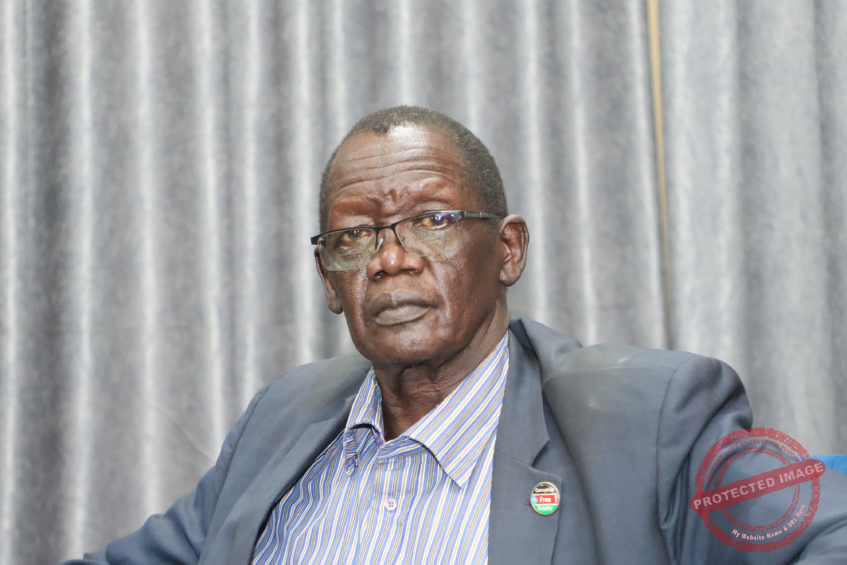
Hon. Zacharia Matur Makuer, a member and former Chairperson of the Specialized Committee on Higher Education and Technology, R-TNLA - Credit: Darlington Moses/Eye Radio - Feb. 18, 2026
JUBA, South Sudan (Eye Radio) — A member of the Specialized Committee on Higher Education and Technology in the National Legislative Assembly has criticized the chronic underfunding of public universities, warning that a lack of state support is forcing government institutions to operate like private businesses.
Hon. Zacharia Matur Makuer made the remarks during Eye Radio’s Sundown program on Wednesday, February 18. His comments follow a tense standoff on Monday between the University of Juba administration and students over unpaid tuition fees that initially barred many from entering the campus.
Quoting the Higher Education Act 2012, Hon. Makuer argued that public universities were established as government institutions and were never intended to function as private entities.
He blamed the Ministry of Finance for failing to meet its obligations, leaving university administrations with no choice but to shift the financial burden onto students to sustain basic operations.
“Our public universities were not made to be run like private universities,” Hon. Makuer stated. “They are government institutions, and the government should take full charge of funding.”
The lawmaker explained a critical legal nuance: while the Higher Education Act grants universities autonomy, they are not independent of the state.
He noted that while this autonomy allows institutions to make administrative decisions—including the introduction of tuition fees to stay afloat—the reliance on these fees creates a fundamental problem.
“In the law, universities are treated as autonomous, not independent,” Makuer explained. “They can do their operation to the degree that they can introduce something like a little tuition fee to charge the student to run the university. This is where the problem actually comes.”
Hon. Makuer cautioned that the current model is reaching a breaking point as more students find themselves unable to afford the rising costs.
He called on the national government to urgently address the funding gap and urged fellow lawmakers to review the Higher Education Act 2012 to clarify the state’s financial responsibilities.
Sustainable funding, he stressed, is essential to protect the public nature of these institutions and to ensure that access to higher education in South Sudan is not restricted by financial hardship.
Currently on air
19:30:00 - 20:00:00
 1
1Published February 16, 2026
 2
2Published February 14, 2026
 3
3Published February 13, 2026
 4
4Published February 12, 2026
 5
5Published February 15, 2026
Published 1 hour ago
Published 2 hours ago
Published 3 hours ago

Published 3 hours ago
Published 3 hours ago
Published 4 hours ago
Support Eye Radio, the first independent radio broadcaster of news, information & entertainment in South Sudan.
Make a monthly or a one off contribution.
Copyright 2026. All rights reserved. Eye Radio is a product of Eye Media Limited.