
2nd March 2026
You are here: Home | National News | News | Science & Environment | Lantoto game park dialogue sparks calls for inclusion and land rights
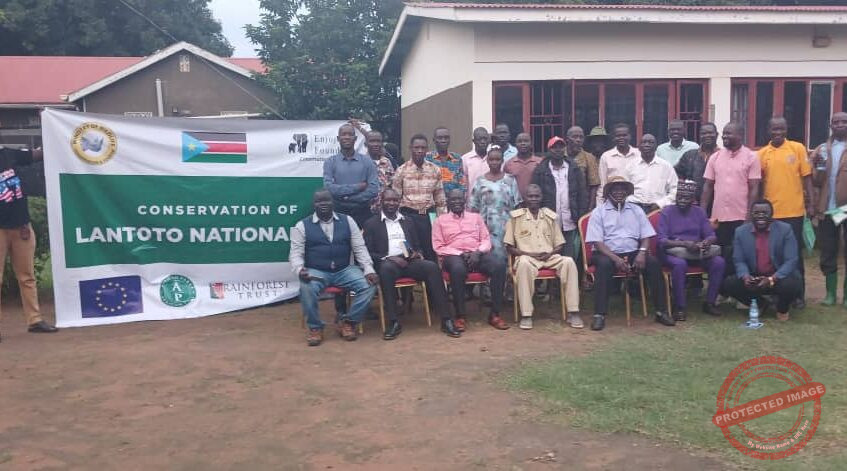
Participants pose for a group photo during a dialogue between Enjojo, overseeing the park and the community|Courtesy
Communities in Yei River County, Central Equatoria State are calling for full inclusion in the planning and development of the Lantoto Game Park, urging transparency, respect for traditional practices, and the recognition of local land rights.
During a consultative dialogue held last week with government officials and conservation partners, local leaders expressed concern that communities residing in or near the proposed park area were excluded from the early stages of the project.
Community leaders emphasized that the success of the Lantoto Game Park initiative hinges on genuine community participation at every stage.
“The right to land ownership is being compromised and disregarded by certain individuals or institutions,” said Salah Aggrey, Secretary General of the Land Committee in Tore Payam.
“We need to examine this collectively and demand that proper consultation be carried out. This project cannot succeed if we are left out of decisions concerning our own land.”
Aggrey criticized the conduct of land-related rituals by outsiders, calling it a violation of local customs and an undermining of traditional authority.
“To our surprise, the engagement was not with our own local chief,” Aggrey said.
“Someone from another state was brought in to perform rituals on our land. This is unacceptable. It undermines the legitimacy of our local governance structures and creates tension rather than harmony.”
He also urged that the boundaries of the park be confined to the 760 square kilometers stipulated in the 1986 Sudan Wildlife Act to avoid disputes.
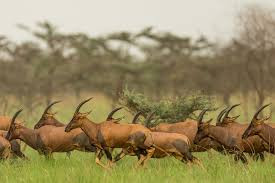
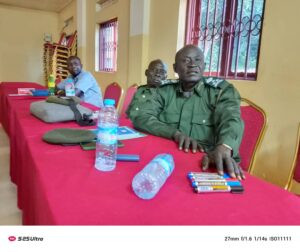
Lokoroto Daniel, Member of Parliament for Lasu Payam, echoed these concerns, calling for clear communication and transparency regarding the park’s size, purpose, and the types of wildlife it will contain.
“If communities understand what Lantoto National Park is about — its dimensions and what it holds — they are more likely to support it,” he said.
“People worry because they feel left in the dark. We want local communities to be treated as stakeholders, not just beneficiaries.”
He emphasized that access to maps and relevant data should be prioritized and made available to the public.
“We are encouraging that all necessary information about the park and land models be shared openly,” Lokoroto added. “This will help avoid resistance rooted in fear and misinformation.”
Alex Lotiyu Elia, Central Equatoria State Minister of Animal Resources, Fisheries, and Tourism, acknowledged that the state government had not been involved in the early stages of planning. However, he noted that efforts have since been made to bring in both state authorities and local communities.
“Today’s workshop is not just a workshop. It’s an important platform for dialogue, cooperation, and collaboration between different levels of government and the communities,” said Minister Lotiyu. “We are committed to ensuring that people in Lasu and Tore are fully engaged going forward.”
Lt. Gen. Paul Thac Chiek, Deputy Director General of the National Wildlife Service, reminded participants that wildlife is a national asset, and its protection is a collective responsibility.
“Communities, you have to help yourselves to protect and conserve our national wildlife,” he said. “This is not just the job of the Minister or the National Wildlife Service. It belongs to all of us.”
He urged communities to work together with government and conservation groups and to take pride in the ecological significance of Lantoto.
During the dialogue, community members outlined their expectations for future engagement. These include:
Clarification of park boundaries in line with existing laws.
Open sharing of information, including maps and implementation plans.
Recognition of traditional leaders and inclusion in all planning and execution activities.
Employment and training opportunities for local residents.
Full respect for land ownership rights and traditional governance systems.
Both officials and residents agreed that the long-term success of the Lantoto Game Park depends on a collaborative approach that honors the voices, rights, and knowledge of the people who live closest to the land.
“We are not against conservation,” said one local elder. “We just want to be respected and included. This is our home, and we want to protect it too — but in our own way, with our own voices.”

Currently on air
09:00:00 - 12:55:00
 1
1Published February 23, 2026
 2
2Published February 28, 2026
 3
3Published February 25, 2026
4Published February 24, 2026
 5
5Published 18 hours ago

Published 17 hours ago
Published 18 hours ago

Published 19 hours ago

Published 20 hours ago

Published 20 hours ago

Published 22 hours ago
Support Eye Radio, the first independent radio broadcaster of news, information & entertainment in South Sudan.
Make a monthly or a one off contribution.
Copyright 2026. All rights reserved. Eye Radio is a product of Eye Media Limited.