
13th August 2026
You are here: Home | Education | National News | News | Juba children call for investment in education, equal access to learning
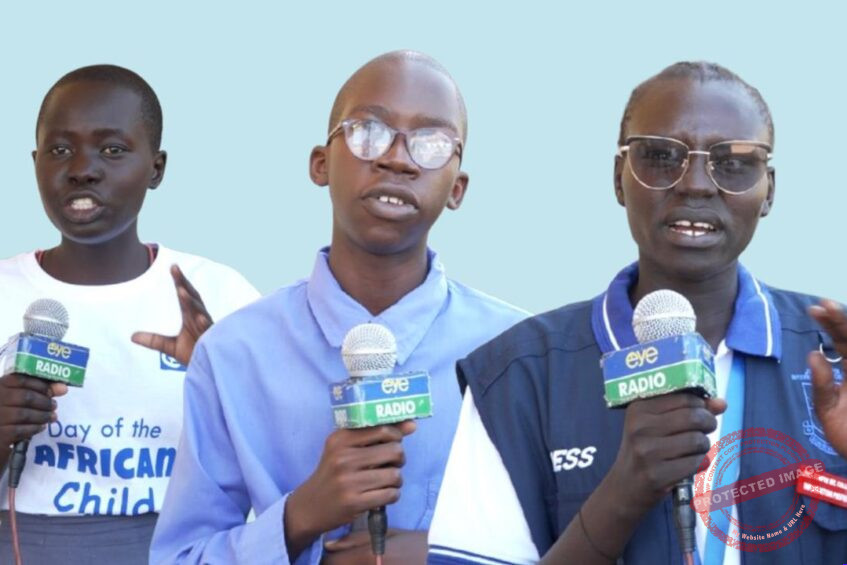
Photo Credit| Darlington Moses
School-going children in Juba have called on the government to increase investment in education, reduce school fees, and ensure improved welfare of teachers to improve access to quality education across the country.
Speaking to Eye Radio during the commemoration of the African Child Day on Tuesday, the children said education remains the most important tool for transforming South Sudan and creating equal opportunities for all.
Poru Adela urged the government to guarantee every child’s right to education and other basic services.
“My message to the government is to ensure that every child has a right to education, every child has a right to proper hygiene and sanitation,” Adela said.
“Education is a powerful weapon to change this country. Not this country only, but Africa at large. The greatest investment in this country is our education.”
She added that leaders should prioritize education over political interests. “Guns, money and politics cannot change this country. But the leaders need to know that education is everything,” she said.
The children also expressed concern over delayed salary payments for civil servants, saying many parents are struggling to meet educational expenses as a result.
Kayanga Juma highlighted challenges affecting boys’ education, saying societal expectations often force boys to fend for themselves at an early age.
“Beliefs are being passed on that you’re a boy, you should know what you should do. You’re a boy, you should hustle for yourself to get your own personal needs, which leaves the boy child neglected in their educational life,” Juma said.
Christine Musa said many children in South Sudan continue to face hardships due to a lack of basic services and the high cost of education.
“I can’t say that South Sudanese children are happy because most of the children lack most of the basic needs such as education, shelters and more especially, the schools are actually being expensively paid. That is why most children in South Sudan are not happy,” Musa said.
Meanwhile, the National Minister of Health, Luke Thompson, called for stronger collaboration among government ministries to secure increased funding for social services.
Speaking during the African Child Day celebration organized by the National Ministry of Gender and its partners in Juba, Thompson said the government has a responsibility to provide children with essential services, including education, healthcare, clean water, and sanitation.
“I look forward to seeing the same sense of urgency from my colleagues in the cabinet to lobby and call for increment in the budget of the social sector,” Thompson said.
The minister stressed that free and quality education is a fundamental right that should be guaranteed to every child.
“It means as a government you must provide free and quality education,” he said.
Thompson warned that failure to invest in children’s welfare could have long-term consequences for society.”When we fail to provide those services, then the kids will grow up deformed in mind, indulged in criminality,” he said.
African Child Day is commemorated annually to promote the rights and welfare of children and to raise awareness about the challenges affecting young people across the continent.
Currently on air
06:00:00 - 06:55:00
 1
1Published August 9, 2026
 2
2Published August 8, 2026
 3
3Published August 9, 2026
 4
4Published August 10, 2026
 5
5Published August 10, 2026
 6
6Published August 11, 2026
 7
7Published 19 hours ago
 8
8Published August 8, 2026
Published 12 hours ago

Published 13 hours ago
Published 13 hours ago
Published 13 hours ago
Published 13 hours ago
Published 16 hours ago
Support Eye Radio, the first independent radio broadcaster of news, information & entertainment in South Sudan.
Make a monthly or a one off contribution.
Copyright 2026. All rights reserved. Eye Radio is a product of Eye Media Limited.