
14th August 2026
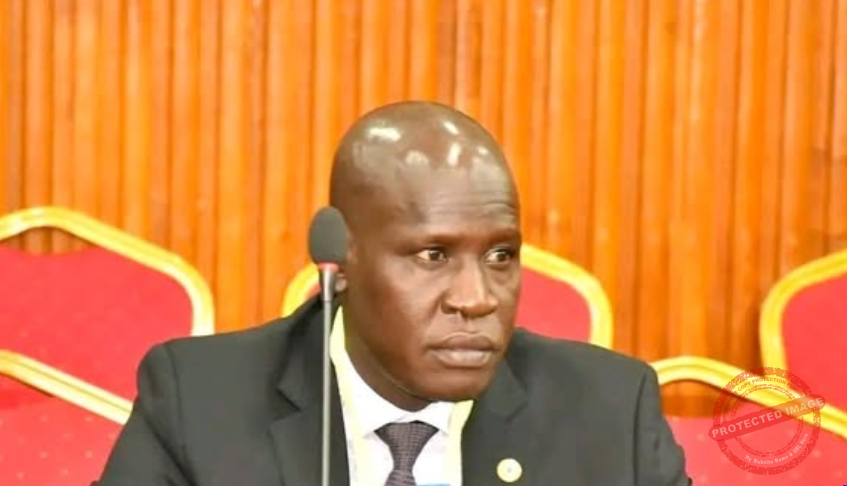
Minister of Health, Luke Thomson Thoan – courtesy photo.
Health Minister Luke Thomson has defended his decision to revoke the appointment of the former Executive Director of the National Public Health Institute (NPHI), arguing that he acted within the authority granted to him by law after the institute’s Board of Directors withdrew its confidence in the official.
Speaking during a press briefing, Thomson said the decision was based on provisions contained in the National Public Health Institute Act, 2023, which governs the appointment and removal of the institute’s Executive Director.
The minister rejected claims that the Executive Director is a presidential appointee, insisting that the position falls under the authority of the Ministry of Health following recommendations from the NPHI Board of Directors.
“I wish to state with absolute authority and certainty that the Executive Director of the National Public Health Institute is not an appointee of the President,” Thomson said.
According to the minister, the law requires the Executive Director to be appointed by the Minister of Health upon recommendation of the Board. He stressed that he cannot appoint or remove an Executive Director independently without the Board first making a recommendation or communicating its position.
Thomson explained that on June 26, the NPHI Board of Directors met with a legally constituted quorum of 12 out of its 19 members and resolved to withdraw its earlier decision made on January 22 recommending the appointment of the Executive Director.
The board’s decision, he said, effectively withdrew its confidence in the head of the institution and was formally communicated to his office on the same day.
The minister said he did not act immediately on the recommendation and instead spent nearly two months engaging members of the board in an attempt to reconsider or clarify their position.
“In those two months I was engaging the Board with an intent to persuade them to at least reverse their decision. But it didn’t work,” he said.
The situation escalated further, according to Thomson, when two deputy directors of the institute approached his office on August 5 intending to submit their resignations.
The minister said the development raised concerns about the management and stability of the institution, prompting him to take action in what he described as the public interest.
“If the Board withdrew its confidence and trust in you, then a new person should be appointed. That is the authority provided by law,” he said.
Thomson said he subsequently issued an order on August 6 revoking the appointment of the Executive Director, citing reasons outlined in the directive.
The Health Minister dismissed assertions that the action was politically motivated, describing it instead as an administrative decision guided strictly by the law governing the institute.
“It is not political. It was an administrative decision,” he stated.
He also challenged allegations that he exceeded his powers, maintaining that anyone dissatisfied with the decision should seek legal redress through the courts.
“Whoever wishes to challenge that decision has the right to challenge it through our judicial system,” Thomson said. “If I exceeded the powers vested in me by law, then the judiciary will advise.”
The minister reiterated that his role is to oversee the health sector on behalf of the government and ensure that institutions under his ministry operate according to the law.
“I am given responsibility by the state in the person of His Excellency the President to oversee the health sector on his behalf. I would not want to betray that trust,” he said.
Currently on air
13:30:00 - 14:00:00
 1
1Published August 9, 2026
 2
2Published August 8, 2026
 3
3Published August 9, 2026
 4
4Published August 10, 2026
 5
5Published August 10, 2026
 6
6Published August 11, 2026
 7
7Published August 8, 2026
 8
8Published August 12, 2026
Published 35 minutes ago

Published 38 minutes ago

Published 1 hour ago

Published 2 hours ago

Published 3 hours ago

Published 3 hours ago
Support Eye Radio, the first independent radio broadcaster of news, information & entertainment in South Sudan.
Make a monthly or a one off contribution.
Copyright 2026. All rights reserved. Eye Radio is a product of Eye Media Limited.