

Displaced residents return to Akobo as humanitarian needs mount -MSF
The Médecins Sans Frontières (MSF), also known as Doctors Without Borders, has said more than 100,000 people have returned to Akobo in Jonglei State after fighting earlier this year forced nearly all residents to flee across the border into Ethiopia.
However, the humanitarian organization warns that returnees are facing enormous challenges, including the collapse of healthcare services, widespread food insecurity, severe malnutrition, and deteriorating water and sanitation conditions.
According to MSF, residents have returned to find a town stripped of basic services after months of conflict. All 15 health facilities serving Akobo and surrounding areas were looted and abandoned, while vaccination services came to a complete halt after cold-chain equipment was destroyed.
Akobo Teaching Hospital was also looted and left without electricity, fuel, beds, medicines, and critical medical equipment.
MSF Project Coordinator in Akobo, Jacob Granger, said the humanitarian response remains insufficient despite the scale of needs.
“The humanitarian response in Akobo continues to fall far short of the scale of needs, despite repeated calls to action and high-level commitments,” Granger said.
He urged donors and humanitarian organizations to scale up assistance in healthcare, food aid, water and sanitation, and protection services ahead of the peak malaria transmission season.
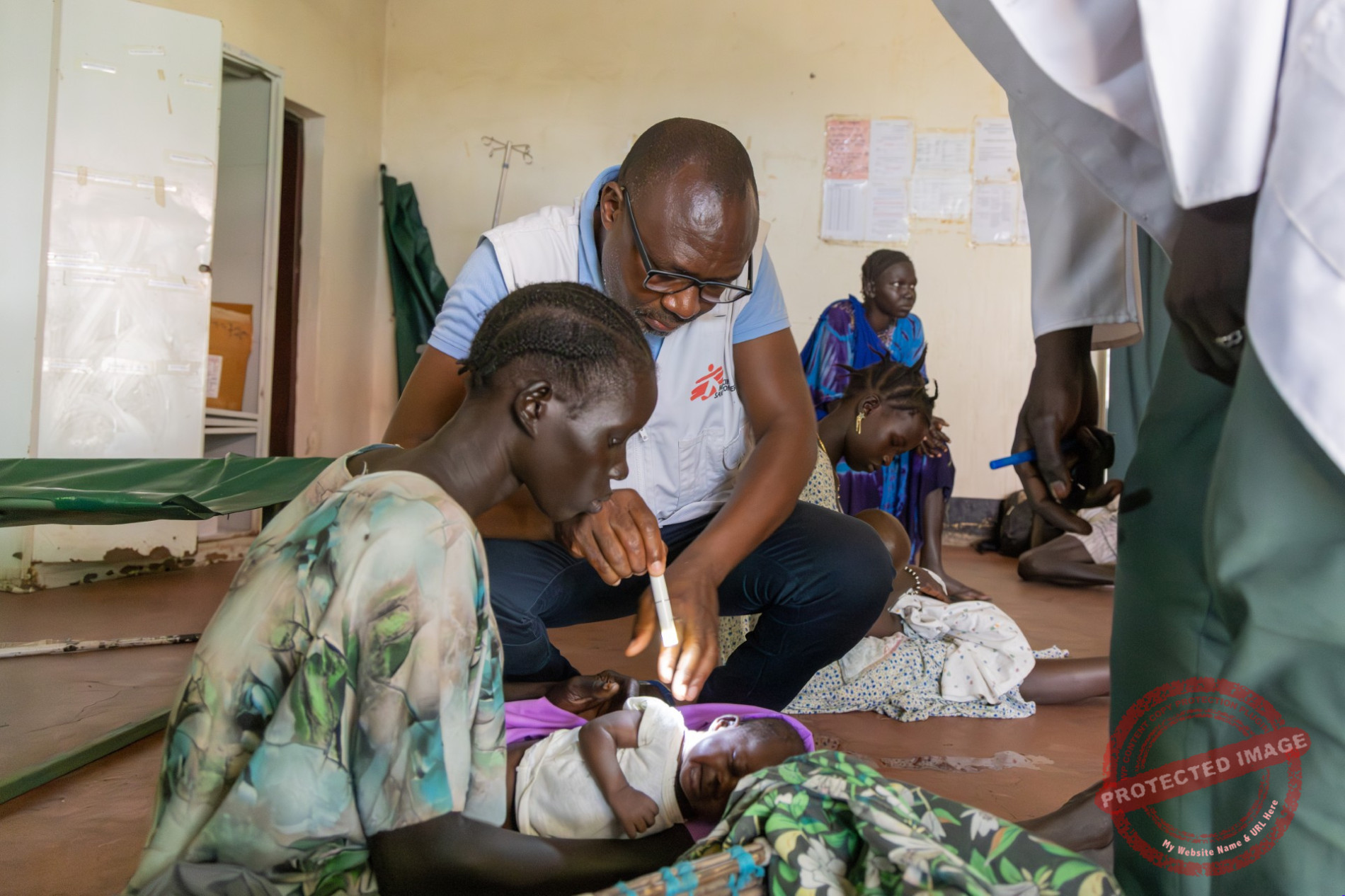
The organization says demand for healthcare has surged since it resumed activities at Akobo Teaching Hospital on May 11. By June 14, the facility had recorded more than 5,000 outpatient consultations and admitted 684 patients despite having capacity for only 30 beds.
MSF also warned that Akobo is currently classified under IPC Phase Five, placing the area on the brink of famine. Between May and June, 36 percent of children screened at MSF facilities were found to be malnourished, including 15 percent suffering from severe acute malnutrition.
Midwife Elizabeth Nyachin Koang said women are giving birth under extremely difficult conditions following the destruction of medical equipment used to monitor pregnancies.
“We no longer have the equipment we once used to monitor pregnancies. We cannot properly assess how a baby is developing or whether it is doing well inside the womb,” she said.
The humanitarian organization further warned of an increased risk of disease outbreaks due to the collapse of water and sanitation infrastructure.
Of the 17 water towers and 35 boreholes that previously supplied the town, only eight hand pumps remain functional, forcing many residents to rely on untreated river water.
MSF says urgent intervention is needed to prevent further deterioration of conditions as the rainy season intensifies and the threat of cholera and malaria continues to grow.