
1st July 2026
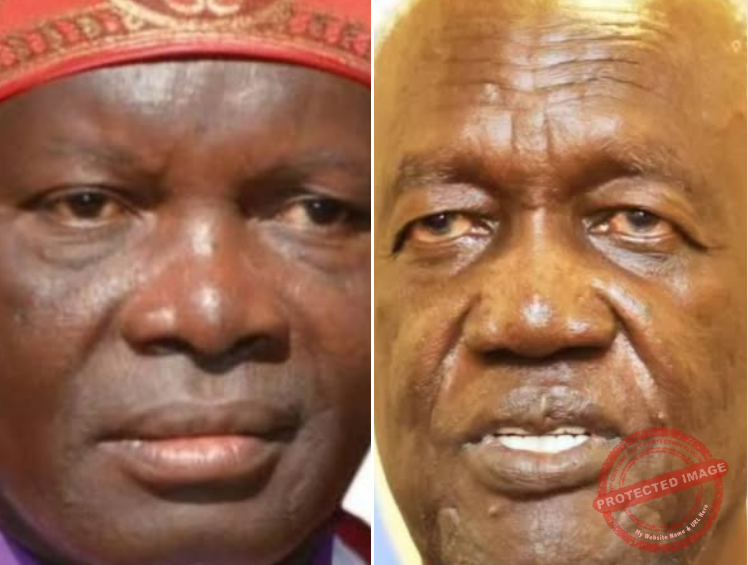
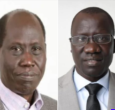
Archbishop Justin Badi Arama (left), Primate of the Episcopal Church of South Sudan, and Senior Presidential Advisor Kuol Manyang Juk (right).
The Primate of the Episcopal Church of South Sudan and a Senior Presidential Advisor offered contrasting perspectives on the root causes of the country’s ongoing instability and civilian deaths during a memorial event on Monday.
During a tribute to late religious pioneers, Archbishop Justin Badi Arama attributed the loss of lives to ethnic divisions and political failures, while Senior Presidential Advisor Kuol Manyang Juk argued that the nation’s primary challenge is widespread laziness.
Archbishop Badi Arama expressed concern over reports of citizens dying in large numbers across several regions. He referenced the vision of late religious leaders—including Bishops Paride Taban, Mathew Mathiang, and Nathaniel Garang—who he said foresaw an independent nation where citizens would enjoy improved lives.
“It is sad to see people dying in hundreds and in fifties, and when you ask the reason, it is only tribalism; it is only bad politics,” the Primate stated. “For how long, South Sudanese, should we continue like this?”
He noted that these leaders worked to transition South Sudanese from “second-class citizens to first-class citizens,” a goal he suggested is being undermined by current divisions.
Responding directly to the Primate’s remarks, Senior Presidential Advisor Kuol Manyang Juk disputed the influence of ethnicity on the current crisis. He instead pointed toward economic inactivity as the fundamental issue facing the population.
“The crisis we have here in South Sudan is not tribalism at all; I dispute it. It is laziness,” Manyang said. “Laziness makes us poor, hungry, and God has created food all around us. Wherever you turn, there is food. But we are too lazy to exploit this food.”
Manyang criticised the habit of discriminating against certain food sources, such as frogs, lizards, or ducks. “These are all foods. But we don’t want to use our minds. Laziness.”
The Senior Advisor highlighted a visible disparity in Juba’s labour market, noting that while foreigners work under the harsh sun, many locals remain inactive.
“See the foreigners who have come to South Sudan… those who are moving in the sun, driving the wheelbarrows. They don’t even feel this sun. But we are sitting under the shade, telling stories that will not have monetary value,” Manyang observed.
He warned that this lack of productivity leads directly to social friction and crime. “When we have nothing to eat, then jealousy comes. A hungry man is an angry man. You become jealous of others who are working because you don’t want to work.”
According to Manyang, the transition from poverty to violence is a logical progression driven by need rather than ethnicity. He argued that when people refuse to work, they turn to theft and organized crime to acquire what others have earned.
“We make crimes. We go and steal. We kill others. We organize ourselves to go and attack others so that we take others’ property,” he explained. He further noted that if the issue were truly tribalism, violence would be limited to inter-ethnic conflict, yet “families are killing themselves, struggling for food, for wealth.”
The exchange highlights a deep divide in how national figures perceive the hardships facing South Sudan. While church leadership calls for a move away from “bad politics” and tribal alignment to honor the founders’ legacy, government advisors suggest that utilizing the country’s natural resources through labor is the only path to stability.
Manyang concluded with a call for self-reliance, suggesting that spiritual intervention cannot replace hard work. “We don’t need to come and ask God to bless us now and then,” he said, implying that the blessings are already present in the land, waiting to be harvested.

Currently on air
14:00:00 - 15:55:00
 1
1Published June 28, 2026
 2
2Published June 25, 2026
 3
3Published June 30, 2026
 4
4Published June 29, 2026
 5
5Published June 29, 2026
 6
6Published June 24, 2026
 7
7 8
8Published June 29, 2026

Published 1 hour ago

Published 2 hours ago

Published 2 hours ago

Published 2 hours ago

Published 3 hours ago

Published 4 hours ago
Support Eye Radio, the first independent radio broadcaster of news, information & entertainment in South Sudan.
Make a monthly or a one off contribution.
Copyright 2026. All rights reserved. Eye Radio is a product of Eye Media Limited.