
Crawford Capital Ltd: Digital firm under corruption sanctions, fiercely defended by government
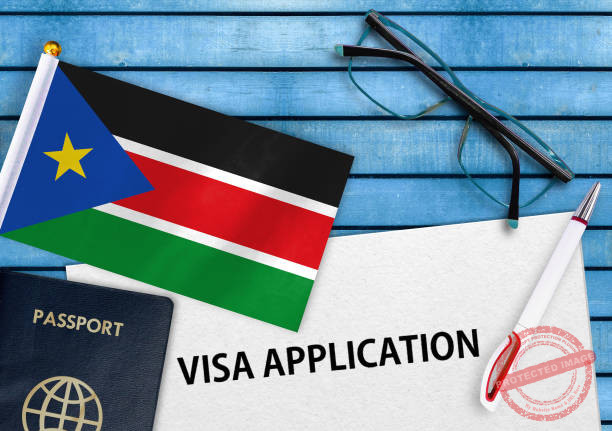
The United States’ sanctions on Crawford Capital Ltd. were quickly followed by a strong defence from government ministries and parastatals. But how did the digital firm come to be at the centre of growing corruption allegations?
The US State Department on Tuesday announced sanctions on Crawford Capital Ltd., alongside visa restrictions on a government official accused of obstructing the peace process.
The swift defence from government institutions has raised a key question: how did Crawford end up at the centre of such a controversy?
The company is now facing growing scrutiny, including from the United Nations Commission on Human Rights in South Sudan.
Serious allegations
The allegations against Crawford are wide-ranging. They include:
- diversion of public revenues,
- opaque government contracts,
- extraordinary profit-sharing arrangements,
- tax exemptions,
- and alleged ties to political elites and their relatives.
At the centre of the debate lies a bigger national question: who truly controls South Sudan’s money?
Rise of a digital powerhouse
Crawford entered government operations in 2019, as South Sudan moved towards digitised revenue systems.
The company was contracted as the exclusive provider of “e-Government Services” under the Ministry of ICT and Postal Services.
The idea behind digitisation was to reduce cash leakages, improve tax collection, and modernise state services. Over time, Crawford expanded its reach across government systems, embedding itself in:
- visa systems,
- customs collections,
- tax platforms,
- petroleum permits,
- cargo tracking,
- health certificates,
- and electronic payment gateways.
But according to the UN Commission on Human Rights in South Sudan, digitisation instead became “a new corruption mechanism” that enabled organised revenue diversion.
The report describes Crawford as “a company with political connectedness exemplified by the breadth of government institutions involved in facilitating increasing state capture.”
The 75 percent arrangement
One of the most controversial findings relates to Crawford’s revenue-sharing agreements.
According to the UN Commission, Crawford Capital Ltd. retained up to 75 percent of profits from several e-service arrangements, while government ministries received only 25 percent.
The arrangement covered:
- electronic visa collections,
- e-tax systems,
- crude oil accreditation permits,
- petroleum import permits,
- and other electronic services.
The Commission said the structure effectively privatised public revenue “at levels not seen in any legitimate public-private partnership.”
Under one crude oil permit scheme introduced through the Ministry of Petroleum, foreign companies purchasing South Sudanese oil were required to pay a 0.3 percent accreditation fee through Crawford’s platform.
The UN estimated that in September 2023 alone, Crawford Capital Ltd. likely earned more than $1.1 million from the scheme, while the Ministry of ICT received about $367,000.
Investigators concluded that the arrangement “cannot be justified” and may reflect abuse of public office for private benefit.
Ownership questions
Officially, Crawford Capital Ltd. is a private company.
However, the UN Commission alleges that its ownership structure is closely tied to politically connected networks.
According to the report:
- Garang Mayom Kuoc Malek owns 68 percent of Crawford Ltd., 95 percent of Crawford Laboratory Ltd, and 61.2 percent for other share holder.
- The second-largest shareholder is Kenyan businessman Jeremy Gisemba, who reportedly owns:
- 26 percent of Crawford Capital Ltd., and 23.4 percent for other share holder.
The report further states that Ruey Majok Guandong previously owned 50 percent of Crawford at incorporation.
It also alleges that the company’s “financial beneficiaries extend further and include political elites and their close relatives.”
The Commission identifies Garang Malek as the son of a former deputy minister and parliamentarian, while Ruey Majok Guandong is described as the son of South Sudan’s ambassador to Türkiye.
It also says Garang Malek and Ruey Guandong previously formed another company with President Salva Kiir’s son, Mayar Salva Kiir.
While these allegations remain untested in court, the report suggests deep patronage networks around the company.
Security-linked influence
The UN Human Rights Commission report also implicates former NSS-ISB Director Akol Koor Kuc in allegedly facilitating Crawford’s expansion into sensitive state systems.
It states that Crawford gained access to strategic databases, revenue systems, and digital platforms through security-linked networks connected to the Internal Security Bureau.
The report alleges penetration into:
- electronic government systems,
- customs and revenue databases,
- telecommunications-linked infrastructure,
- and sensitive state data platforms.
According to investigators, security backing helped shield the company from scrutiny as it expanded across government institutions.
Although the report does not accuse Akol Koor of ownership, it suggests his security apparatus played a key enabling role.
Political tensions over suspension
The controversy deepened when former Trade Minister Atong Kuol Manyang moved in March 2026 to suspend parts of Crawford’s operations and ordered a review.
Her decision followed growing concerns over electronic trade systems and permit collections.
However, the move triggered political backlash. Members of Parliament accused the minister of disrupting government systems and undermining revenue collection.
The pressure escalated when Vice President James Wani Igga reportedly intervened, calling for the suspension to be lifted.
The decision was eventually reversed, highlighting the political sensitivity surrounding the company.
ICT Ministry and SSRA defence
Despite criticism and US sanctions, the Ministry of ICT and Postal Services has continued to defend Crawford.
Current ICT Minister Ateny Wek Ateny said the systems are part of wider digital reforms aimed at improving efficiency and reducing corruption linked to manual processes.
He dismissed the allegations as politically motivated.
The South Sudan Revenue Authority (SSRA) has also defended the electronic systems.
It argues that digitized tax platforms improve accountability and reduce revenue leakages.
However, the UN report raises serious concerns, alleging that some commercial banks were instructed to deposit non-oil revenues into accounts controlled by Crawford instead of official revenue accounts.
It further claims Crawford representatives sometimes posed as Revenue Authority officials during collections.
The report concludes that the SSRA was “complicit in Crawford’s schemes” involving non-oil revenue diversion.
Fuel crisis and humanitarian impact
The most visible impact came in 2024 when a new petroleum levy linked to Crawford disrupted fuel imports.
The system introduced electronic petroleum accreditation permits and new charges on imported fuel.
Humanitarian agencies, diplomatic missions, and UN operations rejected the charges, saying they violated exemptions. As a result, fuel supplies were stranded at border points.
The impact was immediate.
The UN Humanitarian Coordinator warned that food aid air drops to remote areas were suspended due to fuel shortages. UNMISS peacekeeping patrols were also reduced.
The Commission accused Crawford Capital of profiting from “illegal taxes” that disrupted humanitarian and peacekeeping operations.
US sanctions
The crisis escalated when the United States imposed sanctions on Crawford Capital Ltd and associated individuals.
Washington accused the network of corruption, misuse of public resources, and undermining governance and stability in South Sudan.
The sanctions turned a domestic dispute into an international governance concern.
Civil society reaction
Civil society groups have reacted strongly to the sanctions.
Edmund Yakani, Executive Director of CEPO, said the sanctions should push the government toward transparency and accountability.
Baboya James Edimond said the case exposed concerns over the link between political power and private business interests.
Ter Manyang Gatwech described the scandal as evidence of weak accountability systems and called for independent investigations.
Their responses reflect growing concern about elite capture of state institutions.
A larger question
The Crawford Capital Ltd story has become more than a corporate dispute.
The UN Commission describes South Sudan as a country “captured by a predatory elite that has institutionalized the systematic looting of the nation’s wealth for private gain.”
When contacted, Crawford Capital Ltd Chief Executive Biong Deng declined to comment.
In an automated message sent to Eye Radio, Deng wrote “Sorry, I can’t talk right now.”